Peptide Stacks for Beginners: The 3 Best Starting Combinations
Choosing your first peptide stack can be overwhelming. Here are the 3 most researched, beginner-friendly combinations — with clear rationale for why each compound earns its place.
For researchers new to peptide science, the sheer number of compounds and possible combinations can be paralyzing. Which compounds are well-studied? Which combinations make scientific sense? Where do you even start?
This guide focuses on three beginner-appropriate stacks with the strongest research foundations — and explains the reasoning behind each pairing so you understand why each compound earns its place.
What Makes a Stack "Beginner-Appropriate"?
Not all peptide combinations are equal. The best starting stacks share these qualities: - Each compound is independently well-researched (not theoretical) - The mechanisms are synergistic, not redundant - The safety profiles are well-characterized - Administration protocols are clear and established - The research goals are specific and measurable
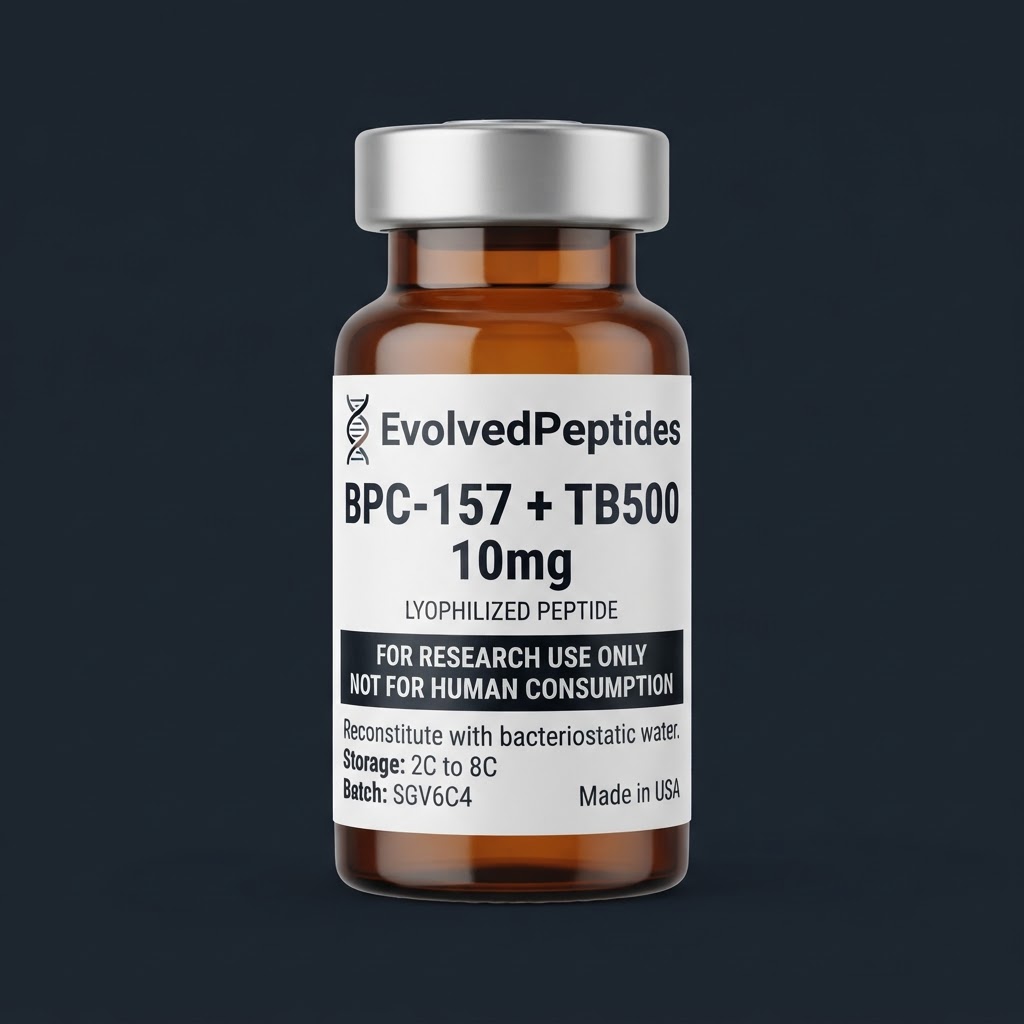
Stack 1: BPC-157 + TB-500 — The Recovery Foundation
This is widely considered the most fundamental recovery stack in peptide research. If you're starting with injury recovery, inflammation reduction, or tissue healing, this is where the literature points first.
BPC-157 (Body Protection Compound-157): - 15-amino acid peptide derived from human gastric protective protein - Promotes angiogenesis (new blood vessel formation) via VEGF upregulation - Activates fibroblasts at repair sites (collagen-producing cells) - Modulates nitric oxide pathway for improved blood flow - Anti-inflammatory through multiple cytokine pathways - Well-studied for tendon, ligament, gut, and joint repair
TB-500 (Thymosin Beta-4 analogue): - Derived from the actin-binding domain of Thymosin Beta-4 - Enables rapid cell migration to injury sites via actin sequestration - Promotes organized collagen deposition (prevents disorganized scarring) - Systemic distribution — supports healing throughout the body simultaneously - Anti-inflammatory via NF-kB pathway modulation
Why They Work Together: BPC-157 builds the vascular infrastructure and activates local fibroblasts. TB-500 gets the cells there quickly and ensures organized repair. Together they address both the "supply chain" (blood vessels, nutrients) and the "workforce" (cell migration, collagen organization) of tissue repair.
Beginner Research Protocol: - BPC-157: 250mcg subcutaneous, once or twice daily - TB-500: 5mg subcutaneous twice weekly (loading phase, 4–6 weeks), then 2.5mg twice weekly (maintenance) - Cycle: 8–12 weeks on, 4 weeks off - Best for: Joint/tendon injury research, post-surgical recovery research, gut health research
Stack 2: CJC-1295 + Ipamorelin — The GH Optimization Stack
For researchers focused on body composition, anti-aging, sleep quality, or growth hormone dynamics, the CJC-1295 + Ipamorelin combination is the most studied starting point.
CJC-1295 (without DAC, aka MOD-GRF 1-29): - 29-amino acid GHRH (Growth Hormone-Releasing Hormone) analogue - Binds pituitary GHRH receptors, stimulating GH release - Half-life ~30 minutes; produces physiological pulsatile GH pattern - Primes the pituitary — maximizes the pool of releasable GH
Ipamorelin: - Pentapeptide GHRP (Growth Hormone-Releasing Peptide) - Acts on ghrelin receptor (GHS-R1a), independently triggering GH release - The "cleanest" GHRP — no significant cortisol, prolactin, or ACTH elevation - No meaningful appetite stimulation (unlike older GHRPs)
Why They Work Together: Two separate receptor pathways both stimulate GH release simultaneously. CJC-1295 maximizes the pituitary's readiness; Ipamorelin pulls the trigger. The combined GH pulse is 3–5x greater than either compound alone. This dual-signal approach mimics the most optimal natural GH secretion pattern.
Beginner Research Protocol: - CJC-1295 (no DAC): 100mcg subcutaneous - Ipamorelin: 200mcg subcutaneous - Both administered together, 30–60 minutes before sleep - Frequency: Daily or 5x/week - Cycle: 12–16 weeks on, 4–6 weeks off - Best for: Body composition research, anti-aging, sleep quality, GH axis research
Stack 3: Semaglutide + CJC-1295/Ipamorelin — The Metabolic Body Recomposition Stack
For researchers studying weight management and metabolic health, the biggest challenge with GLP-1 agonists like Semaglutide is lean mass loss — approximately 30–35% of total weight lost comes from muscle in clinical trials. Adding a GH secretagogue directly addresses this problem.
Semaglutide: - GLP-1 receptor agonist - Suppresses appetite centrally (hypothalamus) - Slows gastric emptying → prolonged satiety - Glucose-dependent insulin secretion - STEP trials: 15–17% body weight reduction over 68 weeks
CJC-1295 + Ipamorelin (as described above): - Elevates GH and IGF-1 - GH directly counteracts the lean mass loss from caloric restriction - IGF-1 stimulates satellite cell activity in muscle - Creates an anabolic environment that preserves muscle while fat loss occurs
Why They Work Together: Semaglutide reduces caloric intake; GH secretagogues preserve what's metabolically valuable — lean muscle. The result is body recomposition rather than just weight loss: more fat loss relative to muscle loss, better metabolic outcomes, and preservation of the metabolism itself.
Beginner Research Protocol: - Semaglutide: Start 0.25mg weekly, titrate slowly per standard protocol - CJC-1295 (no DAC) + Ipamorelin: Add after 4–8 weeks of Semaglutide stabilization - Both GH secretagogues 30 min before sleep, 5x/week - Cycle: Semaglutide ongoing; GH secretagogues 12 weeks on, 4 weeks off, then resume
Principles That Apply to All Three Stacks
1. Start conservatively: Begin at the lower end of the research protocol range. Assess response before titrating up. This applies to both dose and frequency.
2. Use verified, HPLC-tested compounds: Impure compounds introduce confounding variables. Only use suppliers with third-party Certificates of Analysis showing ≥98% purity.
3. Reconstitute and store properly: Use bacteriostatic water. Store lyophilized powder at -20°C; reconstituted solution at 4°C. Never freeze reconstituted peptide. See our full reconstitution guide for step-by-step instructions.
4. Document everything: Effective research requires systematic data collection. Track dates, doses, timing, and observations in a research log.
5. Respect cycles: All three stacks benefit from periodic off-cycles. This prevents receptor desensitization, allows baseline reassessment, and follows established research patterns.
Choosing Your Starting Stack
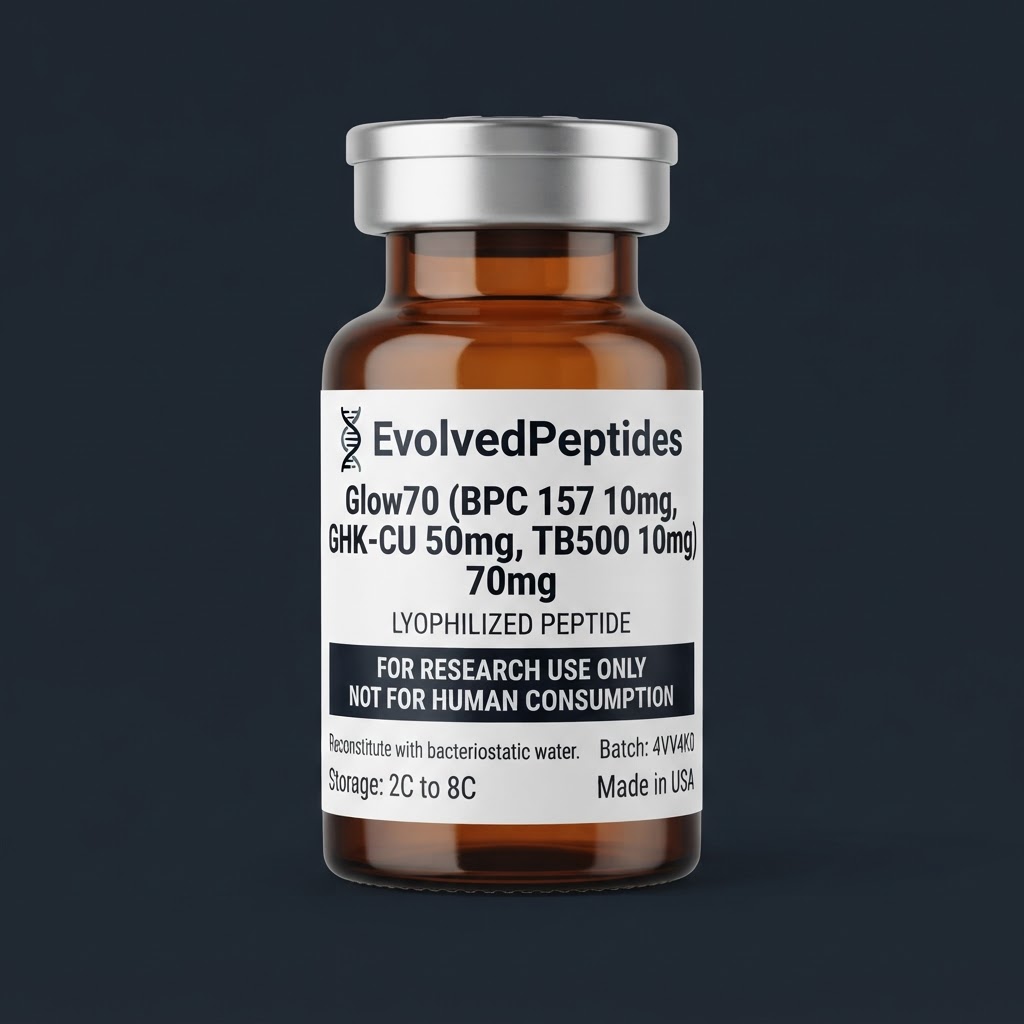
| Research Goal | Recommended Stack | |---|---| | Injury recovery, tissue repair | BPC-157 + TB-500 | | Body composition, anti-aging, sleep | CJC-1295 + Ipamorelin | | Weight management, metabolic health | Semaglutide + CJC-1295/Ipamorelin | | Skin health, post-procedure recovery | BPC-157 + GHK-Cu + TB-500 (Glow70) |
*This article is for research and informational purposes only. All products are sold for laboratory research use only and are not intended for human consumption.*