CJC-1295 + Ipamorelin Blend: Synergistic Growth Hormone Research
The CJC-1295 + Ipamorelin blend combines a GHRH analog with a selective ghrelin-receptor secretagogue to amplify pulsatile growth hormone release. Explore the science, dosing research, and synergistic mechanism behind this popular research combination.
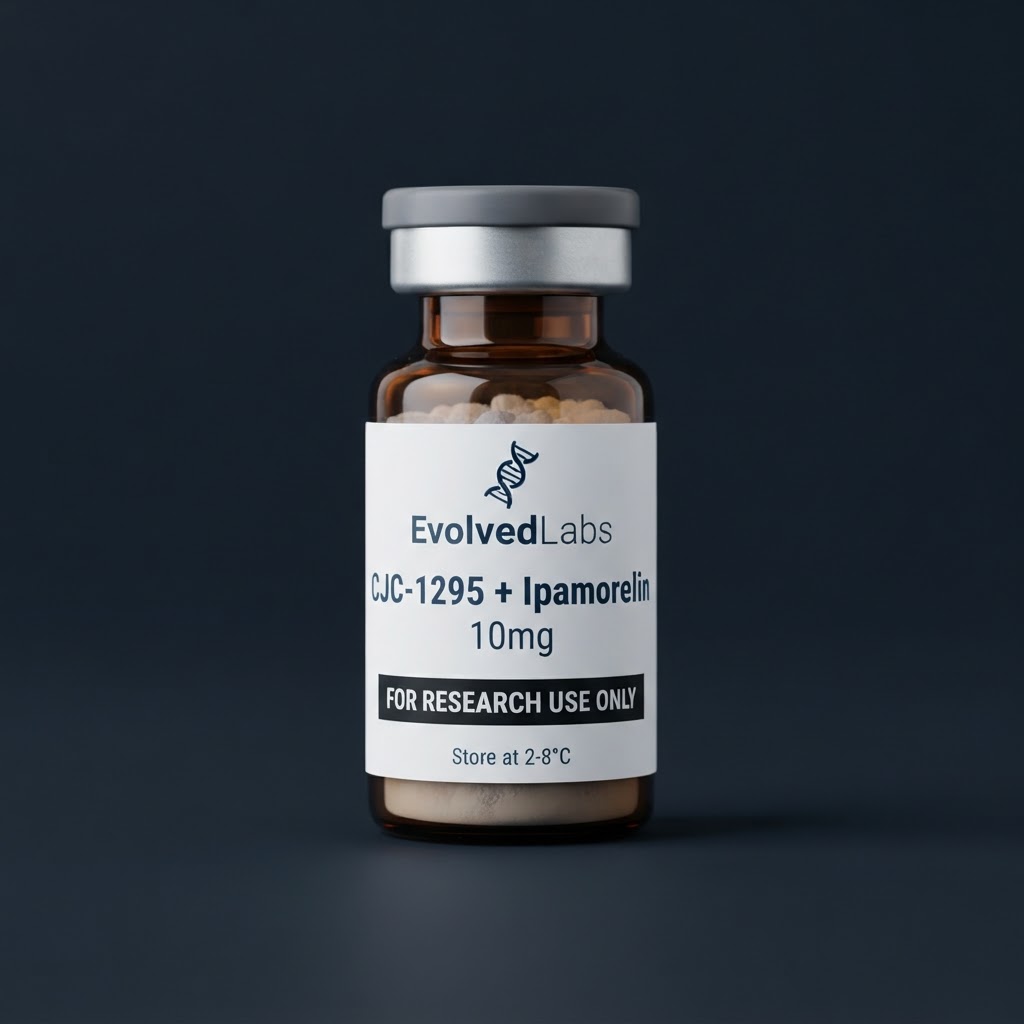
The CJC-1295 + Ipamorelin blend is one of the most widely studied growth hormone (GH) secretagogue combinations in peptide research. By pairing a growth hormone-releasing hormone (GHRH) analog with a ghrelin-receptor (GHS) agonist, the blend is designed to amplify the natural pulsatile release of GH through two complementary pathways. This article examines the pharmacology, synergistic mechanism, and research applications of the CJC-1295 + Ipamorelin combination.
Understanding the Components
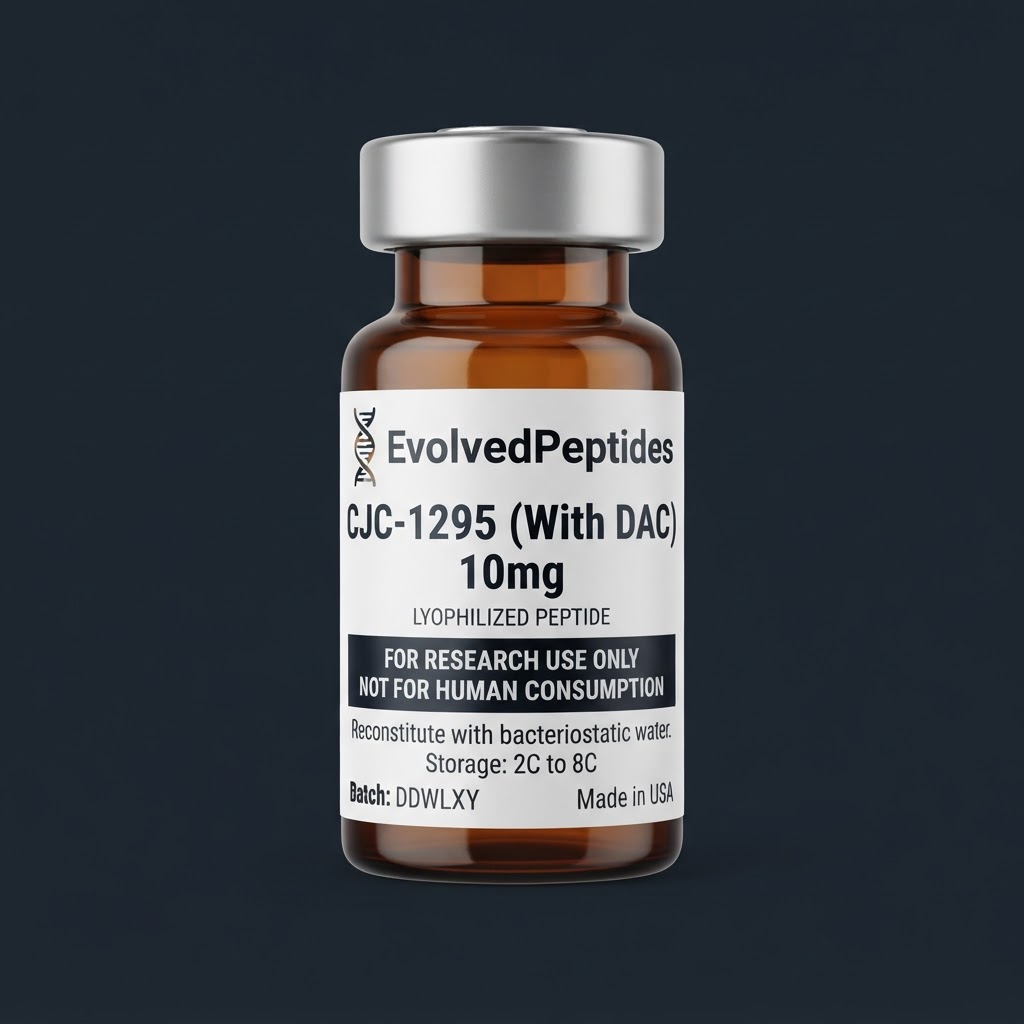
CJC-1295 (Modified GRF 1-29) CJC-1295 is a synthetic analog of growth hormone-releasing hormone (GHRH). The most common research form is Modified GRF (1-29) with DAC (Drug Affinity Complex), which extends the half-life from minutes to approximately 8 days by binding to serum albumin. CJC-1295 acts on the anterior pituitary to stimulate both the amplitude and frequency of endogenous GH pulses, producing sustained elevations in IGF-1.
Key research areas: - Increased GH and IGF-1 secretion - Body composition research (lean mass preservation, fat mass reduction) - Sleep architecture and slow-wave sleep enhancement - Anti-aging and somatopause research
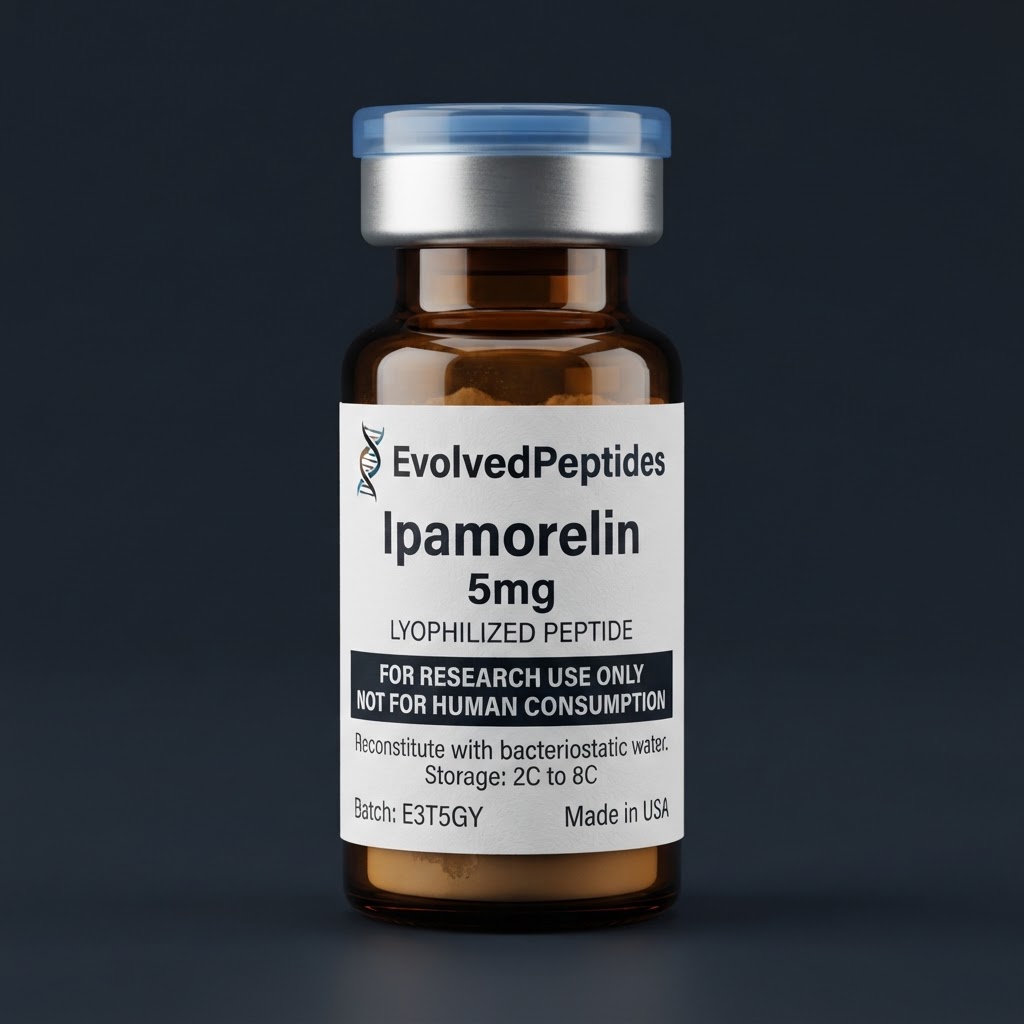
Ipamorelin Ipamorelin is a pentapeptide growth hormone secretagogue (GHS) that acts on the ghrelin receptor (GHS-R1a) in the pituitary and hypothalamus. It is notable among secretagogues for its selectivity — it stimulates GH release with minimal effect on ACTH, cortisol, prolactin, LH, or FSH, making it one of the "cleanest" GH secretagogues in research use.
Key research areas: - Pulsatile GH release stimulation - Minimal cortisol/ACTH elevation (selective profile) - Gastrointestinal motility and mucosal research - Body composition and metabolic markers
The Synergistic Mechanism
The combination of a GHRH analog (CJC-1295) and a GHS (Ipamorelin) is grounded in the physiological regulation of GH secretion, which is controlled by two primary endogenous signals:
1. GHRH (stimulatory) — from the hypothalamus 2. Somatostatin (inhibitory) — from the hypothalamus
Ghrelin (and ghrelin mimetics like Ipamorelin) provides a third regulatory input — it both directly stimulates GH release at the pituitary and suppresses somatostatin tone, effectively "removing the brake" on GH secretion.
Why Combine Them?
Research shows that GHRH and GHS act through distinct but complementary intracellular pathways: - GHRH (CJC-1295) increases cAMP in somatotrophs, amplifying the amplitude of each GH pulse. - GHS (Ipamorelin) increases intracellular calcium via the IP3 pathway, triggering the pulse itself and reducing somatostatin inhibition.
When administered together, the result is a synergistic (greater-than-additive) GH pulse: CJC-1295 raises the ceiling on how much GH a single pulse can release, while Ipamorelin ensures that pulse actually fires and that somatostatin doesn't suppress it.
| Parameter | CJC-1295 Alone | Ipamorelin Alone | CJC-1295 + Ipamorelin | |---|---|---|---| | Primary target | GHRH receptor | Ghrelin (GHS-R1a) receptor | Both | | Effect on pulse amplitude | Increased | Moderate | Markedly increased | | Effect on pulse frequency | Maintained | Increased | Increased | | Somatostatin suppression | Minimal | Yes | Yes | | ACTH/cortisol effect | Minimal | Minimal | Minimal |
Research Applications
1. Growth Hormone Deficiency and Somatopause Research Age-related decline in GH secretion ("somatopause") is associated with reduced IGF-1, loss of lean body mass, increased visceral fat, and sleep disturbance. The CJC-1295 + Ipamorelin blend is studied as a strategy to restore pulsatile GH patterns to youthful profiles without the continuous elevation (and associated side effects) seen with recombinant HGH administration.
2. Body Composition Research By amplifying endogenous GH pulses and increasing IGF-1, the blend is investigated for: - Preservation of lean body mass in catabolic states - Reduction of visceral adiposity - Increased lipolysis and fat oxidation markers
3. Sleep and Recovery Research A significant portion of endogenous GH is released during slow-wave (deep) sleep. CJC-1295 has been studied for its effects on slow-wave sleep duration, and Ipamorelin's pulsatile profile aligns with natural nocturnal GH pulses. Researchers examine the blend's effects on sleep architecture, recovery, and nocturnal hormone profiles.
4. Anti-Aging and Longevity Pathways GH/IGF-1 axis modulation is a central theme in aging research. The blend is studied for its potential to restore youthful hormonal profiles while preserving the natural pulsatile signaling that continuous HGH administration disrupts — potentially avoiding the desensitization and side effects associated with supra-physiological GH exposure.
In Vitro Research Protocol Reference
Research protocols commonly reference subcutaneous administration. The "without DAC" form of CJC-1295 (Mod GRF 1-29) has a short half-life (~30 minutes) and is dosed alongside Ipamorelin 1–3 times daily to mimic natural GH pulses.
| Parameter | Typical Research Reference | |---|---| | CJC-1295 (no DAC) | 300 mcg per dose | | Ipamorelin | 300 mcg per dose | | Frequency | 1–3x daily | | Route | Subcutaneous injection | | Cycle length | 4–8 weeks, followed by 2–4 week break | | Monitoring | IGF-1, fasting glucose, cortisol |
Note: CJC-1295 with DAC has an ~8-day half-life and is typically dosed once weekly; the daily combination protocols generally use the without DAC (Mod GRF 1-29) form to preserve pulsatile release. Reconstitute the 10 mg vial with bacteriostatic water before use.
Safety and Monitoring Considerations
- Pulsatile vs. Continuous Elevation: A primary rationale for the blend is to preserve pulsatile GH release. Continuous elevation (as with exogenous HGH) is associated with different receptor signaling and side-effect profiles. - Monitoring Parameters: Research protocols typically monitor IGF-1, fasting glucose/insulin, cortisol, and thyroid panels. - Water Retention: GH-elevating compounds can affect fluid balance in research models. - Glucose Tolerance: Chronic GH elevation can influence insulin sensitivity.
Quality Standards for Research
Research-grade CJC-1295 + Ipamorelin should be sourced from suppliers providing: - HPLC purity verification (≥98%) - Certificate of Analysis with batch-specific data - Confirmed molecular identity (mass spectrometry) - Proper lyophilized storage and reconstitution documentation
Storage and Handling
Store lyophilized powder at -20°C, protected from light. After reconstitution with bacteriostatic water, refrigerate (2–8°C) and use within the timeframe specified by the supplier. Handle with standard laboratory safety protocols.
*This article is for research and informational purposes only. CJC-1295 and Ipamorelin are sold for in vitro laboratory research purposes only and are not intended for human consumption. Not evaluated by the FDA.*