CJC-1295 + Ipamorelin: The Classic GH Stack Explained
The CJC-1295 and Ipamorelin combination is one of the most popular growth hormone stacks in research. Learn why these two peptides work synergistically.
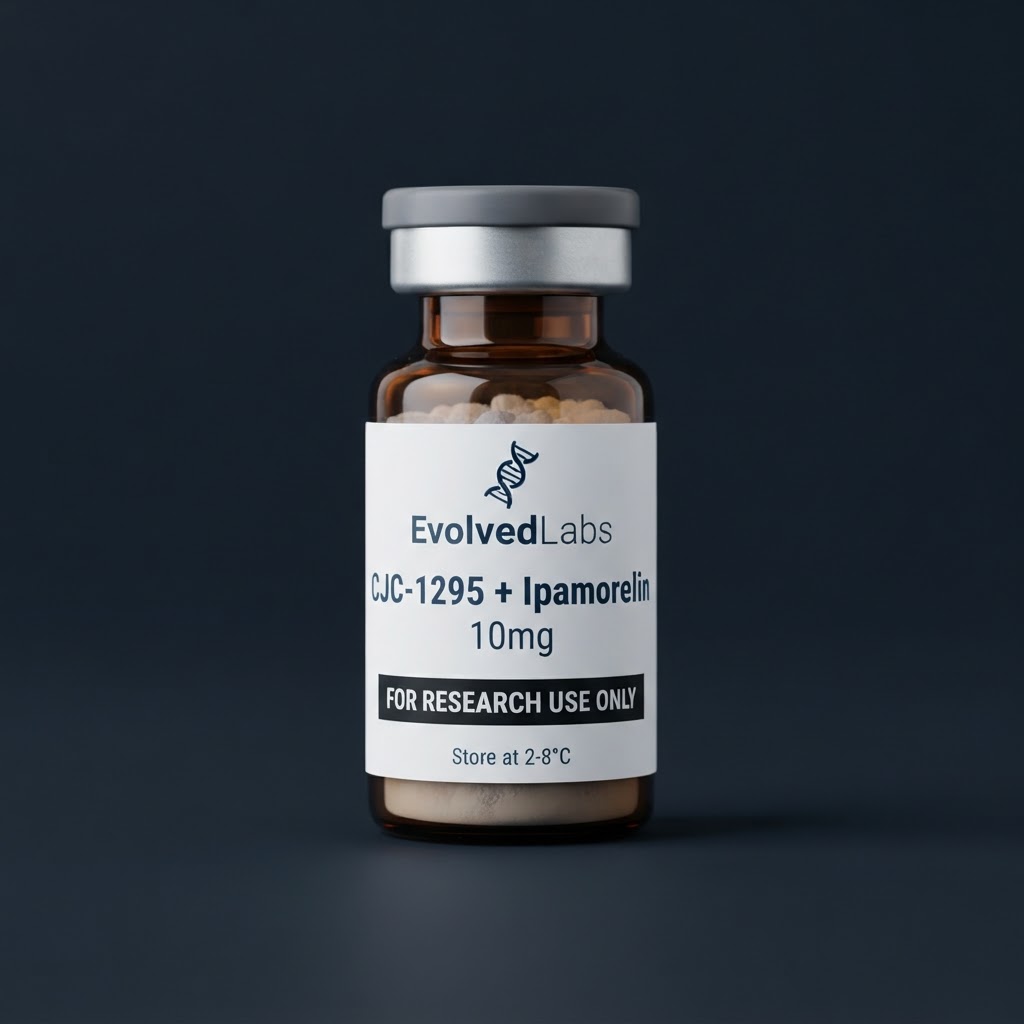
CJC-1295 and Ipamorelin represent two separate classes of growth hormone-related peptides that operate through entirely different but synergistic mechanisms. Their combination has become one of the most frequently studied GH-stimulating stacks in peptide research.
Understanding the GH Axis
Before understanding this stack, it's important to understand how growth hormone is naturally regulated:
1. GHRH (Growth Hormone-Releasing Hormone) from the hypothalamus stimulates GH secretion 2. Ghrelin/GHRPs independently stimulate GH release through a separate receptor (GHS-R1a) 3. Somatostatin from the hypothalamus inhibits GH release 4. GH pulses are primarily nocturnal, peaking during deep sleep
CJC-1295 and Ipamorelin each target a different step in this cascade — which is why their combination produces dramatically greater GH output than either compound alone.
CJC-1295: The GHRH Analogue
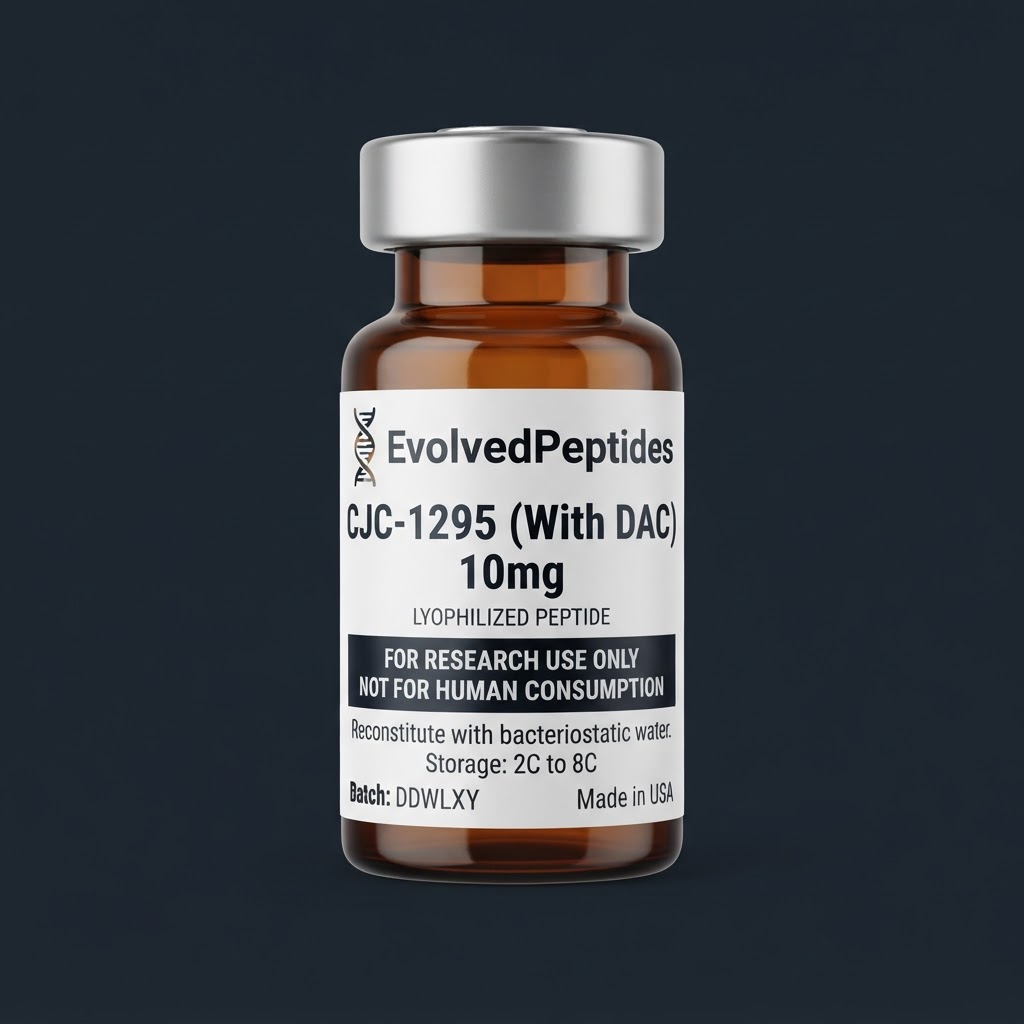
CJC-1295 (also called Modified GRF 1-29 or Mod-GRF without the DAC modification) is a 29-amino acid analogue of GHRH. It was developed to address the extremely short half-life of natural GHRH (~7 minutes) by introducing amino acid substitutions that resist enzymatic degradation.
With DAC (Drug Affinity Complex), CJC-1295's half-life extends to 6–8 days through albumin binding — enabling once or twice weekly dosing. Without DAC, the half-life is ~30 minutes, requiring multiple daily injections but producing more physiological pulsatile patterns.
Ipamorelin: The Clean GHRP
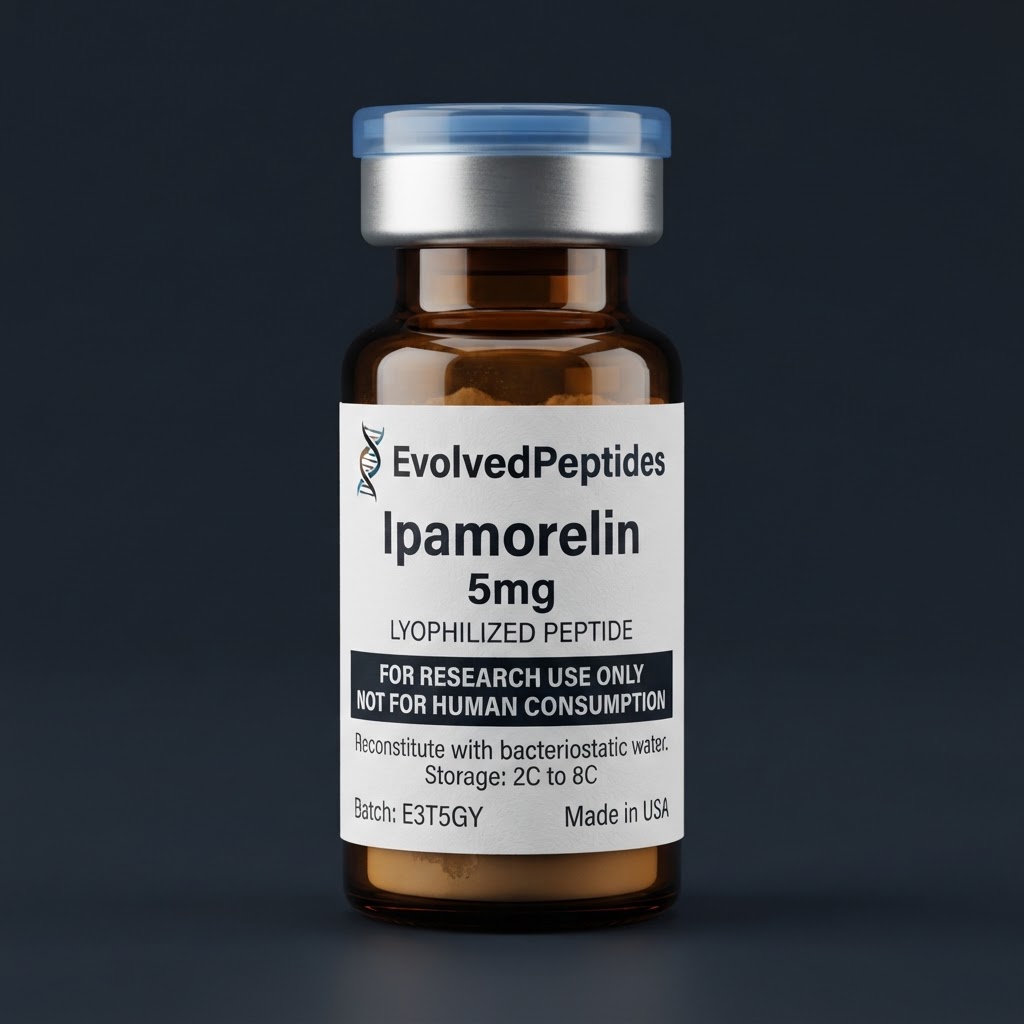
Ipamorelin is a pentapeptide GHRP (Growth Hormone Releasing Peptide) — it acts on the ghrelin receptor (GHS-R1a) in the pituitary and hypothalamus to independently trigger GH secretion.
What distinguishes Ipamorelin from older GHRPs like GHRP-2 and GHRP-6: - No significant cortisol elevation (GHRP-2 increases cortisol ~30–50%) - No significant prolactin elevation - No meaningful ACTH increase - Highly selective GH release — the cleanest GHRP studied - Appetite stimulation is minimal (unlike GHRP-6, which strongly stimulates hunger)
Why the Combination Is Synergistic
The dual mechanism creates a two-signal system that mimics optimal natural GH secretion:
- CJC-1295 primes the pituitary through the GHRH receptor, maximizing the pool of releasable GH - Ipamorelin simultaneously triggers release through the ghrelin receptor - The combined pulse is 3–5x larger than either compound alone in research models - Somatostatin inhibition (which limits natural GH pulses) is bypassed by the dual signal
Research Applications
Body Composition: - Elevated GH drives lipolysis (fat breakdown) preferentially in visceral and subcutaneous depots - IGF-1 elevation supports protein synthesis and lean muscle maintenance - Multiple studies show favorable body composition changes with long-term GH secretagogue protocols
Recovery and Tissue Repair: - GH is a primary anabolic hormone — elevated levels accelerate connective tissue, tendon, and muscle repair - IGF-1 directly stimulates satellite cell activity in muscle - Collagen synthesis is upregulated under elevated GH conditions
Sleep Quality: - 70–80% of GH is secreted during Stage 3/4 (deep) sleep - Timing CJC-1295 + Ipamorelin before bed maximizes the natural nocturnal GH pulse - Many researchers report improved deep sleep as a notable effect
Anti-Aging Research: - GH declines 14% per decade after age 30 (somatopause) - GH secretagogue research targets reversing this decline through natural pituitary stimulation - Improvements in skin elasticity, energy, and lean mass are commonly studied outcomes
Research Protocols
Standard Protocol: - CJC-1295 (with DAC): 1–2mg twice weekly subcutaneous - Ipamorelin: 200–300mcg, 2–3x daily (before meals or before bed)
Pulsatile Protocol (Without DAC): - CJC-1295 (no DAC): 100mcg, 2–3x daily - Ipamorelin: 100–200mcg, same timing - Both injected together before sleep for maximum nocturnal GH pulse
Timing Considerations: - Injections 30–60 minutes post-meal minimize somatostatin suppression from insulin spikes - Pre-sleep timing most commonly studied for optimal GH release - Avoid dosing with high-fat/carb meals immediately before injection
Safety and Side Effects
The combination is generally well-tolerated in research: - Water retention (transient, especially early) - Tingling/numbness in extremities (carpal tunnel-like) - Mild headaches in initial use - Injection site irritation - No significant cortisol or prolactin changes (unlike older GHRPs)
*This article is for research and informational purposes only.*