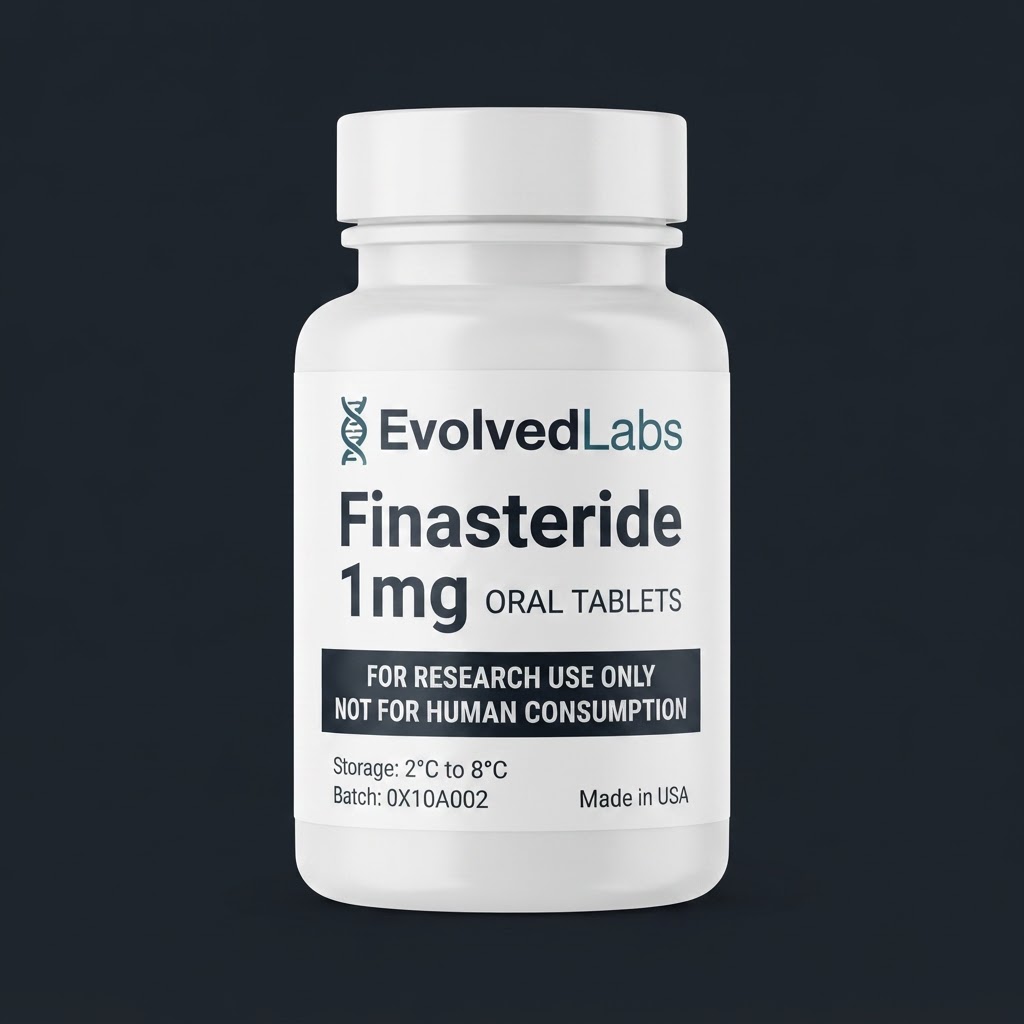
Finasteride: Selective 5α-Reductase Type II Inhibition
Finasteride is the most studied 5α-reductase inhibitor for androgenic alopecia and prostate research. Explore its selective Type II inhibition, DHT reduction, and clinical research profile.
Finasteride is a selective 5α-reductase Type II inhibitor that reduces DHT levels by approximately 70%. It is one of the most extensively studied compounds in androgenic alopecia and prostate research, with decades of clinical data.
Mechanism of Action
Finasteride selectively inhibits the Type II isoform of 5α-reductase:
1. Selective Enzyme Binding: Binds to 5α-reductase Type II (found primarily in prostate, hair follicles, genital skin) 2. DHT Conversion Blockade: Prevents testosterone conversion to DHT 3. Circulating DHT Reduction: Reduces serum DHT by approximately 70% 4. Testosterone Preservation: Does not significantly affect testosterone levels 5. Tissue-Specific Effect: Primarily affects Type II-expressing tissues
Finasteride vs. Dutasteride
| Property | Finasteride | Dutasteride | |---|---|---| | Type I inhibition | No | Yes | | Type II inhibition | Yes | Yes | | DHT suppression | ~70% | ~90%+ | | Half-life | ~6 hours | ~5 weeks | | Research context | Standard DHT reduction | Maximum DHT suppression |
Finasteride's selectivity for Type II makes it suitable for research targeting prostate and hair follicle tissues specifically.
Pharmacokinetics
- Route: Oral - Half-life: ~6 hours - Metabolism: Hepatic via CYP3A4 - Excretion: Primarily fecal and renal - Steady State: Achieved relatively quickly
Research Applications
1. Androgenetic Alopecia Research Finasteride is one of the most researched compounds for hair loss: - Male pattern baldness treatment models - Hair follicle miniaturization reversal - Hair count, weight, and diameter measurements - Long-term hair maintenance research
2. Prostate Research - Benign prostatic hyperplasia (BPH) treatment models - Prostate volume reduction - Urinary symptom improvement research - Prostate cancer prevention studies
3. Hormone Research - DHT/testosterone ratio studies - Androgen pathway modulation - Comparison with other 5α-reductase inhibitors
Standard Research Protocols
Oral Finasteride: - Dose: 1–5mg daily - Frequency: Once daily - Route: Oral - Duration: 6–12 months for hair research; varies for prostate research - Monitoring: DHT levels, testosterone, PSA, liver function, lipid panel
Dose Considerations in Research
- 1mg: Standard research dose for alopecia studies - 5mg: Higher dose used in prostate research models
The 1mg tablet provides the standard research dose for androgenic alopecia studies.
Safety Considerations in Research
Sexual Function: The most studied side effects involve: - Reduced libido (typically reversible) - Erectile dysfunction (typically reversible) - Reduced ejaculate volume Post-finasteride syndrome research is an active area of study.
Prostate Markers: Finasteride reduces PSA levels by approximately 50%. Research protocols account for this when interpreting PSA data.
Quality Standards for Research
Research-grade finasteride should be sourced from suppliers providing: - HPLC purity verification (≥98%) - Certificate of Analysis with batch-specific data - Accurate dosing per tablet (1mg) - Pharmaceutical-grade tablet manufacturing - Proper storage and handling documentation
Storage and Handling
Store at controlled room temperature (20–25°C), protected from light and moisture. Handle with standard laboratory safety protocols.
*This article is for research and informational purposes only. Finasteride is sold for laboratory research purposes only and is not intended for human consumption. Not evaluated by the FDA.*