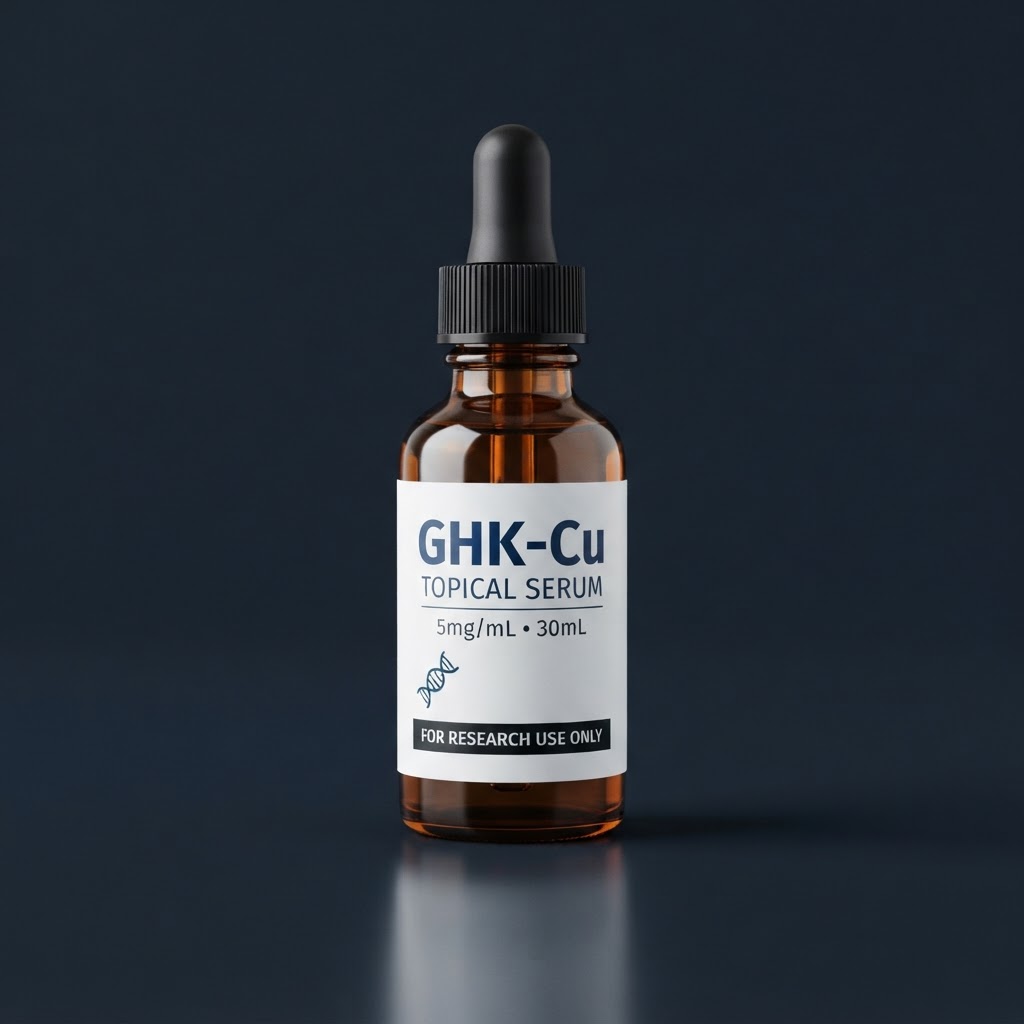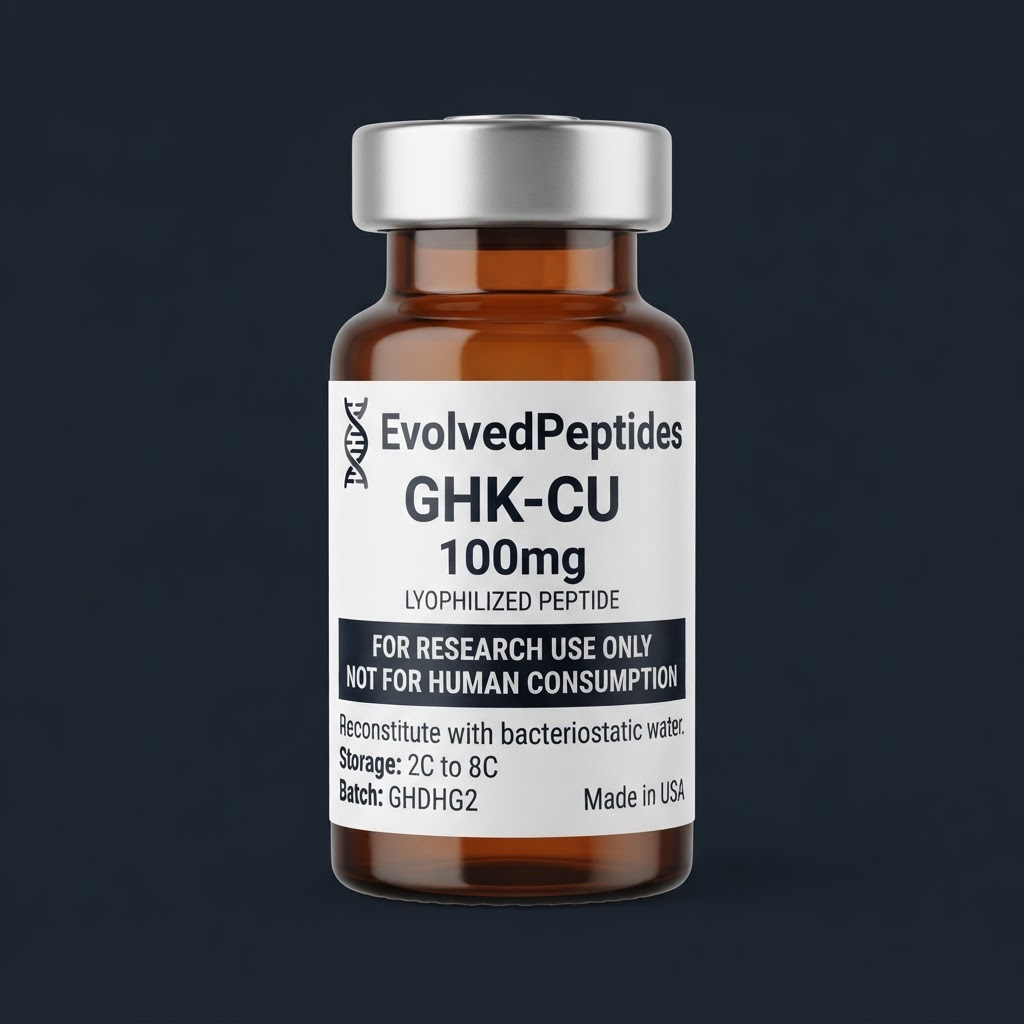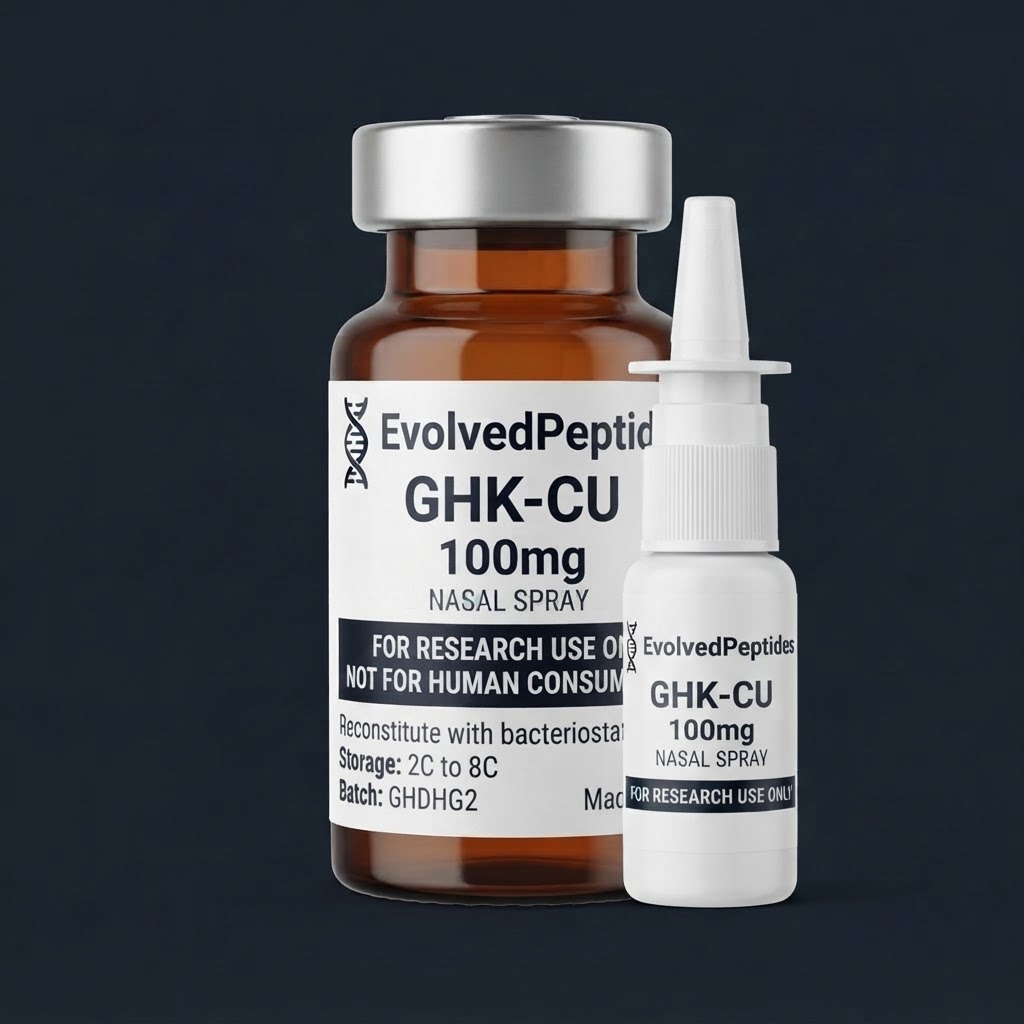
GHK-Cu Nasal Spray: Intranasal Copper Peptide Research Overview
GHK-Cu nasal spray delivers the copper-binding tripeptide studied for skin regeneration and collagen synthesis research. Explore intranasal delivery science and standard research protocols for this copper peptide.
GHK-Cu is a naturally occurring tripeptide (Gly-His-Lys) that binds copper(II) with high affinity. First isolated from human plasma in the 1970s, GHK-Cu has become one of the most studied copper peptides in dermatological and wound-healing research, with a literature spanning tissue remodeling, collagen synthesis, and inflammatory pathway modulation. The nasal spray format offers researchers an alternative delivery route to the traditional subcutaneous and topical protocols.
What Is GHK-Cu?
- Tripeptide structure: Glycine-Histidine-Lysine, a fragment generated during protein breakdown in the body - Copper carrier: GHK transports copper ions into cells — copper being a required cofactor for lysyl oxidase, the enzyme that cross-links collagen and elastin - Age correlation: Blood levels of GHK decline with age — roughly from ~200 ng/mL at age 20 to ~80 ng/mL by age 60 — an observation central to anti-aging research interest - Gene expression effects: Microarray studies report GHK-Cu modulates expression of numerous genes involved in tissue remodeling, including collagen, matrix metalloproteinases, and inflammatory signaling
Research Findings
GHK-Cu research covers several tissue-repair contexts:
1. Collagen and elastin: Cell-culture studies show increased collagen I and III synthesis and lysyl oxidase activity 2. Wound healing models: GHK-Cu accelerated wound contraction and improved repair quality metrics in rodent studies 3. Fibroblast activity: Stimulates fibroblast proliferation and secretion of extracellular matrix components 4. Anti-inflammatory markers: Reduces pro-inflammatory cytokine output in inflamed tissue models 5. Hair follicle research: GHK-Cu is studied alongside other copper peptides in follicle cycle and growth-factor research
Intranasal Delivery Considerations
The nasal route changes the research picture relative to injections:
- Systemic access without needles: Absorption through the nasal mucosa into circulation, bypassing GI degradation - No nose-to-brain requirement: Unlike nootropic peptides, GHK-Cu's research targets are peripheral tissues (skin, connective tissue) - Variable bioavailability: Intranasal peptide absorption is dose-formulation dependent - Practical research use: Enables daily-administration protocols without injection logistics
Research Protocol Reference
| Parameter | Typical Research Reference | |---|---| | Dose | 1-2 mg (2-4 sprays) per administration | | Frequency | Once daily | | Route | Intranasal | | Cycle | 4-8 week courses in skin-aging protocols | | Monitoring | Collagen markers, wound-healing metrics, skin imaging |
Research references cite 1-2 mg daily GHK-Cu for skin and tissue-remodeling protocols, with 4-8 week courses typical.
GHK-Cu Nasal Spray vs. Injection vs. Topical
| Property | Nasal spray | Subcutaneous | Topical | |---|---|---|---| | Systemic exposure | Moderate | High | Local only | | Convenience | High | Low | High | | Best research context | Systemic tissue-remodeling studies | Maximum-exposure protocols | Dermal-only studies | | Dosing | 1-2 mg daily | 1-2 mg daily | mg/cm² applied |
Handling and Quality
GHK-Cu is a copper coordination complex — color (blue) and stability depend on the copper binding. Research-grade GHK-Cu nasal spray should be stored per label, protected from heat, with verified: - HPLC purity verification (≥98%) - Certificate of Analysis with copper-complex confirmation - Verified peptide content per spray
*This article is for research and informational purposes only. GHK-Cu is sold for laboratory research purposes only and is not intended for human consumption. Not evaluated by the FDA.*