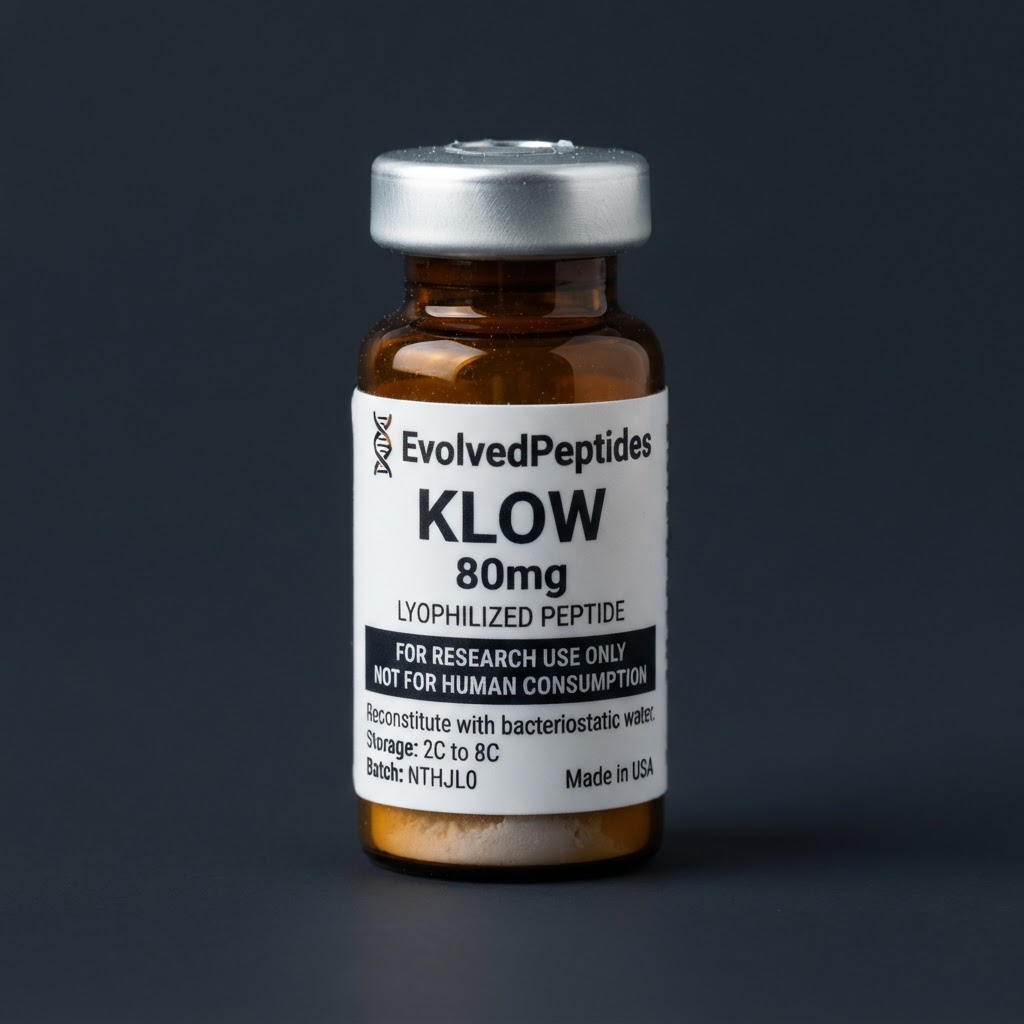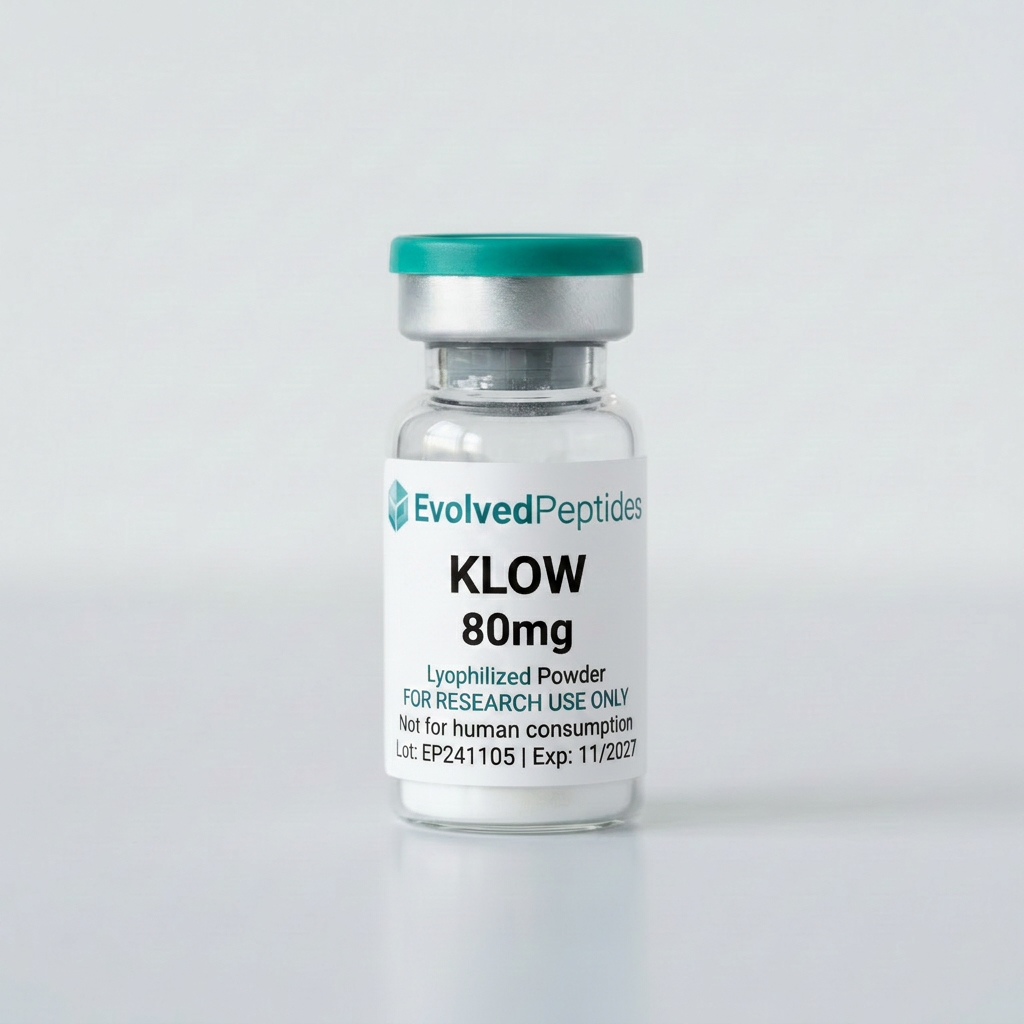
KLOW 80mg: The Synergistic Peptide Blend for Recovery & Skin Research
KLOW 80mg combines GHK-Cu, BPC-157, TB-500, and KPV into a single high-dose vial — a synergistic protocol for advanced recovery, skin regeneration, and anti-inflammatory research.
KLOW 80mg is a precision-formulated research peptide blend containing four synergistic compounds: GHK-Cu (copper peptide), BPC-157 (Body Protection Compound), TB-500 (Thymosin Beta-4 analogue), and KPV — a tripeptide derived from alpha-MSH. At 80mg total per vial, it represents one of the highest-dose combination peptide products studied in regenerative research.
Why Combination Research Peptides?
Tissue repair and skin rejuvenation are not single-pathway events. Recovery from injury, inflammation, or aging involves cascading failures across multiple biological systems simultaneously: - Loss of vascularization (blood supply to healing tissue) - Impaired cell migration (cells can't reach repair sites) - Declining collagen architecture - Chronic low-grade inflammation - Aging gene expression programs
No single peptide addresses all of these — but KLOW's four-compound formulation covers virtually the entire regenerative landscape.
Component 1: GHK-Cu (Copper Peptide)
GHK-Cu is a naturally occurring tripeptide-copper complex that declines dramatically with age (from ~200 ng/mL at 20 to ~80 ng/mL at 60). It is one of the most extensively studied dermatological research compounds:
- Influences expression of over 4,000 human genes - Upregulates collagen I, III, and VII synthesis - Stimulates elastin and decorin production - Activates MMP enzymes to remove damaged collagen before depositing organized new collagen - Potent antioxidant activity via superoxide dismutase induction - Promotes angiogenesis at wound sites
GHK-Cu provides the foundational "architectural reset" of the extracellular matrix that sets the stage for the other components to work.
Component 2: BPC-157 (Body Protection Compound)
BPC-157 is a 15-amino acid sequence derived from gastric protective proteins. Its most critical contributions to the KLOW protocol:
- Angiogenesis via VEGF upregulation — new blood vessel formation is the rate-limiting step in tissue repair; BPC-157 directly accelerates this - Fibroblast activation — collagen-producing cells are recruited and activated at repair sites - eNOS/nitric oxide pathway — improves local blood flow and reduces inflammation - Gut-brain axis — systemic anti-inflammatory effects through neural pathways - Tendon and ligament repair — one of the most studied peptides for connective tissue recovery
In the KLOW context, BPC-157 ensures adequate blood supply and cellular infrastructure for the repair environment GHK-Cu initiates.
Component 3: TB-500 (Thymosin Beta-4 Analogue)
TB-500 is derived from the actin-binding domain of Thymosin Beta-4 — one of the body's primary wound-healing signals:
- Actin sequestration — frees cells to migrate rapidly to injury sites (critical for aging skin where cell migration slows significantly) - Scar prevention — promotes organized collagen deposition rather than disorganized fibrosis - Systemic distribution — distributes throughout the body via subcutaneous delivery, supporting healing in multiple areas simultaneously - NF-kB anti-inflammatory pathway — broad cytokine suppression - Epithelialization — promotes new skin cell growth over wounds and repair areas
TB-500 provides the cellular logistics system that moves repair cells where they're needed — complementing GHK-Cu's structural programming and BPC-157's vascular foundation.
Component 4: KPV (Lys-Pro-Val)
KPV is a tripeptide derived from the C-terminus of alpha-melanocyte-stimulating hormone (α-MSH). It is the most targeted anti-inflammatory component in the KLOW blend:
- MC1R and MC3R agonism — activates melanocortin receptors known for their anti-inflammatory regulatory role - Gut barrier protection — shown in research to reduce intestinal permeability and inflammation in colitis models - Skin anti-inflammation — reduces local cytokine release, relevant to post-procedure recovery and inflammatory skin conditions - Synergy with BPC-157 — both target gut and tissue inflammation through complementary mechanisms - Effective even at very low concentrations — highly potent per microgram
KPV adds a targeted, receptor-mediated anti-inflammatory signal that works upstream of the cytokine storm — preventing the inflammatory cascade before it inhibits healing.
How the Four Components Work Together
| Phase of Healing | Primary Compound | Mechanism | |---|---|---| | Gene expression reset | GHK-Cu | >4,000 gene modulations | | Vascular preparation | BPC-157 | VEGF, eNOS, angiogenesis | | Cell migration | TB-500 | Actin modulation | | Inflammation control | KPV + BPC-157 + GHK-Cu | Multiple receptor pathways | | Collagen deposition | GHK-Cu + BPC-157 | Fibroblast activation | | Scar prevention | TB-500 | Organized matrix remodeling |
The four-compound combination creates a self-reinforcing healing environment — each peptide amplifies the effectiveness of the others.
Research Applications
Advanced Skin Recovery: For post-procedure skin research (laser resurfacing, microneedling, chemical peels), KLOW addresses all three phases of healing — inflammation, proliferation, and remodeling — simultaneously. The KPV component specifically targets the inflammatory phase that, if prolonged, leads to scarring.
Connective Tissue and Joint Recovery: BPC-157 and TB-500's well-documented tendon and ligament healing properties make KLOW relevant for musculoskeletal recovery research — particularly for injuries involving multiple tissue types simultaneously.
Gut Health Research: BPC-157 and KPV both have significant gastrointestinal research data. KPV specifically is one of the few peptides studied for inflammatory bowel conditions via its MC1R activity on intestinal immune cells.
Systemic Anti-Aging Protocols: For comprehensive anti-aging research, KLOW provides the full regenerative framework — gene-level collagen programming (GHK-Cu), vascular maintenance (BPC-157), cell renewal support (TB-500), and inflammatory control (KPV).
Research Protocol
- Reconstitution: Use bacteriostatic water; inject slowly along vial wall; swirl gently - Dose: Full 80mg vial typically divided across a research cycle - Frequency: 2–3x per week during loading phase, then weekly maintenance - Administration: Subcutaneous injection - Cycle: 8–12 weeks on, 4-week break - Storage: Lyophilized powder at -20°C; reconstituted at 4°C for up to 30 days
Comparison to Individual-Compound Protocols
Researching KLOW vs. buying each component separately: - Eliminates the need to reconstitute and time 4 separate vials - Pre-optimized ratios designed for synergistic activity - Single injection delivers all four signals simultaneously - Higher GHK-Cu concentration relative to the other components reflects its role as the primary structural agent
*This article is for research and informational purposes only. KLOW 80mg is sold for laboratory research purposes only and is not intended for human consumption.*