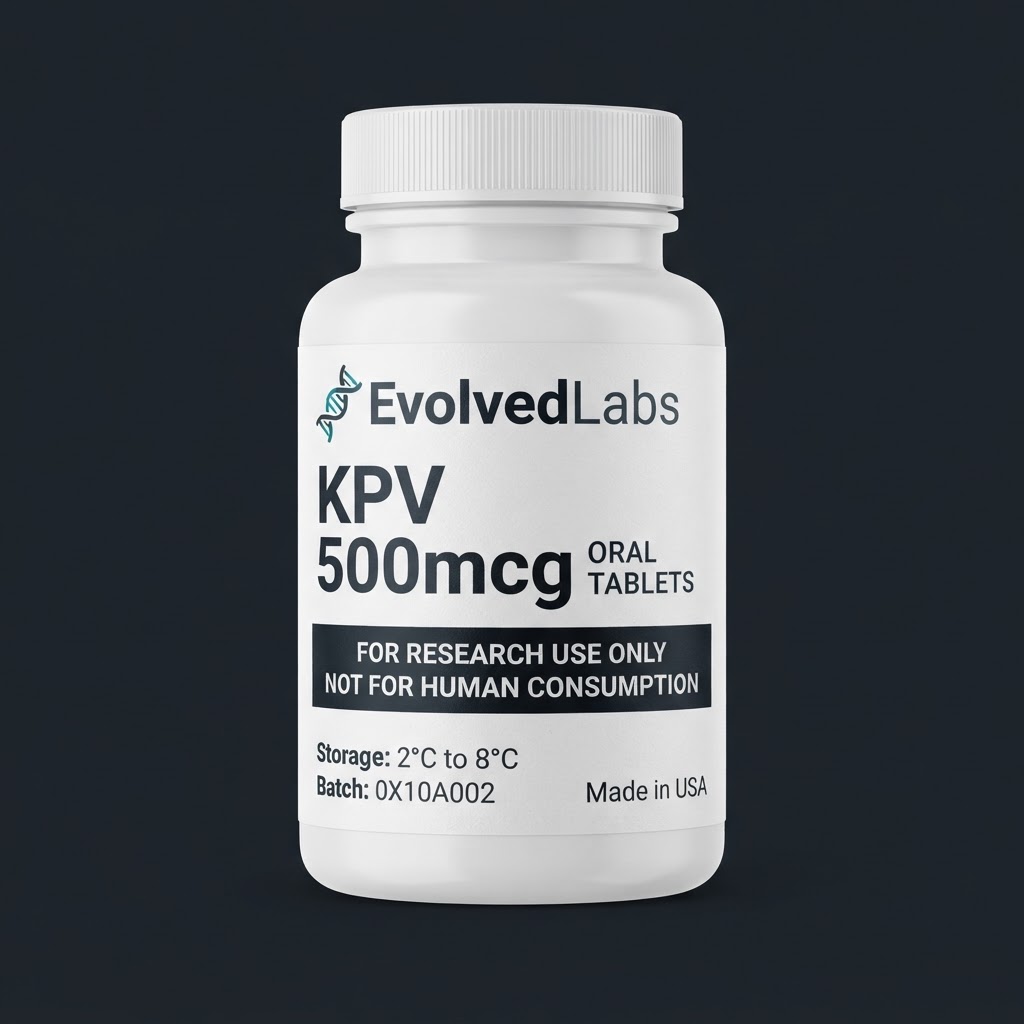
KPV Peptide: Anti-Inflammatory and Gut Healing Research
KPV is a tripeptide fragment of alpha-melanocyte-stimulating hormone with potent anti-inflammatory properties. Explore its role in gut healing, inflammation, and immune regulation research.
KPV is a tripeptide (Lysine-Proline-Valine) representing the C-terminal fragment of alpha-melanocyte-stimulating hormone (α-MSH). Despite its small size, KPV retains potent anti-inflammatory activity and is researched for its effects on gut healing, inflammatory conditions, and immune regulation. The oral tablet formulation provides convenient administration for gastrointestinal-focused research.
Understanding α-MSH and KPV
Alpha-melanocyte-stimulating hormone (α-MSH) is a 13-amino acid peptide with multiple biological activities, including: - Pigmentation (melanocortin receptor activation) - Anti-inflammatory effects - Anti-pyretic (fever-reducing) effects - Immune regulation
Research identified that the anti-inflammatory activity of α-MSH is primarily mediated by its C-terminal tripeptide — KPV (Lys-Pro-Val). This fragment retains the anti-inflammatory properties without the pigmentation effects, making it a targeted anti-inflammatory research compound.
Mechanism of Action
KPV's anti-inflammatory effects involve multiple pathways:
1. MC1R Activation: KPV can activate melanocortin-1 receptor on immune cells, producing anti-inflammatory signaling 2. NF-κB Inhibition: Suppresses the NF-κB inflammatory pathway — a master regulator of inflammation 3. Cytokine Modulation: Reduces pro-inflammatory cytokines (TNF-α, IL-1, IL-6) 4. Immune Cell Regulation: Modulates macrophage and T-cell inflammatory responses 5. Gut-Specific Effects: When administered orally, KPV may provide direct anti-inflammatory effects on intestinal mucosa
Pharmacokinetics
- Route: Oral (tablets) or subcutaneous injection - Oral bioavailability: KPV is a small tripeptide — more stable than larger peptides in the GI tract - Half-life: Relatively short (peptide) - Distribution: Systemic, with potential local GI effects from oral administration - Metabolism: Proteolytic degradation
Research Applications
1. Inflammatory Bowel Disease (IBD) Research KPV is extensively studied for gut inflammation: - Colitis research models - Intestinal mucosal healing - Inflammatory cytokine reduction in gut tissue - Research in Crohn's disease and ulcerative colitis models
2. General Anti-Inflammatory Research - Systemic inflammation models - Cytokine storm research - Autoimmune condition research - Inflammatory marker modulation
3. Gut Barrier Research - Intestinal permeability (leaky gut) models - Mucosal barrier integrity - Gut microbiome interactions - Epithelial cell protection
4. Skin and Wound Healing - Anti-inflammatory effects in skin tissue - Wound healing research - Dermatological inflammatory conditions
5. Immune Regulation Research - T-cell modulation - Macrophage phenotype regulation - Immune homeostasis research
KPV vs. BPC 157 for Gut Research
| Property | KPV | BPC 157 | |---|---|---| | Mechanism | MC1R/NF-κB anti-inflammatory | Multiple healing pathways | | Primary effect | Anti-inflammatory | Tissue repair/healing | | Gut specificity | High (oral administration) | High (gastric origin) | | Route | Oral or injection | Oral or injection | | Research overlap | Inflammatory gut conditions | GI healing, musculoskeletal |
KPV and BPC 157 are sometimes researched together for complementary anti-inflammatory and tissue-repair effects.
Standard Research Protocols
Oral KPV: - Dose: 250-500mcg per tablet - Frequency: Once or twice daily - Route: Oral - Duration: 2-4 week research cycles - Monitoring: Inflammatory markers (CRP, cytokines), gut integrity markers, symptom assessment
Safety Profile
KPV has demonstrated a favorable safety profile in research: - Small peptide with low immunogenicity risk - Generally well-tolerated in research settings - No significant reported adverse effects at research doses - Oral route eliminates injection-related risks
Quality Standards for Research
Research-grade KPV should be sourced from suppliers providing: - HPLC purity verification (≥98%) - Certificate of Analysis with batch-specific data - Accurate dosing per tablet (500mcg) - Pharmaceutical-grade tablet manufacturing - Proper storage and handling documentation
Storage and Handling
Store at controlled room temperature (20-25°C), protected from light and moisture. Handle with standard laboratory safety protocols.
*This article is for research and informational purposes only. KPV is sold for laboratory research purposes only and is not intended for human consumption. Not evaluated by the FDA.*