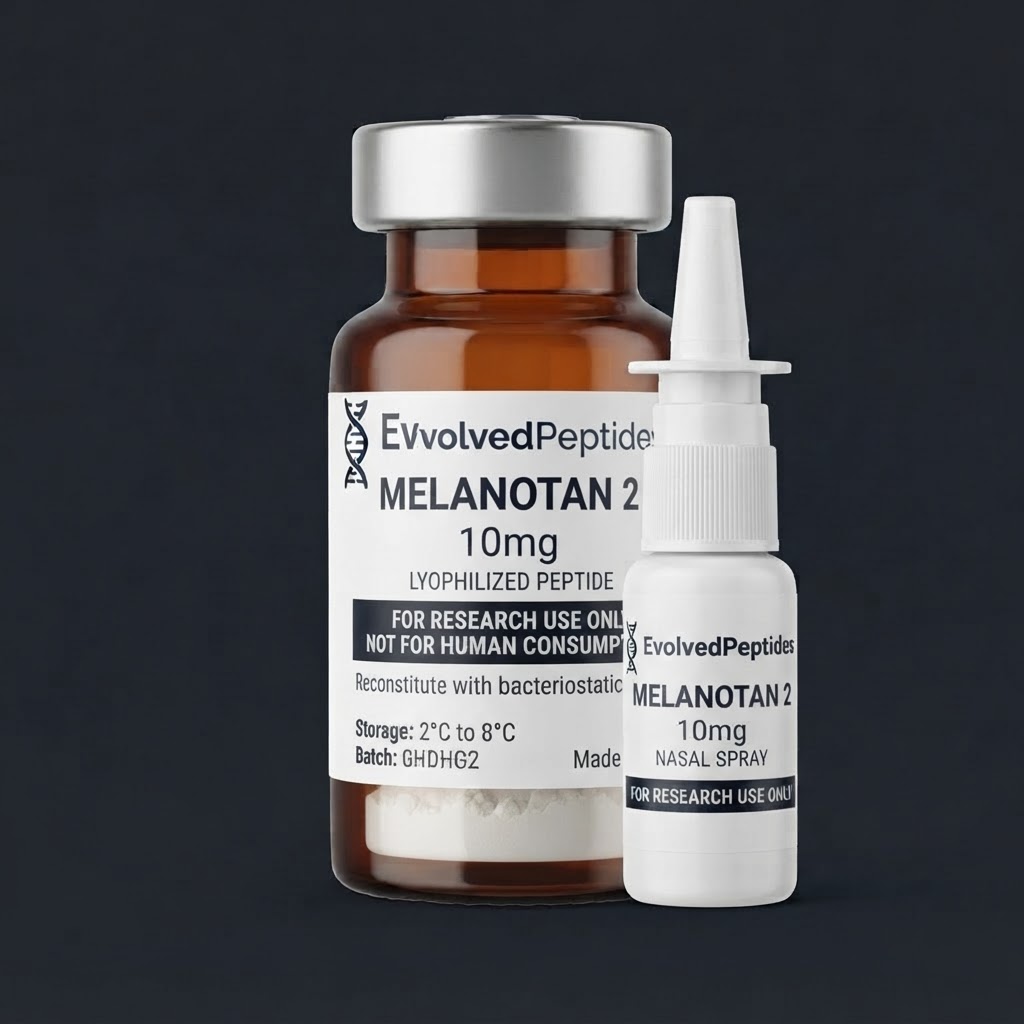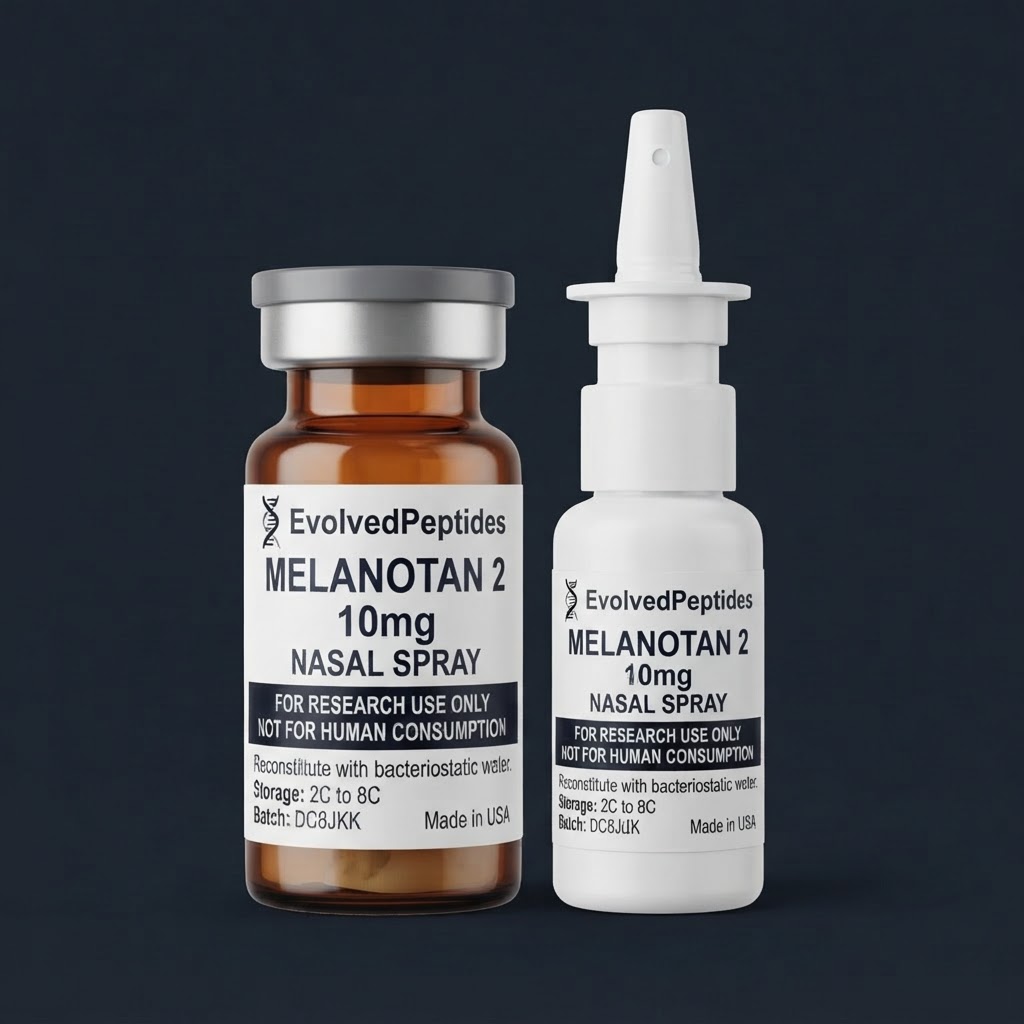
Melanotan 2 Nasal Spray: Intranasal Melanocortin Research Overview
Melanotan 2 nasal spray delivers the cyclic melanocortin peptide studied for melanogenesis research by a needle-free route. Explore intranasal pharmacokinetics, tanning research, and standard research protocols.
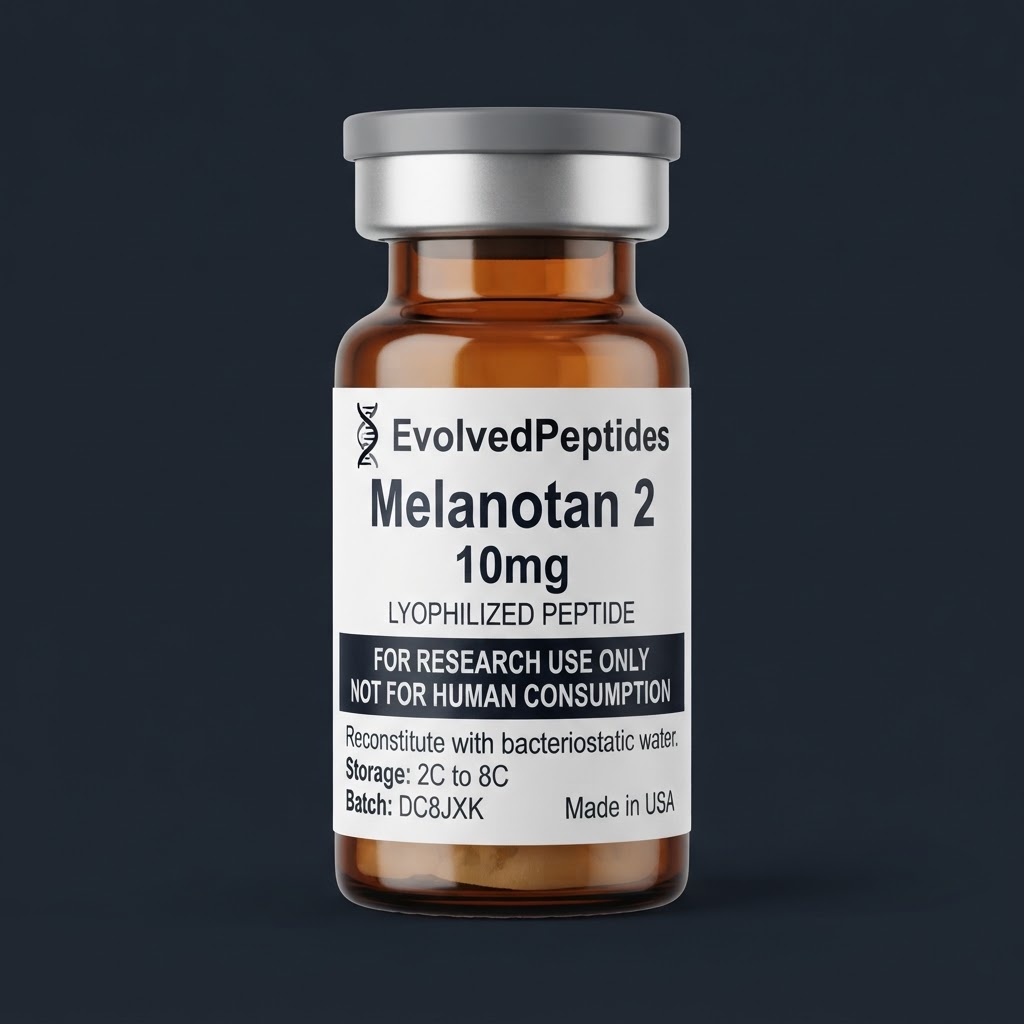
Melanotan II (MT-2) is a synthetic cyclic heptapeptide analog of alpha-melanocyte-stimulating hormone (alpha-MSH), developed at the University of Arizona in the 1980s as part of a research program on photoprotection and melanogenesis. In research models, MT-2 is studied for its melanogenic activity — stimulating melanin production in melanocytes — and its broader melanocortin receptor pharmacology. The nasal spray format offers researchers a needle-free administration route for melanogenesis protocols.
Structure and Melanocortin Pharmacology
MT-2 (Ac-Nle-cyclo[Asp-His-D-Phe-Arg-Trp-Lys]-NH2) is notable for:
- Cyclic design: The ring structure dramatically improves potency and metabolic stability versus native alpha-MSH - Broad receptor activity: MT-2 activates melanocortin receptors MC1R (melanogenesis), MC3R and MC4R (central effects on appetite and arousal), and MC5R - MC1R potency: Its tanning-research profile stems from strong MC1R agonism — the receptor that drives melanin production in skin melanocytes
Research Findings
- Melanogenesis: MT-2 administration in animal and early clinical research increased melanin production and skin darkening without sun exposure, and potentiated tanning response to UV exposure - Photoprotection: The original research program investigated melanocortin-induced melanin as a photoprotective strategy - Appetite effects: MC4R activation produces appetite suppression in research models — an observation that connects MT-2 to later weight-management peptide research - Central melanocortin effects: Because MC3R/MC4R sit in the CNS, MT-2 research spans behavioral endpoints beyond melanogenesis
Intranasal Delivery Considerations
- Needle-free protocols: Enables daily loading-phase administration without injection logistics - Absorption variability: Intranasal bioavailability for cyclic peptides is lower and more variable than subcutaneous injection — research dosing typically compensates - Onset: Systemic absorption begins within minutes via the nasal mucosa - Stability: Intranasal delivery avoids GI and first-pass degradation
Research Protocol Reference
| Parameter | Typical Research Reference | |---|---| | Dose | 0.5-1 mg per administration (intranasal) | | Frequency | Daily (loading phase), then every 2-3 days (maintenance) | | Route | Intranasal | | Escalation | Gradual dose escalation referenced in published protocols | | Monitoring | Melanin indexes, pigmentation imaging, blood pressure |
Research protocols commonly describe a gradual loading phase with daily administration followed by maintenance every 2-3 days, mirroring the published clinical research on the compound.
MT-2 vs. MT-1 (Melanotan I)
| Property | Melanotan II | Melanotan I (afamelanotide) | |---|---|---| | Receptor selectivity | MC1R, MC3R, MC4R (broad) | MC1R-selective | | Melanogenic potency | Higher | Moderate | | Central effects | Present in research | Minimal | | Research depth | Extensive preclinical | Extensive clinical (photoprotection trials) |
Researchers studying pure melanogenesis typically note MT-1's cleaner MC1R selectivity, while MT-2 research covers the full melanocortin receptor range.
Handling and Quality
Research-grade Melanotan 2 nasal spray should be stored per label, refrigerated after opening and protected from light, with verified: - HPLC purity verification (≥98%) - Certificate of Analysis with sequence confirmation - Verified peptide content per spray
*This article is for research and informational purposes only. Melanotan II is sold for laboratory research purposes only and is not intended for human consumption. Not evaluated by the FDA.*