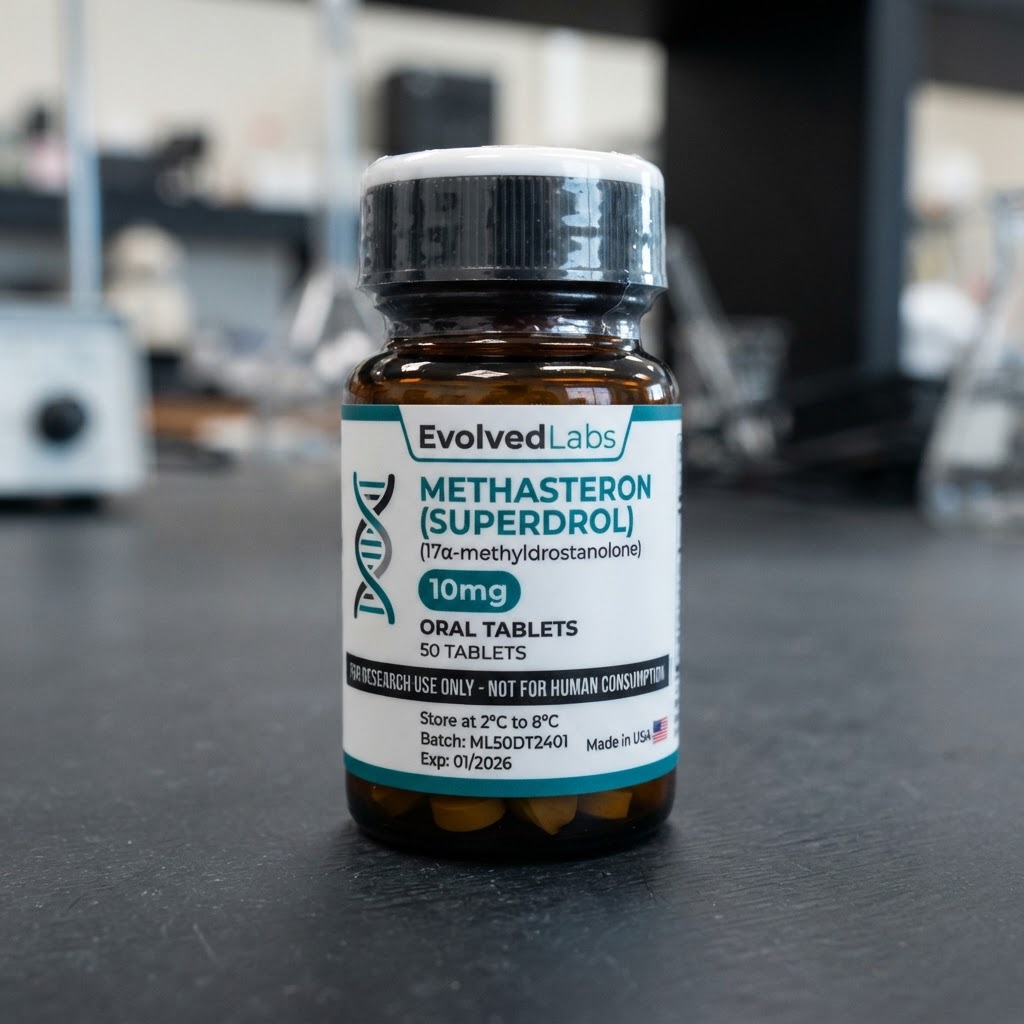
Methasteron (Superdrol): Potent Oral Anabolic Steroid Research
Methasteron, commonly known as Superdrol, is one of the most potent oral anabolic-androgenic steroids ever developed. Explore its mechanisms, research applications, and significant safety considerations.
Methasteron (commonly known as Superdrol or methyldrostanolone) is a synthetic oral anabolic-androgenic steroid (AAS) derived from dihydrotestosterone (DHT). It is widely regarded as one of the most potent oral anabolic compounds ever developed, with an exceptionally high anabolic-to-androgenic ratio that produces dramatic effects on lean body mass and strength in research settings.
Chemical Structure and DHT Derivation
Methasteron is a 17-alpha-alkylated derivative of drostanolone (Masteron). The key structural modifications include:
- 17-alpha alkylation: Allows oral bioavailability by resisting hepatic first-pass metabolism - Methylation at carbon 2: Enhances anabolic potency significantly - DHT base structure: Cannot be aromatized (converted to estrogen), eliminating estrogenic side effects
These modifications produce a compound with an exceptionally high anabolic-to-androgenic ratio — making it one of the most anabolic-selective oral AAS in research literature.
Pharmacokinetics
- Route: Oral (tablet) - Half-life: Approximately 8–10 hours - Bioavailability: High due to 17-alpha alkylation - Metabolism: Primarily hepatic - Duration of action: Requires 2x daily dosing in research protocols due to moderate half-life
Mechanism of Action
Methasteron acts through the androgen receptor (AR), producing effects via the same genomic pathway as endogenous androgens:
1. AR binding: Methasteron binds cytosolic androgen receptors in target tissues 2. Nuclear translocation: The hormone-receptor complex translocates to the nucleus 3. Gene transcription modulation: Alters expression of androgen-responsive genes 4. Protein synthesis upregulation: Significantly increased ribosomal protein synthesis 5. Nitrogen retention: Enhanced positive nitrogen balance (anabolic marker) 6. Glycogen supercompensation: Enhanced glycogen storage in skeletal muscle
The DHT-derived structure means methasteron cannot be aromatized — eliminating estrogenic side effects like gynecomastia and water retention. However, it is not a substrate for 5-alpha-reductase (already being a DHT derivative).
Research Applications
1. Lean Body Mass Research
Methasteron is primarily researched for its dramatic effects on lean body mass: - Rapid increases in skeletal muscle mass in research models - Significant strength improvements - Enhanced nitrogen retention and protein synthesis - Particularly studied in hypocaloric conditions for muscle preservation
2. Body Composition Research - Dramatic lean mass increases - Reductions in fat mass (indirectly, via improved metabolic function) - Enhanced muscle hardness and definition (non-aromatizing, no water retention) - Glycogen supercompensation effects
3. Comparative Anabolic Research Methasteron serves as a benchmark compound in comparative anabolic potency studies: - Reference standard for oral AAS potency - Used to benchmark newer anabolic compounds - Comparative receptor binding studies
Safety Considerations in Research
Methasteron's exceptional potency comes with correspondingly significant safety considerations — more pronounced than milder oral AAS like oxandrolone.
Hepatotoxicity: As a 17-alpha-alkylated compound, methasteron carries significant potential for hepatotoxicity: - Liver enzyme elevations (AST, ALT, GGT) are common in research - More hepatotoxic than oxandrolone or stanozolol - Research protocols require regular liver function monitoring - Cholestasis risk at higher doses or prolonged durations
Lipid Effects: Methasteron produces significant adverse lipid changes: - Dramatic reductions in HDL cholesterol - Increases in LDL cholesterol - Research protocols monitor fasting lipid panels - Cardiovascular risk markers may be significantly affected
Blood Pressure: - Research documents blood pressure elevation - Related to sodium retention and androgenic effects - Research protocols monitor blood pressure regularly
Endocrine Effects: Exogenous methasteron significantly suppresses endogenous testosterone production: - Potent HPG axis suppression - Research protocols monitor LH, FSH, total/free testosterone - Recovery dynamics after discontinuation are a key research focus
Androgenic Effects: Despite a favorable anabolic-to-androgenic ratio, the absolute androgenic activity is significant: - Acne - Hair loss (in genetically predisposed individuals) - Prostate effects - Research protocols monitor these androgenic markers
Absence of Estrogenic Effects: Since methasteron cannot aromatize: - No gynecomastia risk - No water retention from estrogen - No estrogen-mediated lipid changes
Standard Research Protocols
Body Composition Research: - Dose: 10–20mg daily (divided 2x daily) - Duration: 4–6 week cycles (short due to hepatotoxicity concerns) - Route: Oral - Monitoring: Liver function (AST/ALT/GGT), lipid panel, blood pressure, hormone panels
Comparison to Other Oral AAS
| Property | Methasteron | Oxandrolone | Stanozolol | Oxymetholone | |---|---|---|---|---| | Potency | Very high | Moderate | Moderate | High | | Hepatotoxicity | Significant | Low-moderate | Moderate | Significant | | Aromatization | No | No | No | No | | Anabolic selectivity | High | High | High | Moderate | | Research cycle length | 4–6 weeks | 6–12 weeks | 6–8 weeks | 4–6 weeks |
Storage and Handling
Research-grade methasteron tablets should be stored at controlled room temperature (20–25°C), protected from light and moisture, and handled with standard laboratory safety protocols.
*This article is for research and informational purposes only. Methasteron is sold for laboratory research purposes only and is not intended for human consumption. Not evaluated by the FDA.*