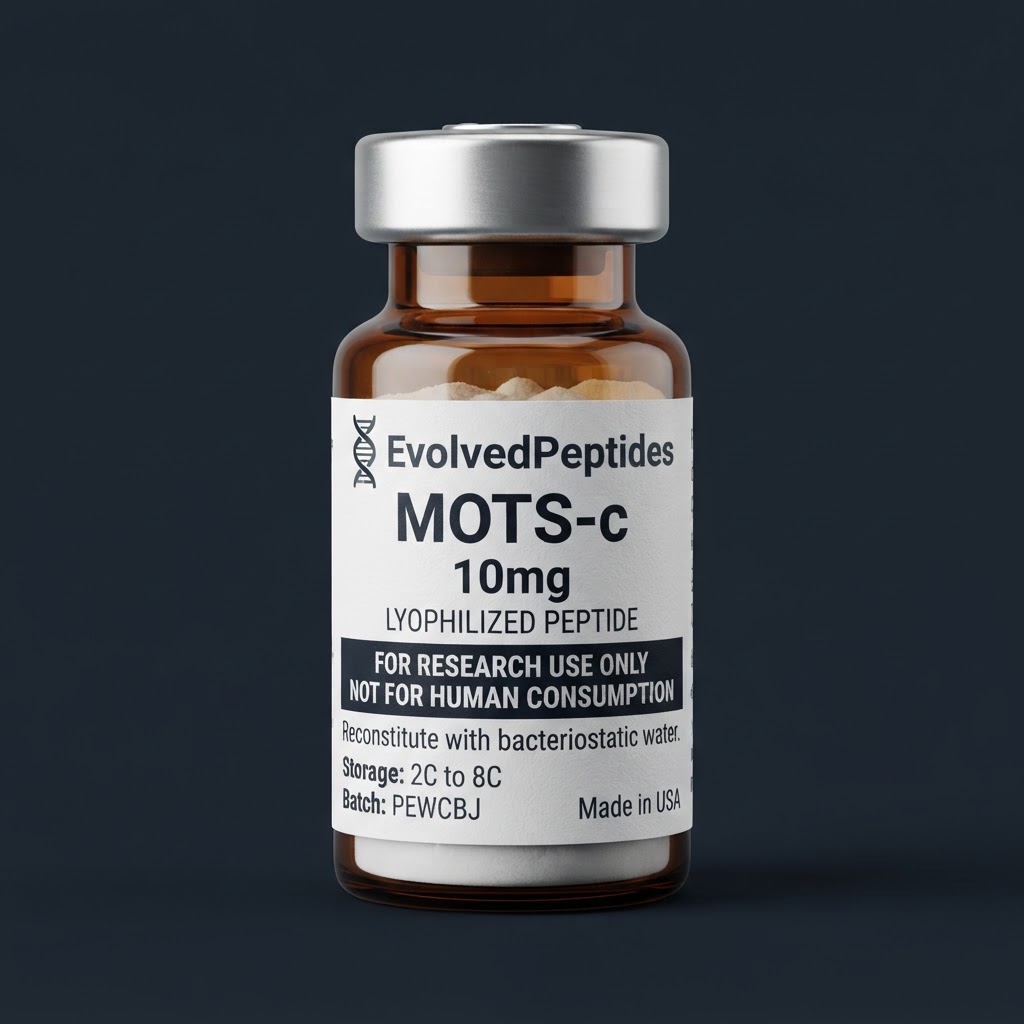
MOTS-c: Mitochondrial-Derived Peptide for Metabolic Research
MOTS-c is a mitochondrial-derived peptide that regulates metabolic homeostasis, insulin sensitivity, and exercise capacity. Explore its role in metabolic and longevity research.
MOTS-c (Mitochondrial Open Reading Frame of the 12S rRNA-c) is a 16-amino acid peptide encoded by mitochondrial DNA. It is a mitochondrial-derived peptide (MDP) that regulates metabolic homeostasis, insulin sensitivity, and cellular stress responses. MOTS-c represents a fascinating link between mitochondrial function and systemic metabolic regulation.
Discovery and Significance
MOTS-c was identified as a novel mitochondrial-derived peptide — a short protein encoded within the mitochondrial genome (rather than nuclear DNA). This was significant because: - Mitochondria were previously thought to only encode proteins for the electron transport chain - MOTS-c demonstrated mitochondria produce signaling peptides that affect nuclear gene expression - It provides a mechanism for mitochondria to communicate with and regulate cellular metabolism
Mechanism of Action
MOTS-c acts through several pathways:
1. AMPK Activation: Activates AMP-activated protein kinase (AMPK) — the cellular energy sensor 2. Nuclear Gene Regulation: Translocates to the nucleus and regulates gene expression (including AICAR-responsive genes) 3. Metabolic Homeostasis: Regulates glucose and lipid metabolism 4. Insulin Sensitivity: Improves insulin sensitivity and glucose tolerance 5. Mitochondrial Function: Supports mitochondrial biogenesis and function 6. Exercise Mimetic: Produces effects similar to exercise on metabolic pathways
Pharmacokinetics
- Route: Subcutaneous injection - Half-life: Peptide-dependent (relatively short) - Distribution: Systemic - Metabolism: Proteolytic degradation - Onset: Metabolic effects develop over hours to days
Research Applications
1. Metabolic Research MOTS-c is extensively studied for metabolic effects: - Insulin sensitivity improvement - Glucose metabolism regulation - Research in type 2 diabetes models - Metabolic syndrome research
2. Obesity and Weight Management Research - Fat metabolism regulation - Research in obesity models - Body composition effects - AMPK-mediated fat oxidation
3. Exercise and Performance Research - Exercise mimetic effects - Endurance capacity research - Mitochondrial efficiency in muscle - Research in exercise adaptation models
4. Longevity and Aging Research - Age-related metabolic decline - Mitochondrial dysfunction in aging - Research in lifespan/healthspan models - AMPK/sirtuin pathway interactions
5. Insulin Resistance Research - Reversing insulin resistance - Research in metabolic disorders - Glucose tolerance improvement - AMPK-mediated glucose uptake
MOTS-c vs. Other Metabolic Peptides
| Property | MOTS-c | Humanin (MDP) | SS-31 (Elamipretide) | |---|---|---|---| | Origin | Mitochondrial DNA | Mitochondrial DNA | Synthetic (mitochondrial-targeting) | | Primary target | AMPK/metabolic | Cell survival/anti-apoptotic | Mitochondrial function | | Research focus | Metabolic homeostasis | Neuroprotection/cellular | Mitochondrial dysfunction |
Standard Research Protocols
- Dose: 5-10mg (research context) - Route: Subcutaneous injection - Frequency: Once or twice weekly - Duration: 2-4 week research cycles - Monitoring: Glucose tolerance, insulin markers, metabolic panel, body composition
Safety Considerations in Research
MOTS-c has demonstrated a favorable safety profile in preliminary research: - Generally well-tolerated in research settings - Peptide-based compound with low toxicity - Research protocols monitor metabolic markers - Long-term safety data is developing
Quality Standards for Research
Research-grade MOTS-c should be sourced from suppliers providing: - HPLC purity verification (≥98%) - Certificate of Analysis with batch-specific data - Accurate dosing per vial (10mg) - Proper storage and handling documentation - Peptide-specific quality assurance
Storage and Handling
Store lyophilized peptide at -20°C, protected from light. Reconstitute with bacteriostatic water. Reconstituted solution should be refrigerated (2-8°C) and used within recommended timeframe. Handle with standard laboratory safety protocols.
*This article is for research and informational purposes only. MOTS-c is sold for laboratory research purposes only and is not intended for human consumption. Not evaluated by the FDA.*