Peptides for Cognitive Enhancement: The Research Landscape
From BDNF-boosting Semax to anxiolytic Selank, a new class of nootropic peptides is emerging in cognitive research. Here's a comprehensive overview of the most studied compounds.
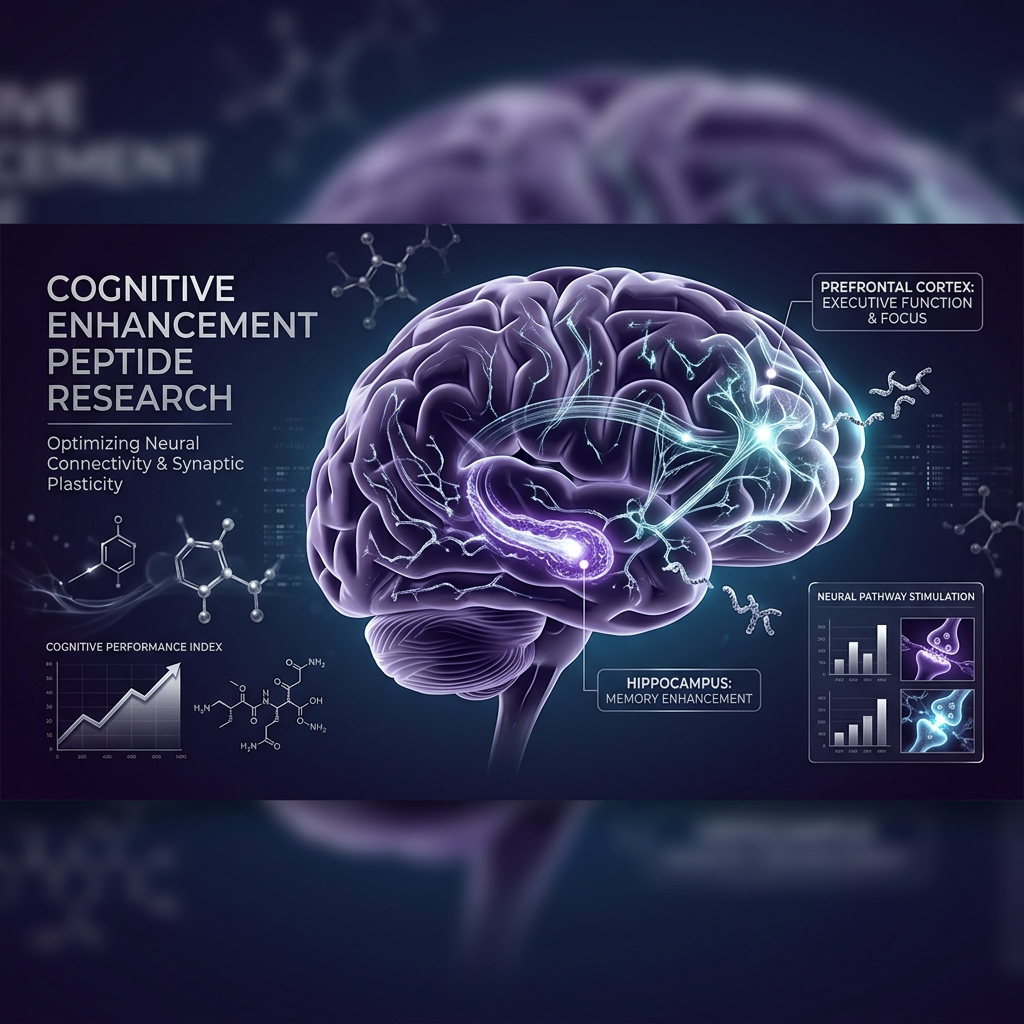
Cognitive enhancement through peptides represents a fundamental shift from conventional nootropic research. Traditional nootropics — from caffeine to racetams to amphetamines — work primarily by increasing the availability of existing neurotransmitters. Peptide-based cognitive compounds take a deeper approach: they modify the brain's structure, signaling capacity, and resilience at the cellular and genetic level.
Why Peptides Offer a Different Approach to Cognition
| Approach | Mechanism | Duration of Effect | Risk Profile | |---|---|---|---| | Stimulants (caffeine, modafinil) | Increase catecholamine availability | Hours | Tolerance, cardiovascular | | Racetams (piracetam) | Acetylcholine modulation | Hours | Mild, poorly understood | | SSRIs/SNRIs | Serotonin reuptake inhibition | Weeks | Sexual dysfunction, weight | | Peptides (Semax, Selank) | BDNF, GABA, gene expression | Days to weeks (residual) | Very low in research |
The key distinction is neuroplasticity: peptide research compounds don't just make existing neural circuits work harder — they may actually improve the architecture of the neural network over time through BDNF upregulation and neurogenesis.
Understanding BDNF: The Central Target
BDNF (Brain-Derived Neurotrophic Factor) is to neurons what growth hormone is to muscle: - Promotes survival of existing neurons under stress - Drives neurogenesis in the hippocampus (memory consolidation) - Enhances long-term potentiation (the synaptic strengthening behind memory formation) - Upregulates through exercise, sleep, caloric restriction — and certain peptides - Declining BDNF is associated with depression, cognitive decline, and Alzheimer's pathology
Compounds that robustly increase BDNF are considered among the most promising research targets for cognitive enhancement and neuroprotection.
Primary Cognitive Research Peptides
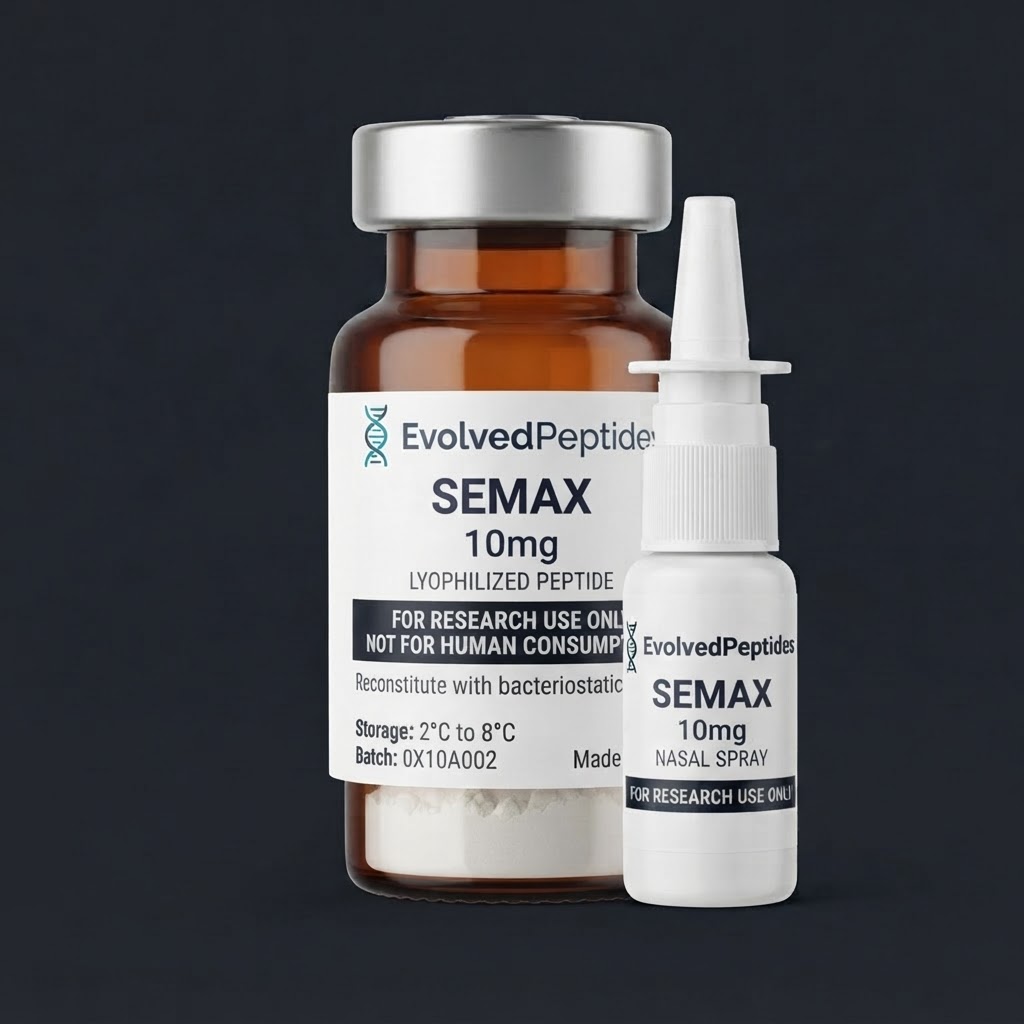
Semax — The BDNF Driver:
Semax is derived from the ACTH(4-10) hormone fragment and represents the most well-evidenced peptide for direct BDNF upregulation:
- Increases BDNF mRNA and protein expression in hippocampus and frontal cortex - Improves memory consolidation, attention, and information processing - Neuroprotective in ischemia models (reduces infarct size post-stroke) - Modulates dopamine and serotonin receptor sensitivity - Used clinically in Russia for stroke recovery, ADHD-adjacent conditions - Administered intranasally for direct CNS delivery via olfactory pathway - Onset: 15–30 minutes; duration 4–6 hours
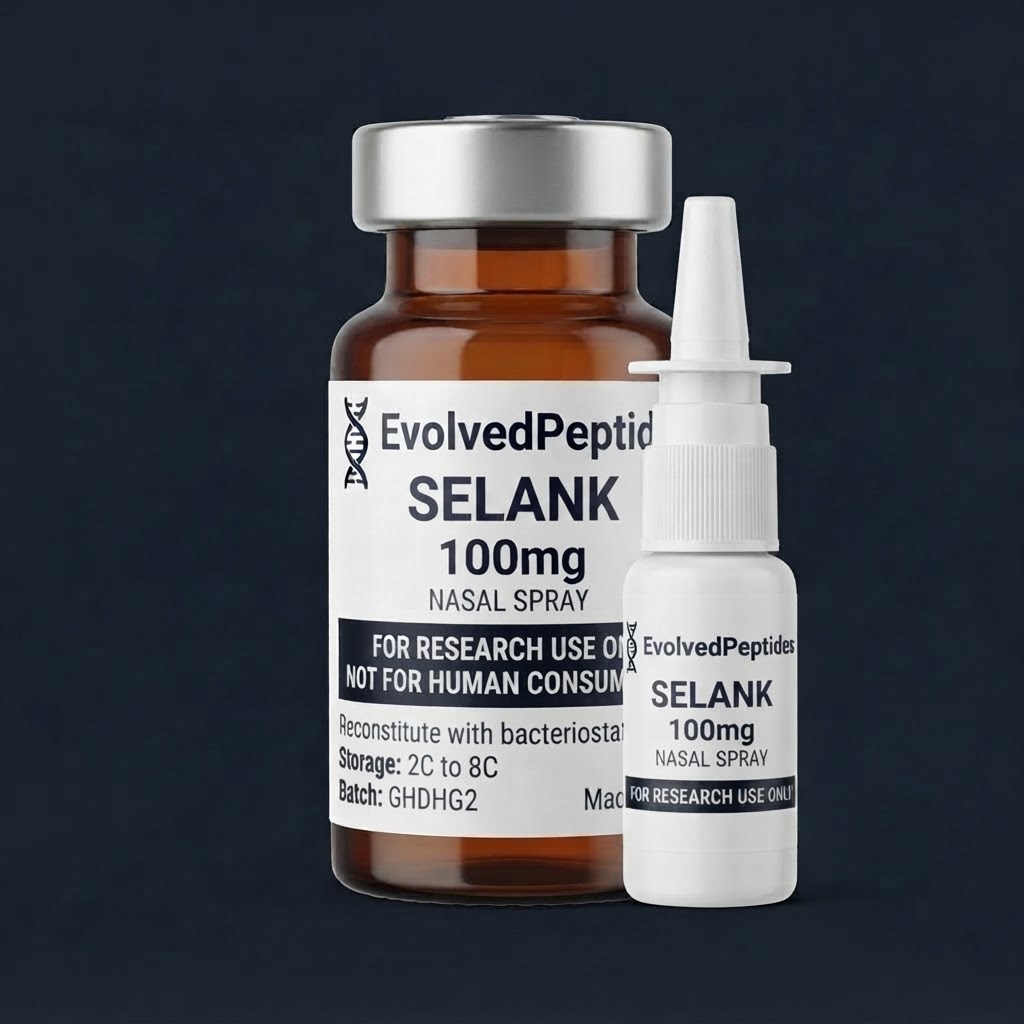
Selank — The Anxiolytic-Nootropic:
Selank is a tuftsin analogue that achieves anxiolysis without sedation — a critical distinction for cognitive research:
- Modulates GABA-A receptor expression (anxiolytic without benzodiazepine-like sedation) - Inhibits enkephalinase → extends endogenous opioid activity → stress relief - Upregulates serotonin synthesis - Immunomodulatory via tuftsin activity - Improves memory and attention independently of anxiety reduction - Russian clinical trials show efficacy comparable to benzodiazepines for anxiety without cognitive impairment - Administered intranasally; onset 15–30 minutes
The Semax + Selank Stack (The Russian Stack):
This combination is widely considered the most sophisticated cognitive peptide protocol currently studied:
| Role | Compound | Primary Effect | |---|---|---| | Cognitive accelerator | Semax | BDNF, focus, memory | | Anxiety buffer | Selank | GABA, stress resilience | | Combined benefit | Both | Peak cognitive output with stability |
The synergy is intuitive: Semax maximizes cognitive potential while Selank removes the anxiety that typically limits peak performance. The combination is studied in high-performance contexts — academic, professional, and military.
BPC-157 — The Unexpected Nootropic:
Primarily known as a recovery peptide, BPC-157 has documented CNS effects that make it relevant to cognitive research:
- Modulates dopamine receptor activity (relevant to motivation, reward, focus) - Influences serotonergic signaling (mood, emotional processing) - Reduces neuroinflammation - Studied for addiction recovery (dopamine system normalization) - Neuroprotective effects in traumatic brain injury models - The gut-brain axis connection: BPC-157's gastric origin may explain its broad neuroactive effects through vagal nerve signaling
Emerging Cognitive Peptides
Epithalon (Epitalon): - Tetrapeptide from the pineal gland (Ala-Glu-Asp-Gly) - Telomere elongation in cell studies — potential anti-aging neurological effects - Normalizes melatonin production; improves sleep quality and circadian rhythm - Early research on lifespan extension and age-related cognitive decline - Subcutaneous or intranasal administration
Dihexa: - Angiotensin IV analogue with remarkable neurogenic activity - Creates new synaptic connections (synaptogenesis) in preclinical models - 10 million times more potent than BDNF in some models for synaptogenesis - Very early research stage; long-lasting effects after single doses observed in animals - One of the most potent cognitive compounds studied preclinically
Cerebrolysin: - Peptide mixture derived from porcine brain proteins - Used clinically for stroke recovery and Alzheimer's in Europe and Asia - Mimics NGF (nerve growth factor) activity - Intravenous or subcutaneous administration
Cognitive Research Protocol Design
Key considerations for designing a cognitive peptide research protocol:
Objective Clarity: - Memory and learning: Semax (primary), consider Dihexa (experimental) - Anxiety-related cognitive impairment: Selank (primary) or Semax + Selank - Neuroprotection/anti-aging: Epithalon, Semax - Recovery from cognitive injury/stroke: Semax, Cerebrolysin
Timing Optimization: - Semax: Morning for daily cognitive enhancement - Selank: Morning or before high-stress situations - Combined Russian stack: Both intranasally in the morning
Assessment Metrics: - Standardized cognitive testing (working memory, reaction time) - Subjective reporting: focus, anxiety, mood, sleep - Biomarkers: BDNF levels (if accessible), inflammatory markers
Cycle Structure: - Semax and Selank: 4–8 week cycles with 2–4 week breaks - Some research uses longer cycles without tolerance concerns
*This article is for research and informational purposes only.*