Best Peptides for Skin & Anti-Aging Research: A Complete Breakdown
Skin research has become one of the most active areas in peptide science. From GHK-Cu to Melanotan 2, here are the top compounds studied for skin health, collagen, and anti-aging.
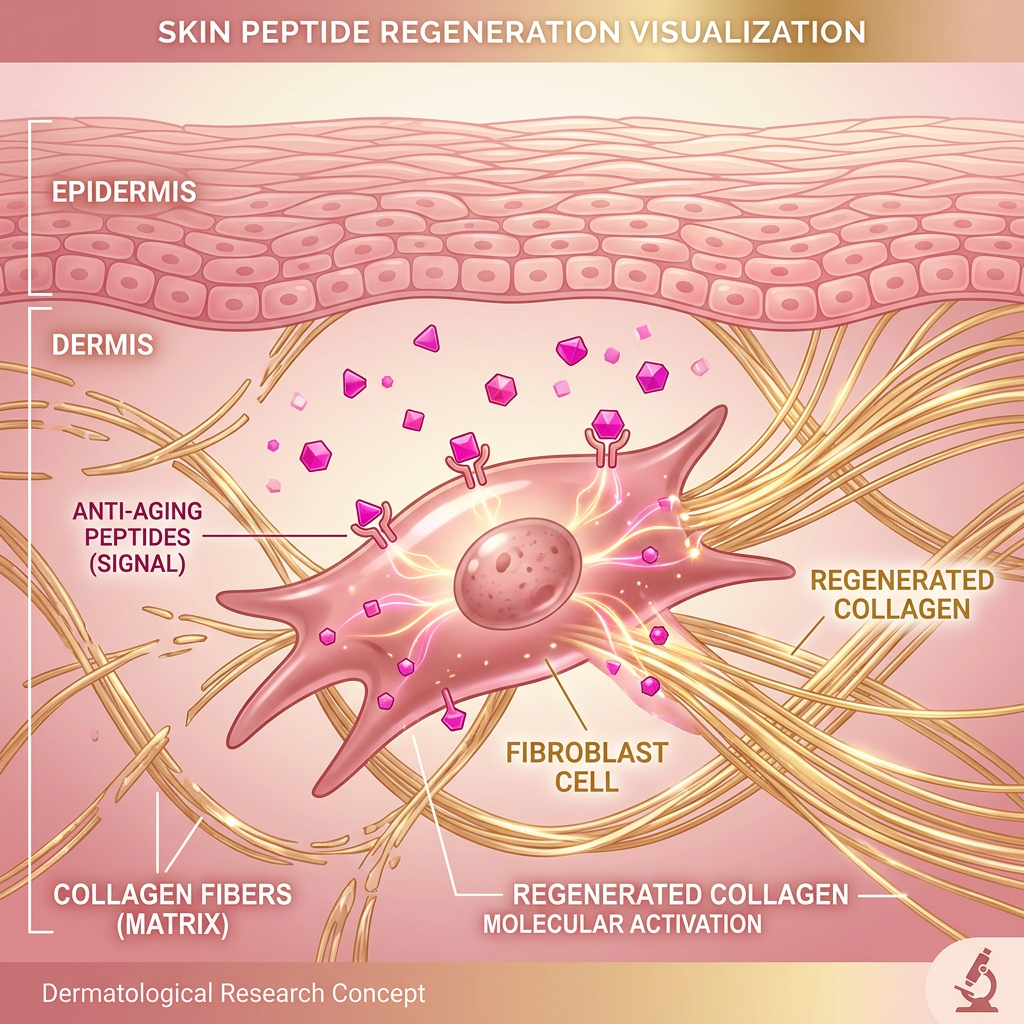
Skin aging is not a single process — it is the convergence of dozens of biological failures occurring simultaneously across multiple cell types, structural proteins, vascular networks, and gene expression programs. This is why conventional skincare, which typically addresses one or two pathways at a time, has inherent limitations. Peptide research offers something different: compounds that engage the skin's own biology at a fundamental level.
The Biology of Skin Aging
Understanding why skin ages is essential for understanding what peptide research targets:
Intrinsic Aging (Chronological): - Fibroblast senescence → declining collagen and elastin production - Reduced cell turnover rate (keratinocyte renewal slows) - Decreased hyaluronic acid production (lost moisture and volume) - Telomere shortening → reduced cellular replication capacity - Gene expression shifts toward inflammatory, pro-catabolic patterns
Extrinsic Aging (Environmental): - UV radiation → DNA damage in keratinocytes and melanocytes; collagen degradation via MMP activation - Oxidative stress → lipid peroxidation, protein carbonylation - Glycation → cross-linking of collagen fibers (stiffer, more brittle skin) - Pollution → inflammatory cytokine activation
The Result: - Reduced dermal thickness (collagen and hyaluronic acid loss) - Loss of structural integrity (wrinkles, sagging) - Impaired wound healing (slower cell migration, less angiogenesis) - Hyperpigmentation (uneven melanin distribution) - Increased inflammatory tone
Peptide Research Compounds for Skin
GHK-Cu (Copper Peptide) — The Gene Regulator:
GHK-Cu is the most extensively researched peptide specifically in dermatology:
- Declines from ~200 ng/mL at age 20 to ~80 ng/mL at age 60 (60% reduction) - Influences expression of over 4,000 human genes - Upregulates: collagen I, III, VII synthesis; elastin; decorin; hyaluronic acid synthase; antioxidant enzymes - Downregulates: inflammatory cytokines (TNF-α, IL-6); oxidative stress genes; cancer-related genes
In controlled human studies with topical formulations: - Increased skin thickness (measured by ultrasound) - Reduced fine lines and wrinkles - Improved skin elasticity and firmness - Enhanced skin clarity
GHK-Cu also promotes MMP (matrix metalloproteinase) activity to remove damaged collagen before stimulating new deposition — creating a complete renovation rather than just patching.
BPC-157 — The Vascularity Restorer:
As skin ages, dermal vasculature becomes sparse and sluggish — reducing nutrient delivery and healing capacity. BPC-157 directly addresses this:
- VEGF upregulation drives new capillary formation (angiogenesis) - eNOS activation improves existing blood vessel function - Accelerates wound closure in human and animal studies - Anti-inflammatory without immunosuppression - Stimulates fibroblast activity and migration to repair sites
In the context of skin research, BPC-157 creates the vascular and cellular infrastructure needed for active regeneration — a prerequisite that GHK-Cu's gene modulation alone cannot provide.
TB-500 (Thymosin Beta-4 Analogue) — The Cell Migration Signal:
Skin repair requires cells to physically move to where they're needed. TB-500's actin-regulating mechanism is what enables this:
- Frees G-actin → enables rapid keratinocyte and fibroblast migration - Promotes epithelialization (coverage of wounds with new skin cells) - Reduces fibrosis (disorganized scar formation) - Activates stem cells in skin progenitor pools - Anti-inflammatory across multiple cytokine pathways
Older skin migrates cells slowly — TB-500 research suggests this rate can be meaningfully increased.
Melanotan 2 — The Pigmentation Peptide:
MT-2 engages the melanocortin system for both cosmetic and protective skin research:
- MC1R activation → melanin synthesis in melanocytes → tanning effect - Promotes eumelanin (superior UV protection) over pheomelanin - Photoprotective: research shows reduced UV-induced erythema and DNA damage - Antioxidant effects in skin cells at the cellular level - Even pigmentation distribution as an area of ongoing research
Growth Hormone Secretagogues — The Systemic Skin Factor:
GH and IGF-1 have significant effects on skin that are often overlooked:
- GH stimulates fibroblast collagen synthesis systemically - IGF-1 drives keratinocyte proliferation - Age-related GH decline is a contributor to skin thinning and poor wound healing - CJC-1295 + Ipamorelin or Sermorelin used in anti-aging protocols often note skin improvements as a secondary benefit
Comparing Topical vs. Systemic Research
| Compound | Topical Efficacy | Systemic Efficacy | Primary Route in Research | |---|---|---|---| | GHK-Cu | Strong (0.1–1%) | Yes | Both (topical widespread) | | BPC-157 | Limited (poor skin penetration) | Strong | Subcutaneous | | TB-500 | Poor | Strong | Subcutaneous | | Melanotan 2 | None | Strong | Subcutaneous |
This is why systemic peptide research represents a fundamentally different approach from even the most advanced topical skincare — compounds like BPC-157 and TB-500 require subcutaneous delivery to achieve their skin benefits.
The Glow70 Comprehensive Stack
BPC-157 + GHK-Cu + TB-500 covers all three critical dimensions of skin regeneration: - Structure (GHK-Cu): Collagen, elastin, gene expression - Vascularity (BPC-157): Blood supply, fibroblast activation - Cell dynamics (TB-500): Migration, epithelialization, scar prevention
Researching these three compounds together creates an environment for comprehensive skin rejuvenation that addresses aging at its biological roots.
Building a Research Protocol
| Goal | Primary Compounds | Supporting Compounds | |---|---|---| | Anti-aging general | GHK-Cu, GH secretagogue | TB-500 | | Post-procedure healing | BPC-157, TB-500 | GHK-Cu | | Pigmentation/tanning | Melanotan 2 | GHK-Cu (antioxidant) | | Comprehensive rejuvenation | Glow70 (all three) | GH secretagogue |
*This article is for research and informational purposes only.*