Peptides and Longevity: What Epithalon and GHK-Cu Research Reveals
Two peptides stand out in longevity research for their documented effects on aging at the cellular level — Epithalon and GHK-Cu. Here's what the science actually shows.
Longevity research has identified several biological hallmarks of aging: telomere shortening, epigenetic drift, mitochondrial dysfunction, accumulation of senescent cells, loss of proteostasis, and chronic inflammation. Most pharmaceutical interventions target one of these pathways. What makes Epithalon and GHK-Cu uniquely interesting is that each appears to act upstream — engaging regulatory mechanisms that influence multiple hallmarks simultaneously.
The Longevity Research Landscape
Longevity research is among the fastest-growing areas in biomedical science. The field has identified a set of core "hallmarks of aging" — biological processes that drive age-related decline:
1. Genomic instability — DNA damage accumulation 2. Telomere attrition — chromosomal cap shortening 3. Epigenetic alterations — gene expression pattern drift 4. Loss of proteostasis — protein folding and clearance deficits 5. Deregulated nutrient sensing — mTOR, AMPK, IGF-1 pathway dysfunction 6. Mitochondrial dysfunction — energy production decline 7. Cellular senescence — accumulation of "zombie cells" that secrete inflammatory signals 8. Stem cell exhaustion — reduced regenerative capacity 9. Altered intercellular communication — chronic systemic inflammation
Most current longevity interventions target 1–2 of these pathways. What makes Epithalon and GHK-Cu stand out is the evidence that each engages multiple hallmarks through foundational biological mechanisms.
Epithalon: The Telomere Peptide
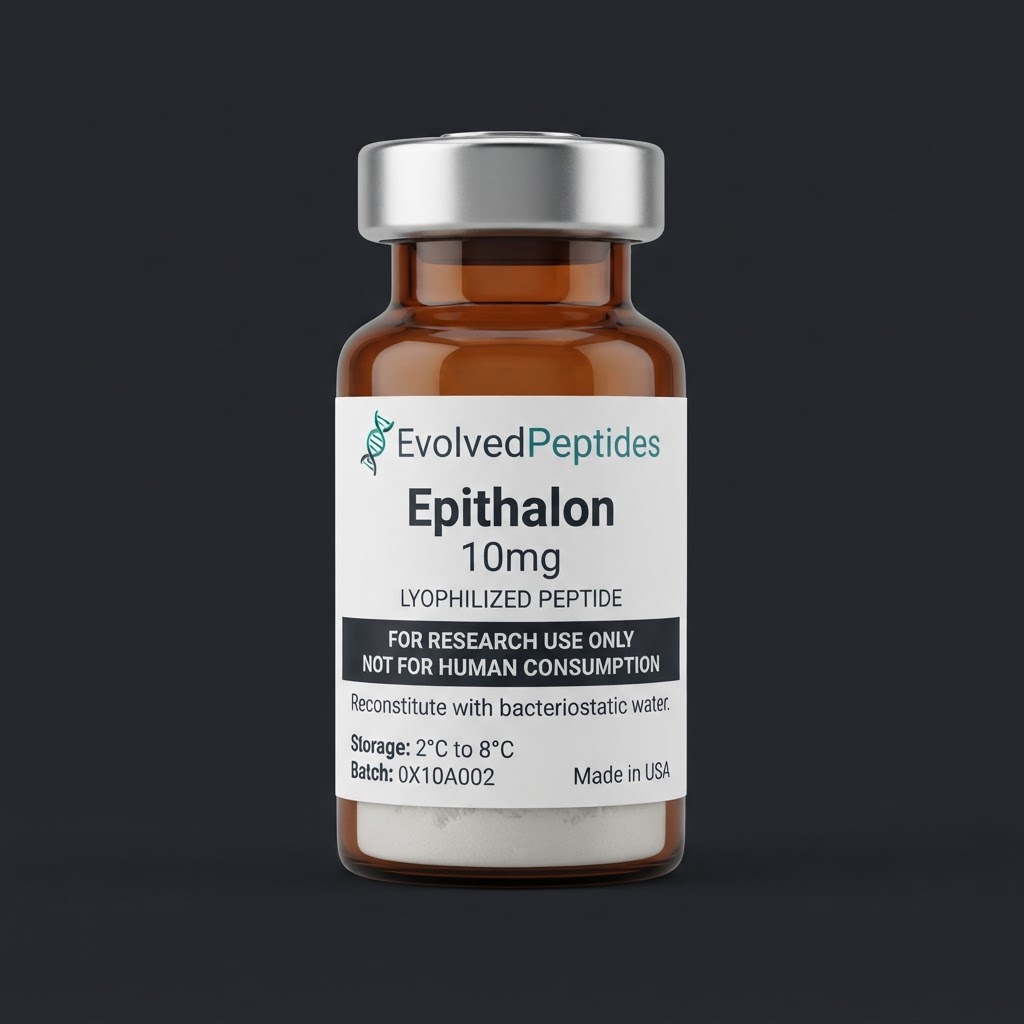
Epithalon (also spelled Epitalon) is a tetrapeptide (Ala-Glu-Asp-Gly) — four amino acids — derived from the pineal gland protein epithalamin. It was developed by Dr. Vladimir Khavinson at the St. Petersburg Institute of Bioregulation and Gerontology, where it has been studied for over 35 years.
Mechanism 1: Telomerase Activation
Telomeres are the protective caps on chromosomal ends. Every time a cell divides, telomeres shorten slightly. When they become critically short, cells either stop dividing (senescence) or die (apoptosis). Telomere length is one of the most reproducible biological markers of aging.
Telomerase is the enzyme that rebuilds telomeres. It is highly active in germline cells and stem cells, but largely inactive in somatic (body) cells in adults — which is why aging cells accumulate short telomeres.
Epithalon has been shown to: - Activate telomerase in human somatic cells in vitro - Elongate telomeres in aging cells - Extend the Hayflick limit (the number of times a cell can divide) in cell culture studies
This mechanism places Epithalon among a very small group of compounds with documented telomere-extending activity. The implications are significant: cells with longer telomeres continue dividing longer, producing more functional progeny instead of becoming senescent.
Mechanism 2: Pineal Gland Regulation and Melatonin
The pineal gland produces melatonin — the hormone that regulates circadian rhythm and sleep. Melatonin production declines with age, beginning around age 30 and falling dramatically by age 70. This decline: - Disrupts sleep architecture (reduced deep sleep) - Impairs circadian-dependent cellular repair processes - Reduces antioxidant defense (melatonin is a potent antioxidant) - Disrupts immune regulation
Epithalon restores pineal gland function and normalizes melatonin production in research models: - Studies show evening melatonin levels significantly higher in Epithalon-treated groups vs. controls - Circadian rhythm normalization across multiple biomarkers - Improved sleep architecture in aging research subjects - Downstream effects on cellular repair (most cellular repair occurs during sleep)
Mechanism 3: Anti-Tumor and Immunomodulatory Effects
Khavinson's research documented anti-tumor properties of Epithalon in cancer-predisposed strains of mice: - Reduction in spontaneous tumor formation rates - Enhancement of NK (natural killer) cell activity - Normalization of T-cell function in aging immune systems - These effects are consistent with its broader role in maintaining cellular genomic stability
Mechanism 4: Antioxidant Properties
Oxidative damage is one of the primary drivers of cellular aging. Epithalon: - Increases superoxide dismutase (SOD) activity - Reduces lipid peroxidation markers in aging tissue - Supports mitochondrial membrane integrity
Lifespan Extension Data
In multiple animal longevity studies, Epithalon treatment produced: - 13–68% lifespan extension in Drosophila (fruit fly) models - Meaningfully extended healthy lifespan in rat and mouse models - Reduced age-related pathology across multiple organ systems
While animal-to-human translation requires caution, the consistency of findings across species is notable.
Research Protocol for Epithalon: - Dose: 5–10mg subcutaneous per injection - Frequency: Once daily for 10–20 day cycles - Cycle frequency: 1–2 times per year (consistent with Khavinson's clinical protocols) - Some research uses twice-daily dosing during active cycle
---
GHK-Cu: The Gene Expression Reset
GHK-Cu (glycyl-L-histidyl-L-lysine copper complex) is a naturally occurring tripeptide-copper complex that declines profoundly with age: - Age 20: ~200 ng/mL plasma concentration - Age 60: ~80 ng/mL plasma concentration (60% decline)
Dr. Loren Pickart's decades of research revealed that GHK-Cu isn't simply a wound-healing compound — it's a fundamental biological signaling molecule that functions as an aging "reset switch" at the level of gene expression.
The 4,000-Gene Finding
The most remarkable discovery in GHK-Cu research is its effect on gene expression. Studies using genome-wide analysis found that GHK-Cu: - Upregulates approximately 2,000 genes - Downregulates approximately 2,000 genes - The net pattern of these changes closely mirrors what you'd see if you compared a young person's gene expression to an old person's — and then reversed the aging pattern
Specifically:
Upregulated (turned on): - Collagen I, III, VII synthesis genes - Elastin synthesis - DNA repair genes - Antioxidant defense enzymes (SOD, catalase) - Mitochondrial energy genes - Anti-inflammatory regulatory genes - Stem cell activation markers
Downregulated (turned off): - NF-kB inflammatory pathway - Cancer-promoting genes (oncogenes) - Oxidative stress response genes - Inflammatory cytokine production - Cellular senescence markers
This pattern of regulation is, to the knowledge of current research, unique among known peptides. No other small molecule or peptide has been shown to recapitulate the breadth of GHK-Cu's gene regulatory activity.
Longevity-Relevant Mechanisms
Cellular Senescence: GHK-Cu downregulates markers of cellular senescence and the SASP (senescence-associated secretory phenotype) — the inflammatory signals that senescent cells release, which drive aging in surrounding tissue. Reducing senescent cell burden is one of the primary targets in longevity research.
Mitochondrial Function: GHK-Cu upregulates genes involved in mitochondrial biogenesis and oxidative phosphorylation efficiency. Mitochondrial dysfunction is a primary hallmark of aging.
Proteostasis: GHK-Cu supports protein quality control mechanisms — relevant to preventing the accumulation of misfolded proteins that characterizes aging and neurodegenerative disease.
Stem Cell Support: Several GHK-Cu-upregulated genes are involved in maintaining stem cell niches and activating progenitor cell populations — directly relevant to the "stem cell exhaustion" hallmark of aging.
Anti-Cancer Properties: Reduced tumor incidence and growth have been observed in research models following GHK-Cu administration — consistent with its downregulation of oncogenic gene expression.
The Epithalon + GHK-Cu Longevity Stack
These two compounds address aging from different but complementary angles:
| Mechanism | Epithalon | GHK-Cu | |---|---|---| | Telomere maintenance | Direct telomerase activation | Indirect via DNA repair gene upregulation | | Gene expression | Pineal/melatonin-mediated regulation | Direct 4,000-gene modulation | | Inflammation | Immunomodulation | NF-kB downregulation | | Antioxidant | SOD activity enhancement | Superoxide dismutase induction | | Cellular repair | Circadian-mediated repair facilitation | Mitochondrial and proteostasis support | | Tissue structure | Systemic aging reversal markers | Collagen, elastin, extracellular matrix |
Used together, Epithalon provides the telomere and circadian foundation while GHK-Cu resets the gene expression landscape — creating a multi-hallmark longevity research protocol that addresses aging more comprehensively than either alone.
Current Research Status and Limitations
It is important to acknowledge the limitations of current longevity research: - Most telomere extension data is from in vitro studies or animal models - Human clinical longevity trials require decades to complete - Khavinson's clinical data on Epithalon, while extensive, comes primarily from his own research group and has limited independent replication in Western literature - GHK-Cu gene expression data is robust but mostly from in vitro and rodent work
This doesn't invalidate the research — it contextualizes it. Longevity research by its nature faces methodological challenges that don't apply to acute disease research. The mechanistic plausibility is high; the human clinical evidence base is growing but not yet at the level of, for example, GLP-1 agonist trials.
*This article is for research and informational purposes only. All products are sold for laboratory research use only and are not intended for human consumption.*