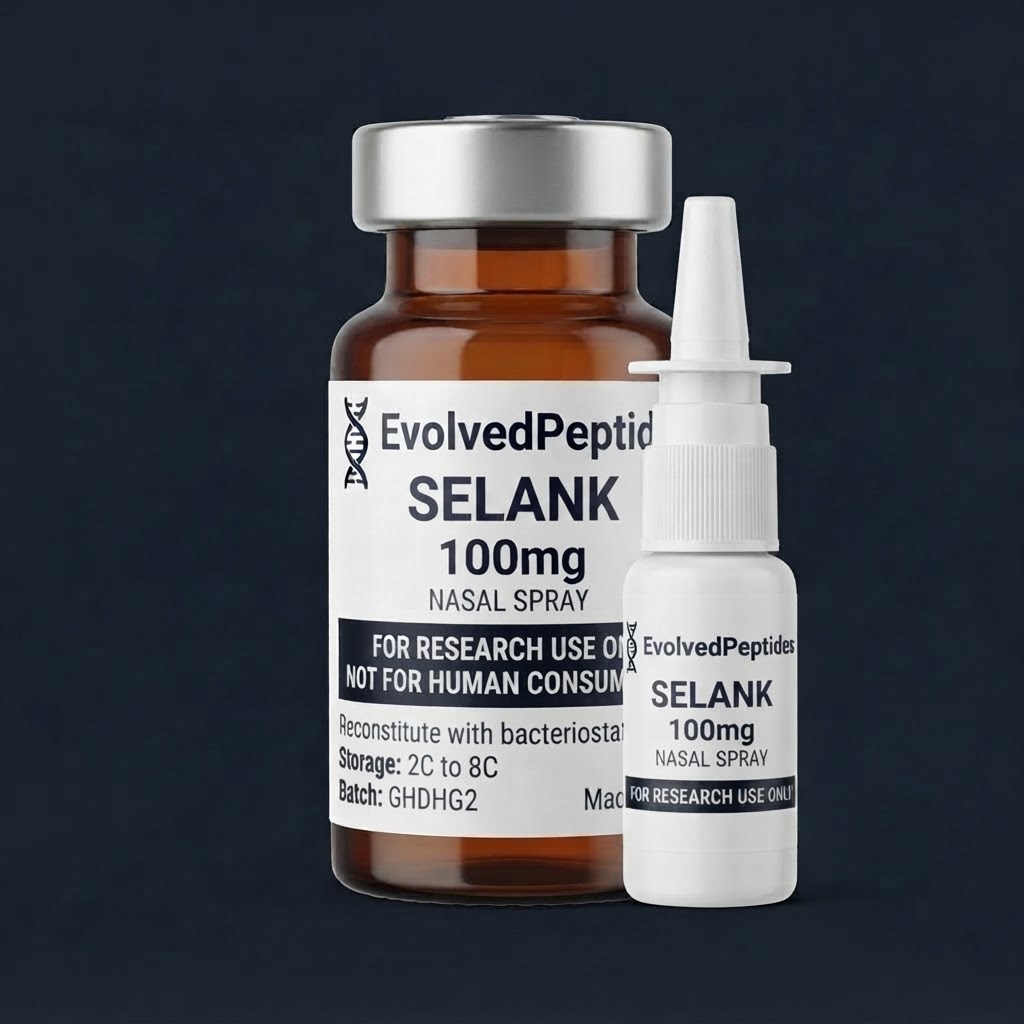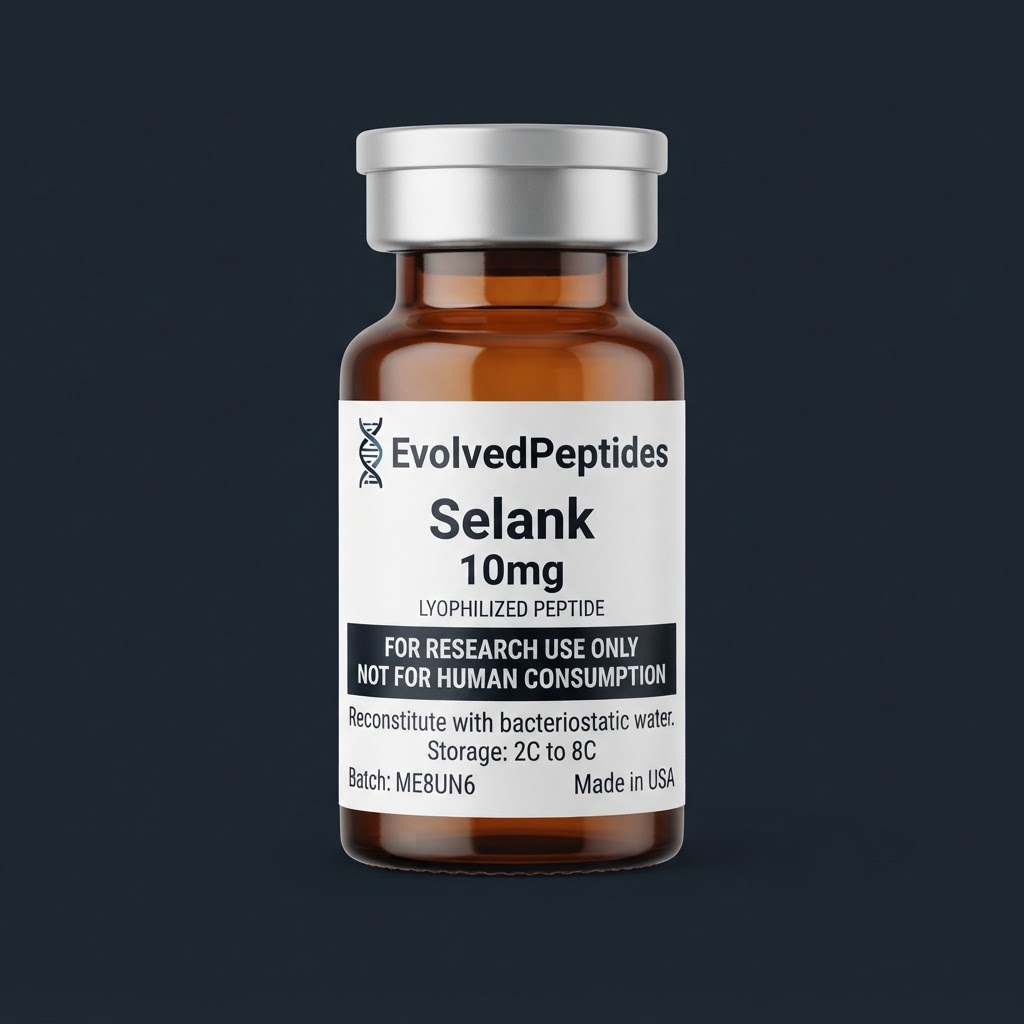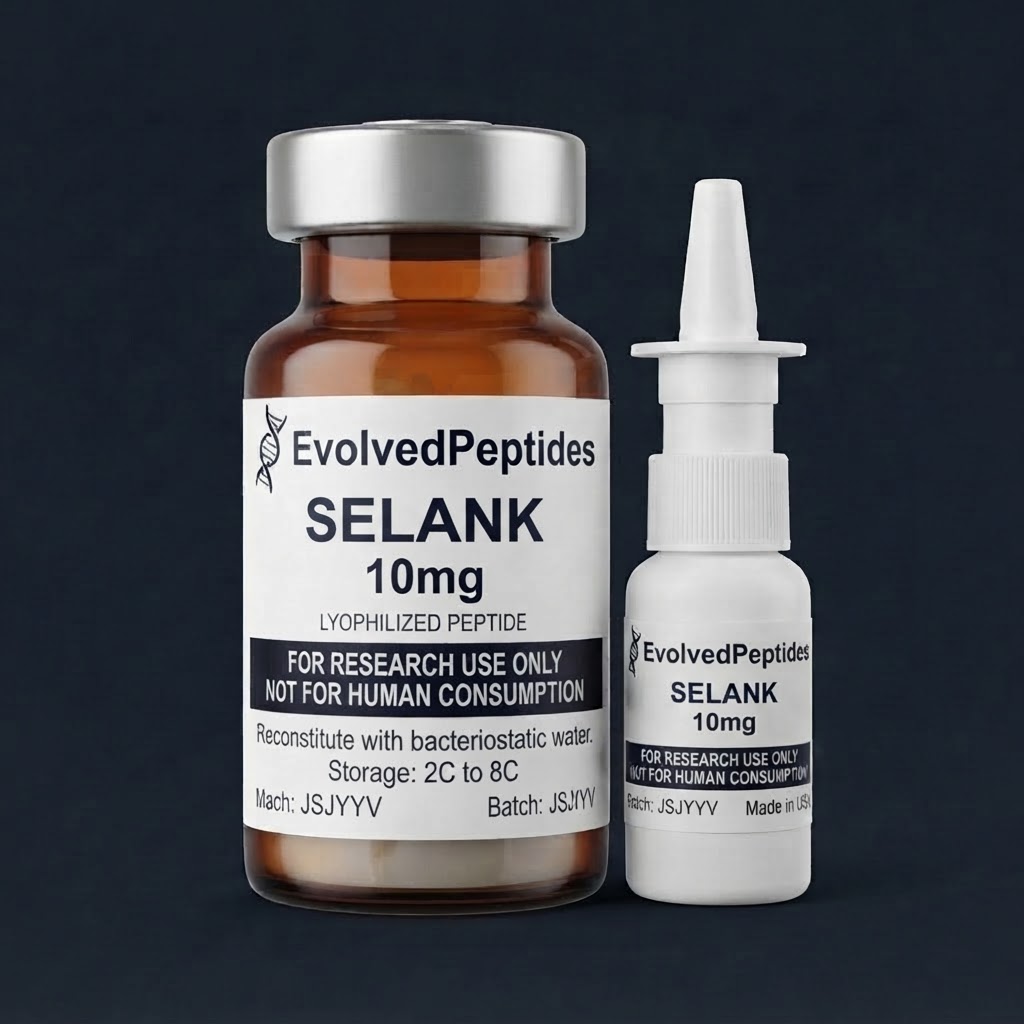
Selank Nasal Spray: Intranasal Anxiolytic Peptide Research Overview
Selank nasal spray delivers the synthetic heptapeptide studied for anxiolytic and cognitive effects in research models. Explore intranasal pharmacokinetics, GABA and serotonin interactions, and research protocols.
Selank is a synthetic heptapeptide (Thr-Lys-Pro-Arg-Pro-Gly-Pro) developed at the Institute of Molecular Genetics of the Russian Academy of Sciences. It is a stabilized analog of the short tetrapeptide tuftsin (Thr-Lys-Pro-Arg) — a fragment of the immunoglobulin G heavy chain — extended with a Pro-Gly-Pro sequence. In research models, Selank has been studied for anxiolytic-like and cognitive effects, and the intranasal route is the standard administration route in both preclinical and clinical literature.
Structure and Origin
- Tuftsin analog: Tuftsin is a naturally occurring tetrapeptide with documented immunomodulatory activity in phagocyte research - Heptapeptide design: The added Pro-Gly-Pro tail improves stability against peptidases - No sedative mechanism: Unlike benzodiazepines, Selank does not act as a direct GABA receptor agonist — research instead describes GABAergic modulation and downstream effects
Intranasal Delivery Science
Selank was designed with intranasal use in mind, and this route is well suited to peptide research:
1. Direct nose-to-brain access: Neuropeptides administered intranasally can reach CNS tissue via olfactory and trigeminal routes, bypassing the blood-brain barrier 2. Rapid pharmacokinetics: Intranasal Selank reaches CNS compartments within minutes in animal studies 3. Degradation resistance: Intranasal administration avoids first-pass degradation, though Selank is still relatively short-acting compared to cyclic peptides
Research Findings
Selank is one of the better-studied nootropic peptides in the Russian-language and international pharmacology literature:
- Anxiolytic-like effects: In rodent models, Selank reduced anxiety-related behaviors on standard behavioral tests without sedation, muscle relaxation, or cognitive impairment - GABAergic interaction: Studies report Selank modulates GABA receptor function and alters the expression of GABA transporter genes — a benzodiazepine-like profile without direct receptor binding - BDNF and neuroplasticity: Selank administration increased BDNF and c-Fos expression in hippocampal and cortical regions in rodent studies - Enkephalin modulation: Selank inhibits enkephalin-degrading enzymes, potentially raising endogenous enkephalin levels - Immune interactions: Consistent with its tuftsin origin, Selank research also covers interleukin-6 modulation and antiviral immune markers
Research Protocol Reference
| Parameter | Typical Research Reference | |---|---| | Dose | 200-400 mcg (1-2 sprays) per administration | | Frequency | Once to three times daily | | Route | Intranasal | | Cycle | As-needed or continuous in research protocols | | Monitoring | Behavioral endpoints, cognitive testing batteries |
Research references commonly cite 200-400 mcg intranasal dosing one to three times daily in animal and early clinical studies.
Selank vs. Semax
Selank is frequently studied alongside Semax (ACTH 4-10 analog) as the two flagship Russian nootropic peptides:
| Property | Selank | Semax | |---|---|---| | Focus of research | Anxiety, emotional cognition | Cognition, neuroprotection, BDNF | | Primary signaling | GABAergic modulation, enkephalins | BDNF upregulation, dopamine/serotonin | | Structure | Tuftsin analog (7 aa) | ACTH 4-10 analog (7 aa with Pro-Gly-Pro tail) | | Route | Intranasal | Intranasal |
The two peptides share the Pro-Gly-Pro stabilizing tail but differ in their parent fragments and research profiles.
Handling and Quality
Research-grade Selank nasal spray should be stored refrigerated after opening, protected from heat and light, with verified: - HPLC purity verification (≥98%) - Certificate of Analysis with sequence confirmation - Verified peptide content per spray
*This article is for research and informational purposes only. Selank is sold for laboratory research purposes only and is not intended for human consumption. Not evaluated by the FDA.*