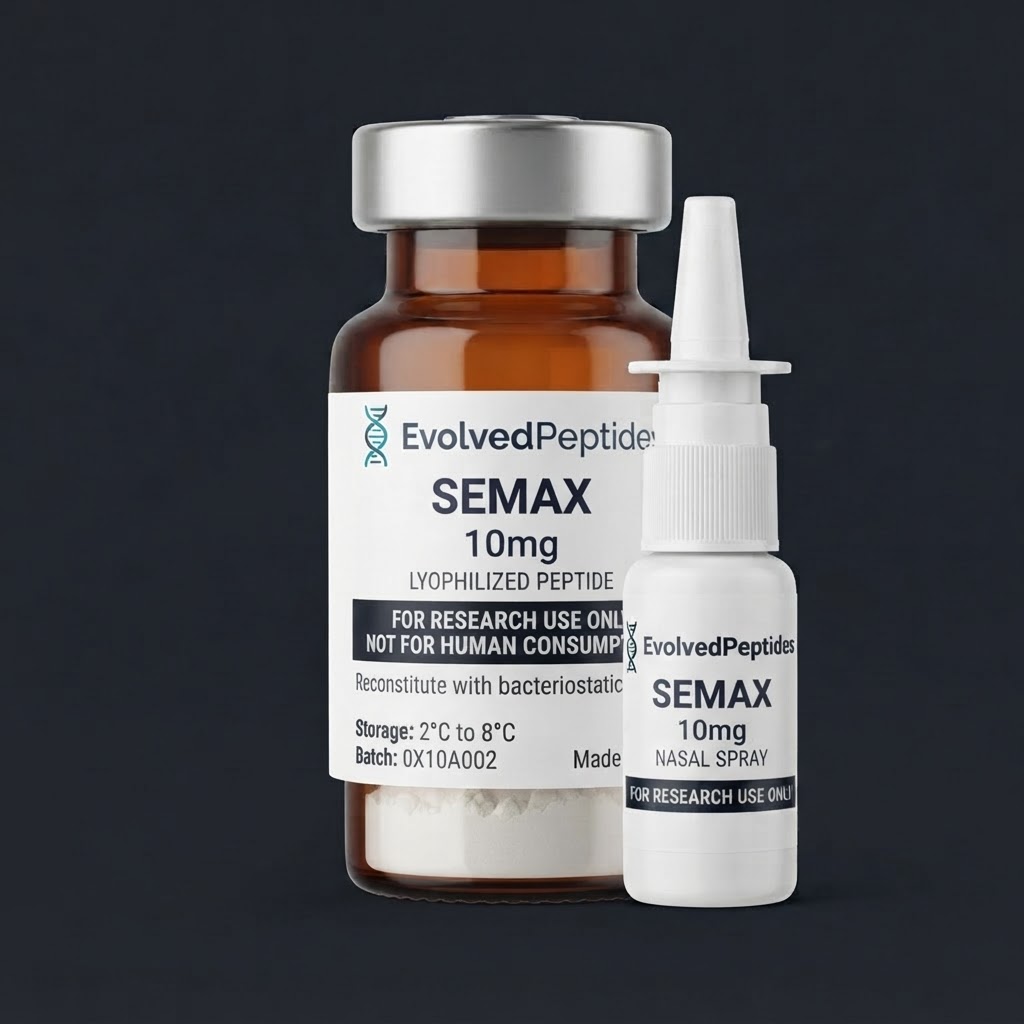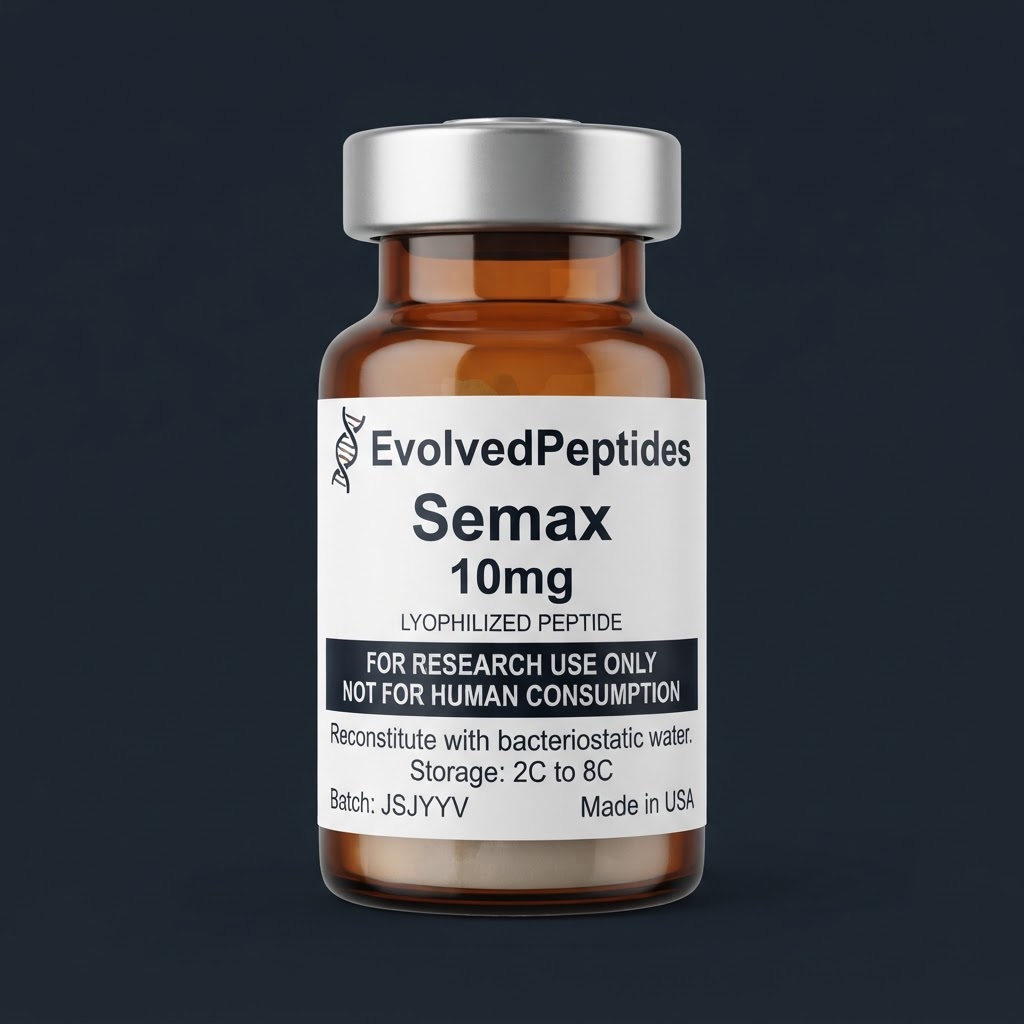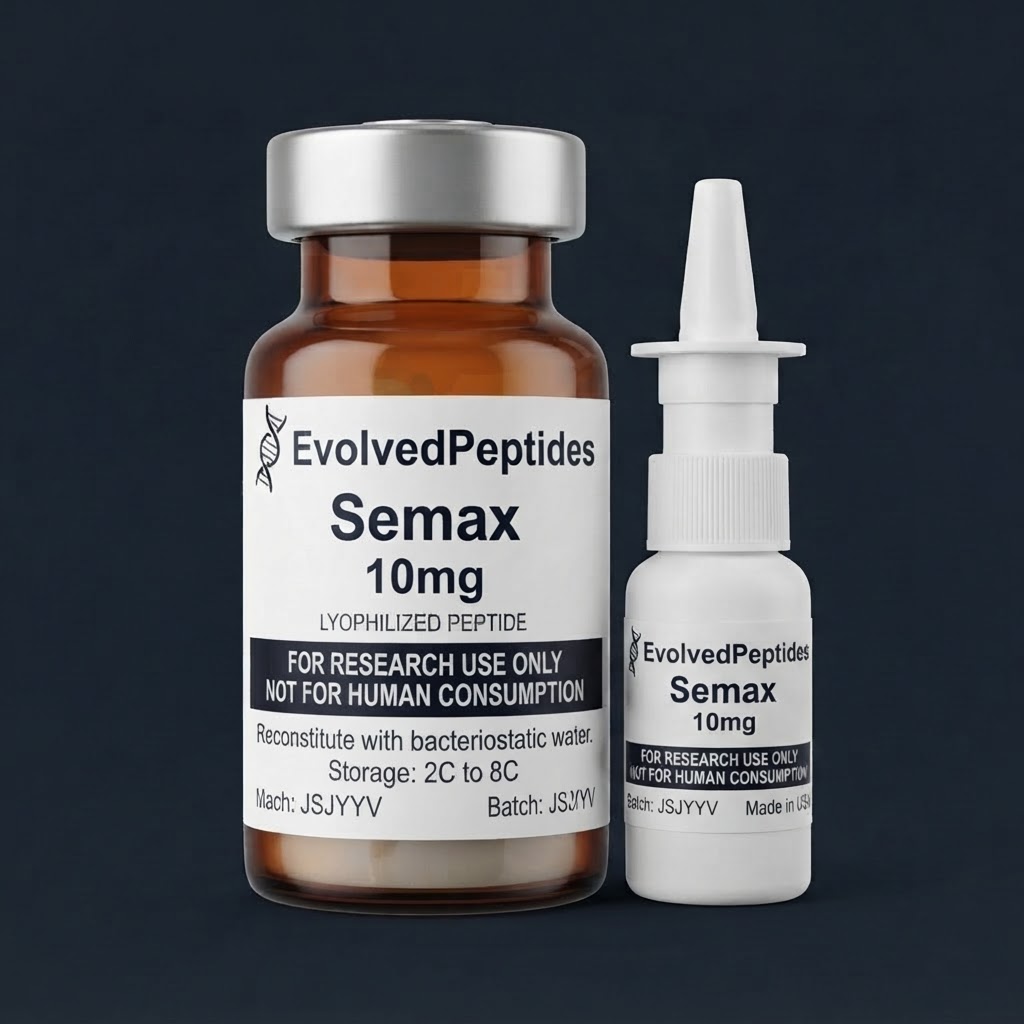
Semax Nasal Spray: Intranasal Nootropic Peptide Research Overview
Semax nasal spray delivers the ACTH(4-10) analog studied for BDNF upregulation and cognitive effects in research models. Explore intranasal pharmacology, neuroprotection research, and standard research protocols.
Semax is a synthetic heptapeptide (Met-Glu-His-Phe-Pro-Gly-Pro) derived from a fragment of adrenocorticotropic hormone (ACTH 4-10), extended with the Pro-Gly-Pro sequence for stability. Developed by the Institute of Molecular Genetics in Moscow, Semax has been studied extensively in Russian neuroscience research for cognitive and neuroprotective effects — and intranasal administration is the canonical route in the published literature.
Structure and Mechanism
Semax is best understood as a neuromodulatory fragment of ACTH stripped of hormonal (corticotropic) activity:
- ACTH 4-10 core: Retains the sequence studied for CNS effects, without the full ACTH structure that activates adrenal receptors - Pro-Gly-Pro tail: Protects against rapid peptidase degradation, extending the research half-life - No corticosteroid activity: Unlike full ACTH, Semax does not elevate cortisol in research models
Key Mechanisms from Research Models
1. BDNF upregulation: Semax administration increased brain-derived neurotrophic factor (BDNF) expression in hippocampus and cortex in rodent studies — BDNF being the central molecular marker of neuroplasticity 2. Dopamine and serotonin modulation: Studies report altered monoamine turnover in CNS tissue 3. NMDA receptor interaction: Research describes Semax effects on the nitric oxide/cGMP cascade downstream of glutamatergic signaling 4. Neuroprotection models: In ischemia and excitotoxicity models, Semax reduced neuronal damage markers 5. Melanocortin receptors: As an ACTH-derived peptide, Semax interacts with central melanocortin systems
Why Intranasal?
Semax was designed for intranasal administration:
- Nose-to-brain transport: Direct access to CNS tissue via olfactory pathways, bypassing the blood-brain barrier - Fast onset: CNS effects measured within minutes in animal studies - Clinical precedent: The published Semax literature — including stroke and cognitive studies — uses the intranasal route almost exclusively - No injection variables: For research protocols, removes reconstitution and injection-site variability
Research Protocol Reference
| Parameter | Typical Research Reference | |---|---| | Dose | 200-400 mcg (1-2 sprays) per administration | | Frequency | Once to three times daily | | Route | Intranasal | | Cycle | 10-14 day courses in some cognitive protocols | | Monitoring | Cognitive testing batteries, BDNF markers, EEG |
Research references commonly cite 200-400 mcg intranasal dosing one to three times daily, with 10-14 day courses described in cognitive and post-stroke research.
Semax vs. Adamax
Adamax is a newer adamantane-conjugated derivative of Semax:
| Property | Semax | Adamax | |---|---|---| | Structure | ACTH 4-10 + Pro-Gly-Pro | Semax core + adamantane conjugation | | Reported potency | Reference standard | Substantially more potent in animal studies | | Research depth | Extensive (30+ years of literature) | Limited, mostly preclinical | | Route | Intranasal | Intranasal |
Researchers comparing the two should note the asymmetry in evidence depth: Semax has decades of published studies, while Adamax research remains early-stage.
Handling and Quality
Research-grade Semax nasal spray should be stored refrigerated after opening, protected from heat and light, with verified: - HPLC purity verification (≥98%) - Certificate of Analysis with sequence confirmation - Verified peptide content per spray
*This article is for research and informational purposes only. Semax is sold for laboratory research purposes only and is not intended for human consumption. Not evaluated by the FDA.*