Semax: The BDNF-Boosting Nootropic Peptide Explained
Semax is an ACTH-derived peptide developed in Russia that has shown remarkable effects on BDNF levels, neuroprotection, and cognitive function. Here's what the science says.
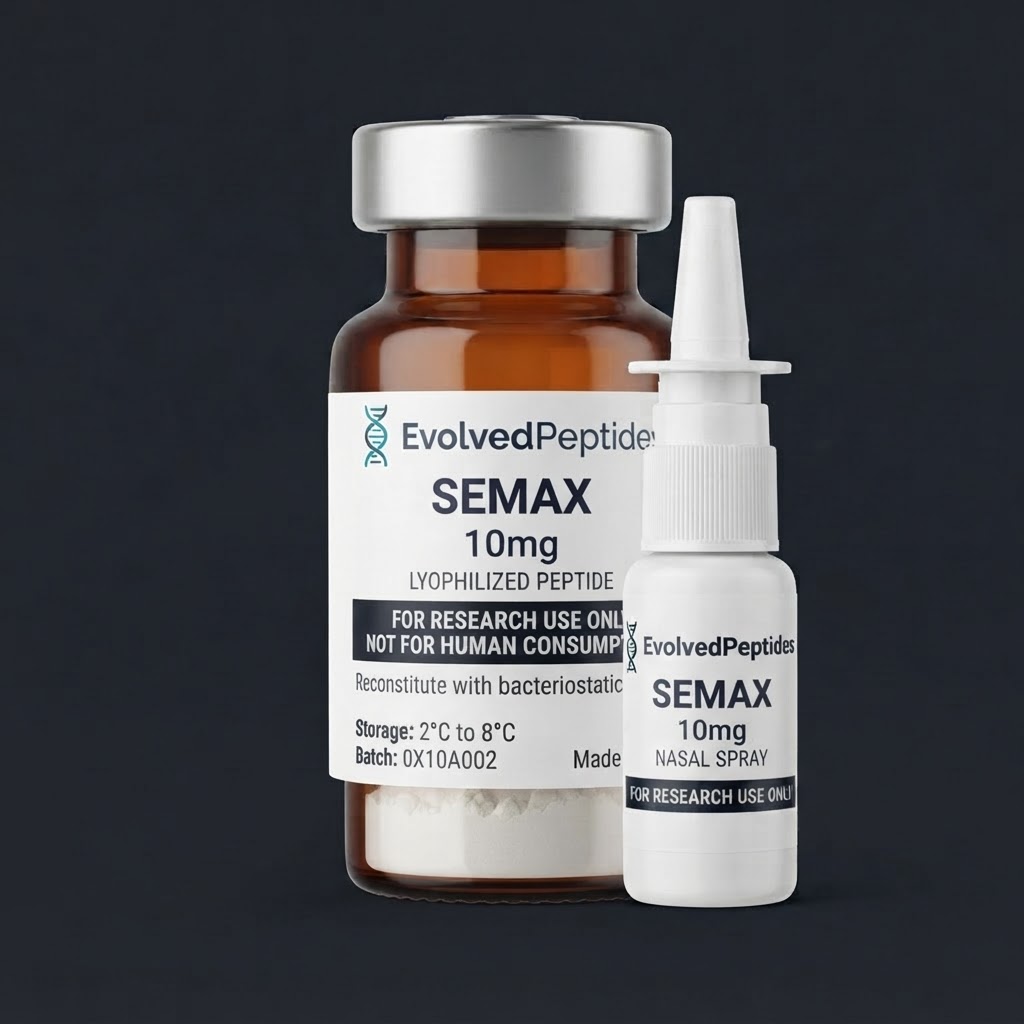
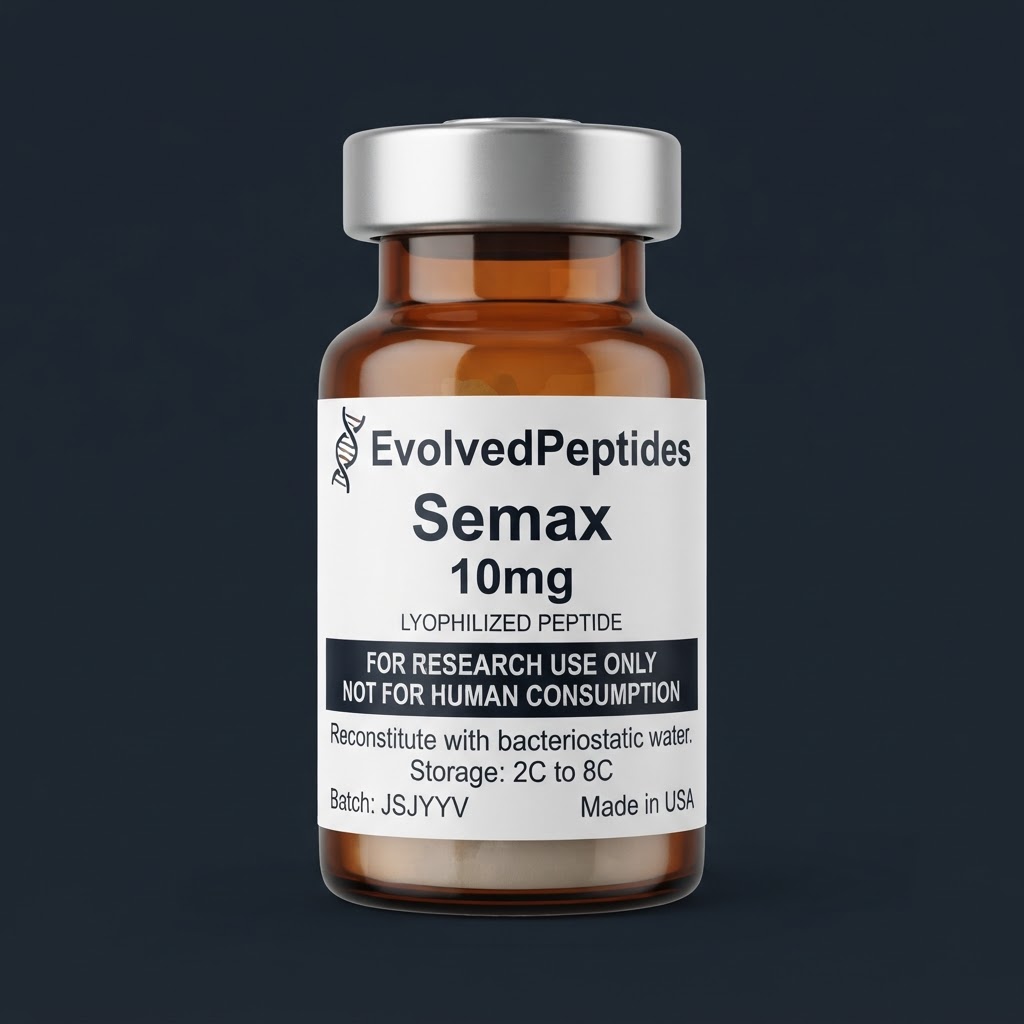
Semax is a synthetic heptapeptide (7 amino acids: Met-Glu-His-Phe-Pro-Gly-Pro) derived from the ACTH(4-10) fragment of adrenocorticotropic hormone. It was developed in the 1980s at the Institute of Molecular Genetics of the Russian Academy of Sciences and has been used clinically in Russia and several Eastern European countries for decades — particularly for stroke rehabilitation, cognitive impairment, and neurological conditions.
The ACTH Connection
ACTH is a pituitary hormone primarily known for stimulating cortisol production. However, its 4-10 fragment (the basis of Semax) has cognitive and neuroprotective properties entirely distinct from cortisol regulation. Semax retains these neuroactive properties while being engineered for greater stability and potency than the native sequence.
Why BDNF Is the Central Mechanism
BDNF (Brain-Derived Neurotrophic Factor) is arguably the most important molecule in the brain for: - Long-term potentiation (the basis of memory formation) - Neuronal survival under stress or injury - Neurogenesis (formation of new neurons, primarily in the hippocampus) - Synaptic plasticity — the brain's ability to rewire connections - Mood regulation through serotonergic signaling
BDNF is often called "miracle-gro for the brain." Declining BDNF is associated with depression, cognitive decline, Alzheimer's pathology, and neurodegeneration.
Semax is one of the few non-exercise interventions shown to significantly and rapidly upregulate BDNF — which explains the breadth of its studied cognitive effects.
Mechanism of Action: Multiple Pathways
Semax exerts its effects through several interconnected mechanisms:
1. BDNF upregulation – Increases BDNF mRNA expression and protein levels in the hippocampus and frontal cortex 2. NGF upregulation – Also elevates nerve growth factor, supporting neuronal maintenance 3. Dopamine system – Modulates dopamine receptor sensitivity and dopamine release in frontal cortex 4. Serotonin system – Influences serotonin transporter expression; relevant to mood stability 5. Melanocortin receptor activation – ACTH fragment activity on MC4R in the brain (cognitive/behavioral effects) 6. Anti-inflammatory – Reduces neuroinflammation markers including NF-kB pathway activation 7. Cholinergic system – Some evidence of acetylcholine modulation relevant to memory
Research Application: Stroke and Ischemia
Semax's primary clinical application in Russia is neuroprotection after ischemic stroke:
- Reduces infarct volume in ischemic brain injury models - Accelerates functional recovery of movement and speech in clinical research - Promotes neuronal survival in ischemia-adjacent tissue - May reduce long-term cognitive deficits following vascular events - Used as a standard-of-care adjunct in some Russian stroke units
Cognitive Enhancement Research
Memory and Learning: - Spatial memory improvements in rodent maze studies - Enhanced verbal memory in early human clinical studies - Faster information processing speed noted in research
Attention and Focus: - Sustained attention improvements - Reduced distractibility in ADHD-adjacent research populations - Used in Russian military and academic settings for cognitive enhancement
Mood and Anxiety: - Secondary effects through serotonergic modulation - Some evidence of anxiolytic-adjacent effects at standard doses - Distinct from Selank's specific anxiolytic mechanism — Semax is primarily cognitive with secondary mood benefit
Neuroprotection: - Protection against glutamate excitotoxicity (relevant to neurodegenerative disease research) - Reduces oxidative stress in neural tissue - Mitochondrial protective effects
Administration: Why Intranasal Is Preferred
Intranasal delivery is the dominant research route for Semax, and for good reason:
- Olfactory pathway: The olfactory epithelium in the nasal cavity provides a direct anatomical route to the CNS — bypassing the blood-brain barrier - Faster onset: CNS effects observed within 15–30 minutes intranasally vs. 45–90 minutes subcutaneous - Higher CNS bioavailability: A larger proportion reaches brain tissue before systemic metabolism - Convenience: No injection required; widely used in clinical settings
Subcutaneous injection is used in some research contexts for systemic effects or when intranasal delivery is not available.
Dosing in Research
Intranasal: - Standard dose: 200–600mcg per administration (1–3 sprays of standard formulation) - Higher doses: up to 900mcg for acute cognitive demands - Timing: Morning for focus/cognition; can be split morning and midday - Onset: 15–30 minutes; duration 4–6 hours
Subcutaneous: - 200–500mcg; effects may be longer-lasting but slower onset
Cycling: - Most research protocols cycle Semax 4–8 weeks on, then 2–4 weeks off - Daily use for extended periods is studied in clinical contexts (stroke recovery)
The Semax + Selank Stack
The combination of Semax and Selank is widely known in nootropic research communities as the "Russian stack": - Semax: cognitive upregulation, BDNF boost, focus - Selank: anxiolytic, stress buffering, mood stabilization - The combination addresses both the "gas pedal" (Semax) and "smooth ride" (Selank) of cognitive performance
Safety Profile
Semax has an extensive safety record from decades of clinical use in Russia: - No significant toxicity in available literature - Side effects are rare and mild: headache, initial slight anxiety at high doses - No dependency or withdrawal observed - No significant effects on cortisol or other hormones
*This article is for research and informational purposes only.*