TB-500: Accelerating Recovery in Research Models
Thymosin Beta-4 (TB-500) has emerged as one of the most studied peptides for injury recovery and tissue regeneration. A deep dive into what makes it so powerful.
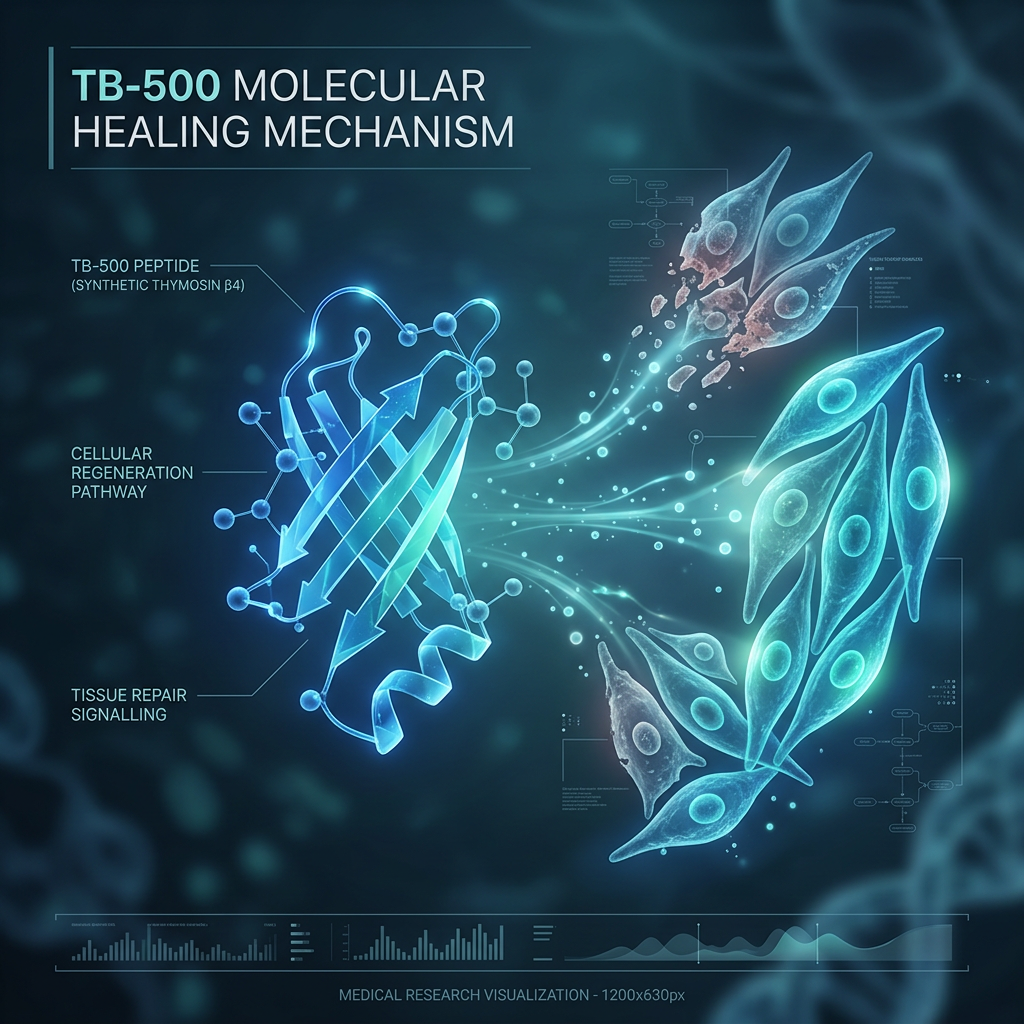
TB-500 is a synthetic peptide derived from the naturally occurring protein Thymosin Beta-4 (Tβ4). It corresponds specifically to the actin-binding domain of Tβ4 — the region most responsible for its biological activity in tissue repair. Thymosin Beta-4 is found in virtually every cell in the human body and is released in high concentrations at sites of injury, acting as a primary wound-healing signal.
The Biology of Thymosin Beta-4
Thymosin Beta-4 was first discovered in the 1960s as part of thymic hormone research. Scientists initially focused on its role in immune development, but subsequent decades revealed its fundamental role in tissue repair across nearly every organ system. TB-500's synthetic fragment form preserves the key functional domain while improving stability and bioavailability.
Mechanism of Action
TB-500's primary mechanism involves actin regulation:
- Actin sequestration – TB-500 binds G-actin (monomeric), preventing it from polymerizing and allowing cells to migrate freely into injury sites - Cell migration – Enables endothelial cells, keratinocytes, and myocytes to move rapidly toward damaged tissue - Angiogenesis – Promotes new blood vessel formation through endothelial cell migration - Anti-inflammation – Downregulates inflammatory cytokines including NF-kB pathways - Stem cell activation – May activate progenitor cells in heart and skeletal muscle tissue
Skeletal Muscle Repair
In research models of skeletal muscle injury, TB-500 has consistently demonstrated accelerated regeneration. Studies show: - Faster return of strength and contractile function after injury - Reduced fibrosis (scar tissue formation) during healing - Increased satellite cell (muscle stem cell) activity - Faster resolution of DOMS-equivalent markers in research
Cardiac Tissue — Emerging Research
One of the most exciting areas of TB-500 research is cardiac regeneration. The adult heart has almost no regenerative capacity — cardiomyocytes don't replicate after damage. TB-500 has shown promise in: - Stimulating migration of progenitor cells to ischemic cardiac regions - Reducing infarct size in myocardial infarction models - Promoting angiogenesis in cardiac tissue - Early human research on cardiac repair is underway
Wound Healing and Skin
- Significantly accelerates skin wound closure in preclinical models - Reduces keloid and hypertrophic scar formation - Promotes epithelialization (new skin cell growth over wounds) - Combined with BPC-157, forms the basis of the Glow70 stack for comprehensive skin recovery
Connective Tissue and Joint Research
- Tendon and ligament studies show improved healing rates - Reduced inflammation in joint injury models - Complementary to BPC-157 which handles localized repair and angiogenesis
Neuroprotection Research
An emerging area of TB-500 research involves the central nervous system: - Shown to reduce damage after traumatic brain injury in rodent models - May promote neurogenesis in injured regions - Anti-inflammatory effects in neural tissue
Research Protocols
Two common approaches studied in the literature:
Loading Protocol: - 5–10mg per week for 4–6 weeks (loading phase) - Followed by maintenance dosing of 2–5mg weekly
Maintenance Protocol: - 2–2.5mg twice weekly, long-term
Administered via subcutaneous or intramuscular injection. Split dosing (twice weekly) is more common than single weekly injection.
The BPC-157 + TB-500 Stack
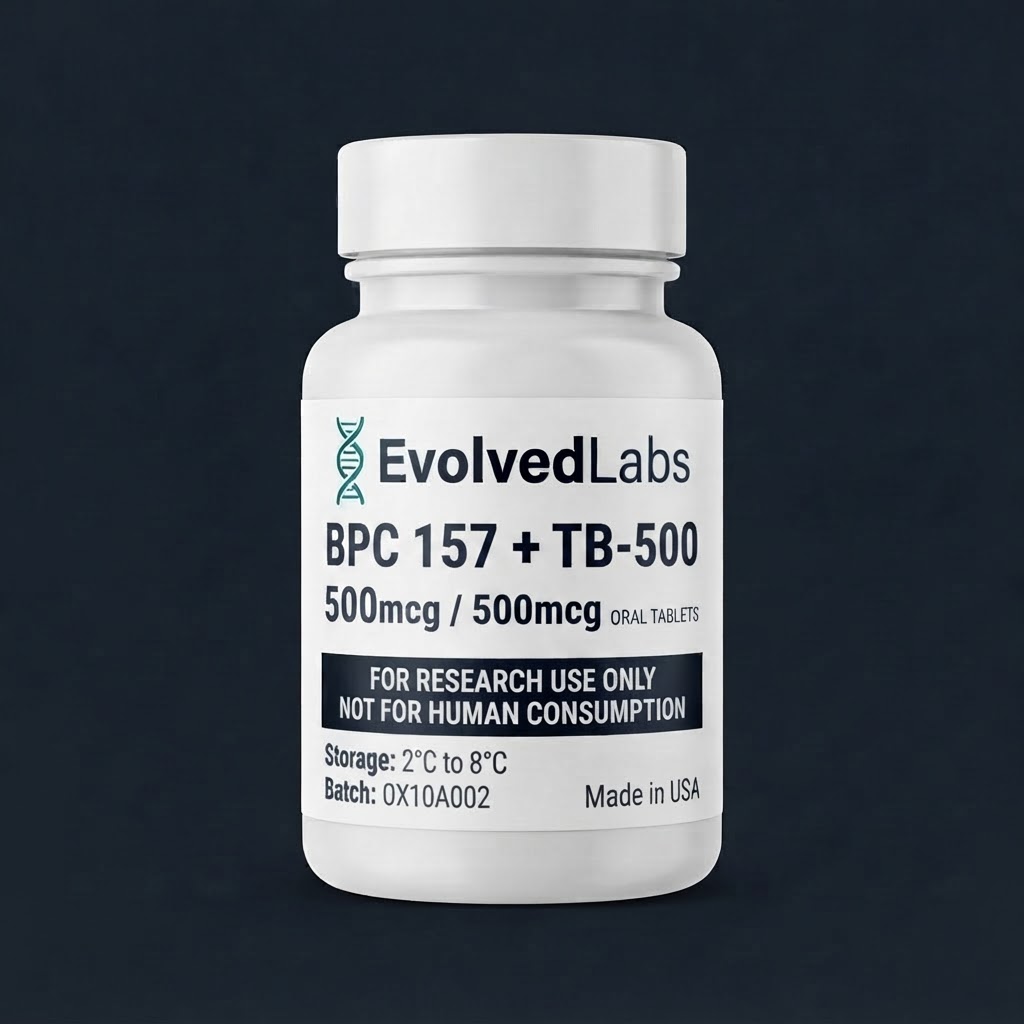
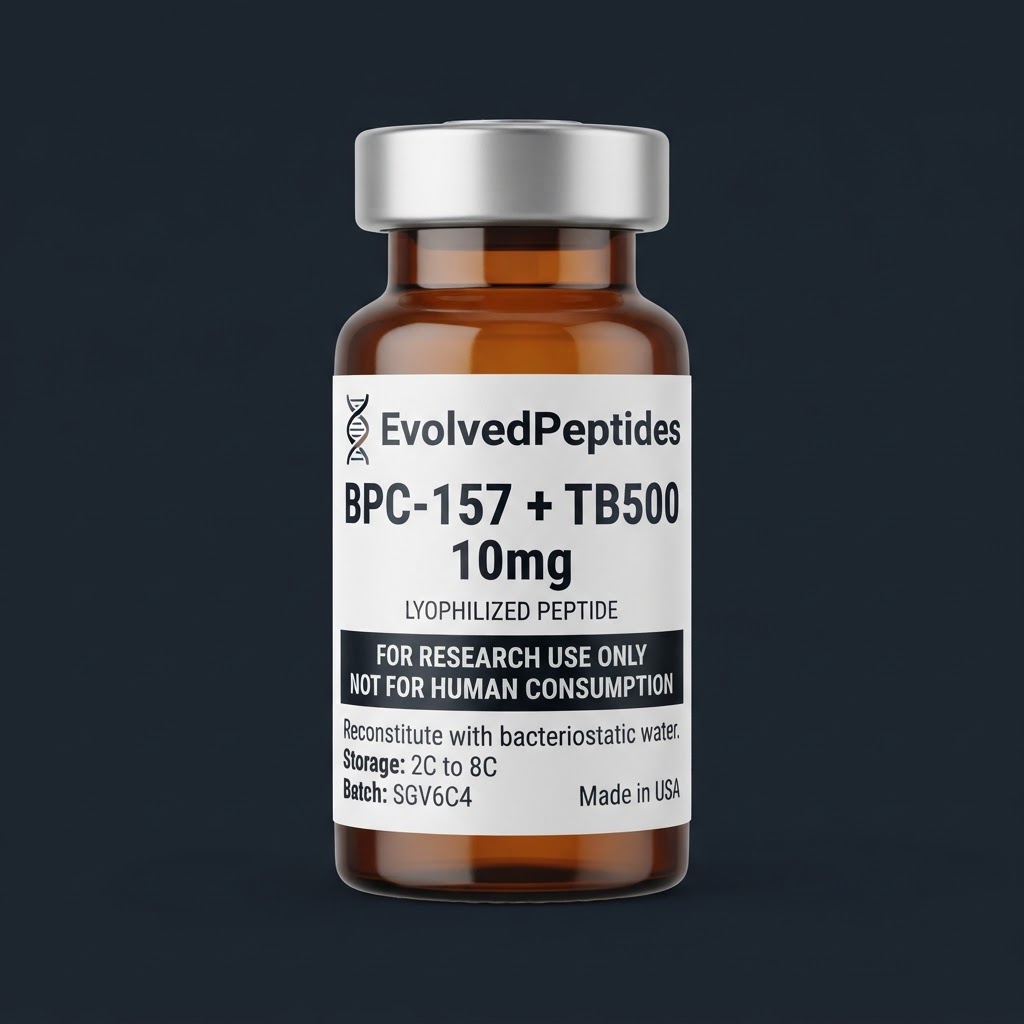
These two peptides are considered highly synergistic: - BPC-157: local tissue repair, angiogenesis, anti-inflammatory (via NO pathway) - TB-500: systemic cell migration, broader inflammation control, cardiac and muscle repair
Together they address wound healing from both local and systemic perspectives. This combination is arguably the most widely studied recovery stack in the peptide research space.
Safety Profile
TB-500 shows a favorable safety profile across animal studies, with no significant toxicity observed at research doses. Common noted effects: - Mild injection site reactions - Temporary fatigue in initial use (rare) - No organ toxicity in available studies
*This article is for research and informational purposes only.*