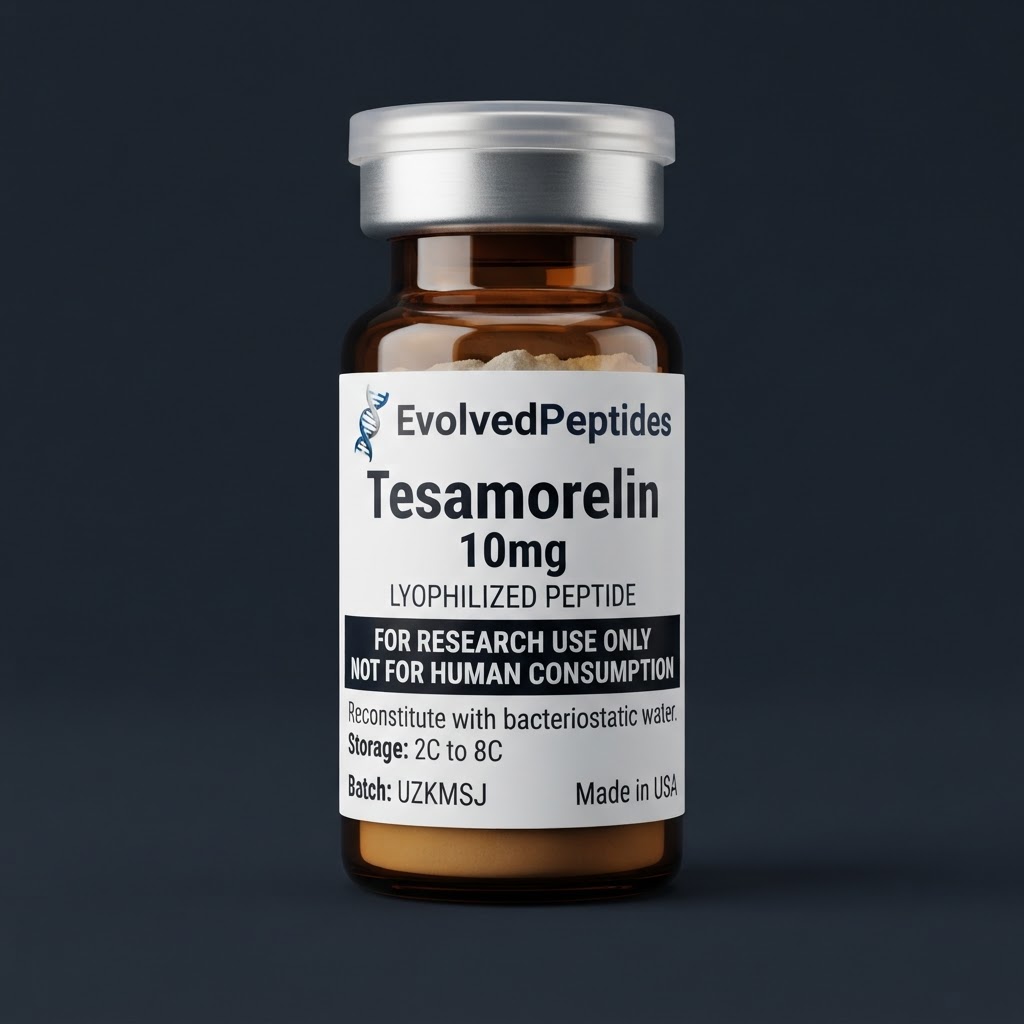
Tesamorelin & Visceral Fat: What the Research Shows
Tesamorelin is the only FDA-studied GHRH analogue specifically researched for visceral (stomach) fat reduction. Here's what the clinical data reveals.
Tesamorelin is a synthetic analogue of growth hormone-releasing hormone (GHRH) — specifically, it's a stabilized form of the full 44-amino acid GHRH sequence. It is the only GHRH analogue to be FDA-reviewed specifically for its effects on visceral adipose tissue reduction.
What Is Visceral Fat and Why Does It Matter?
Not all fat is created equal. Visceral adipose tissue (VAT) is the deep abdominal fat that surrounds internal organs — the liver, pancreas, intestines, and heart. Unlike subcutaneous fat (under the skin), visceral fat is metabolically active and strongly associated with: - Insulin resistance and type 2 diabetes risk - Cardiovascular disease - Chronic inflammation - Metabolic syndrome
Visceral fat is notoriously resistant to conventional diet and exercise in many populations — making targeted pharmaceutical research especially relevant.
How Tesamorelin Works
Tesamorelin stimulates the pituitary gland to release growth hormone by mimicking GHRH. Unlike exogenous HGH (which bypasses the pituitary entirely), Tesamorelin preserves the natural feedback loop:
1. Tesamorelin binds pituitary GHRH receptors 2. GH is released in a pulsatile, physiological pattern 3. GH triggers IGF-1 production in the liver 4. Elevated GH and IGF-1 drive lipolysis — preferentially in visceral depots
This preservation of natural regulation is considered an important advantage over exogenous HGH in research contexts.
Clinical Research Data
Tesamorelin has been studied extensively in HIV-associated lipodystrophy patients — a population that develops severe visceral fat accumulation. Key findings from controlled trials:
- 15–20% reduction in visceral adipose tissue over 26 weeks - Significant improvements in waist circumference - Meaningful increases in IGF-1 levels - Favorable effects on triglycerides and lipid profiles - Effects largely reversed upon discontinuation, suggesting ongoing administration is required to maintain benefit
Body Composition Effects
Beyond visceral fat reduction, Tesamorelin research has noted: - Lean mass preservation – Unlike caloric restriction alone, GH elevation helps maintain muscle - Improved lipid panels – Reductions in triglycerides and improvements in HDL - Insulin sensitivity – Modest improvements, though some subjects show transient insulin resistance
Comparison to Other GHRH Analogues
Tesamorelin differs from CJC-1295 and Sermorelin in a few key ways: - Tesamorelin: Full 44-AA GHRH sequence; most studied specifically for visceral fat - CJC-1295: 29-AA truncated sequence; broader GH elevation; longer half-life with DAC - Sermorelin: 29-AA; well-established safety; commonly used for anti-aging and sleep quality
Standard Research Protocol
- Dose: 1–2mg subcutaneous injection daily - Timing: Evening, before sleep (aligns with natural nocturnal GH peak) - Cycle: Typically 12–26 weeks in research literature - Monitoring: IGF-1 levels often tracked to assess response
Side Effects Noted in Research
- Injection site reactions (redness, itching) — most common - Fluid retention (edema) in some subjects - Transient insulin resistance - Joint pain (arthralgia) reported in small percentage - Contraindicated in active malignancy research models
Who Is This Most Relevant For in Research?
Tesamorelin is most extensively studied in the context of: - HIV-associated lipodystrophy - Age-related GH decline with visceral fat accumulation - Metabolic syndrome research - Abdominal obesity that is unresponsive to conventional interventions
*This article is for research and informational purposes only.*