Testosterone Enanthate: A Comprehensive Research Overview
Testosterone Enanthate is one of the most studied long-acting testosterone esters in endocrinology and hormone research. Explore its pharmacokinetic profile, anabolic mechanisms, and role in testosterone replacement therapy research models.
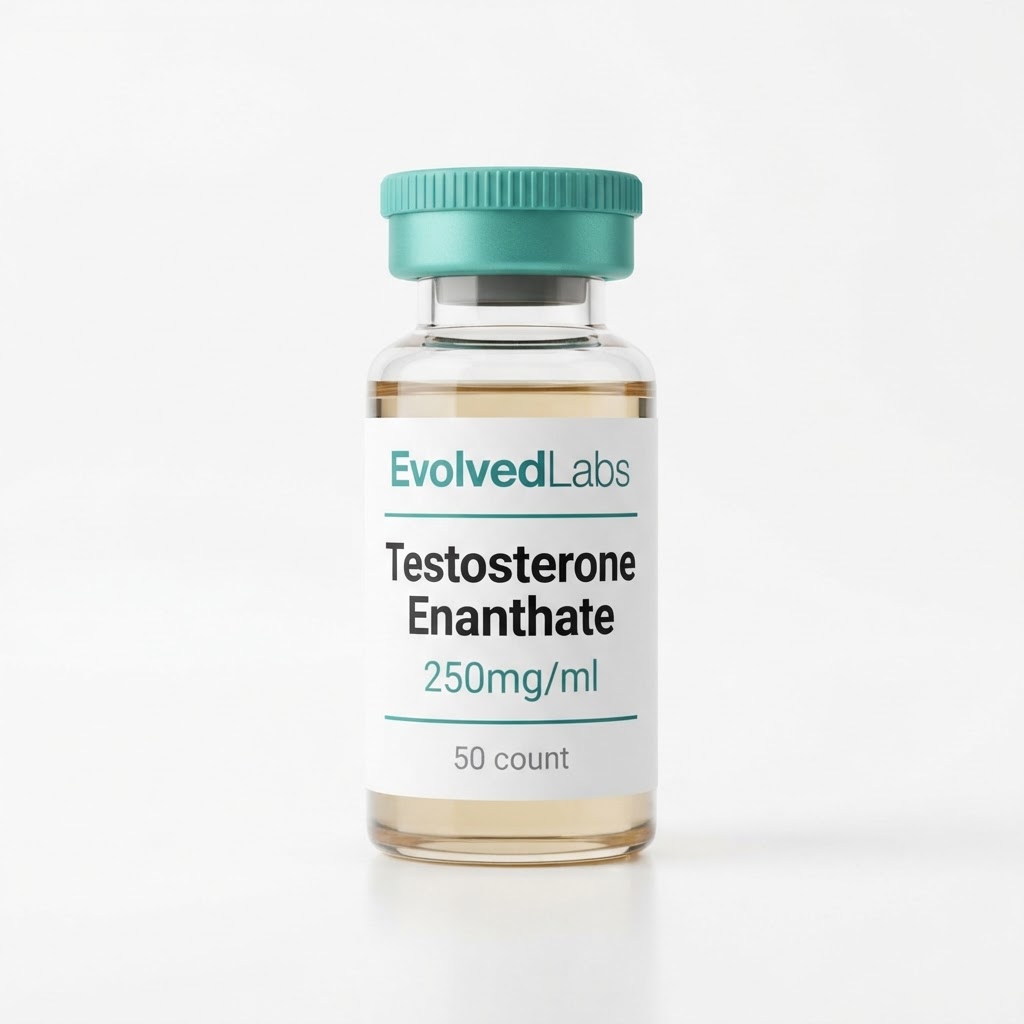
Testosterone Enanthate is a long-acting esterified form of testosterone — the primary endogenous male androgen hormone. It is one of the most extensively studied testosterone esters in clinical and preclinical research, widely used as a reference compound in hormone replacement therapy (TRT) research models, pharmacokinetic studies, and androgen receptor biology investigations.
Chemical Structure and Esterification
Testosterone Enanthate consists of the base testosterone molecule with an enanthate (heptanoate) ester attached at the 17-beta hydroxyl position. This esterification serves a critical pharmacokinetic purpose: it increases the lipophilicity of the molecule, dramatically slowing its release from the injection site into systemic circulation.
Without esterification, testosterone has a half-life of approximately 10 minutes when administered via injection — far too short for practical research applications. The enanthate ester extends the apparent half-life to approximately 4.5–5 days in research models, enabling less frequent administration schedules.
Pharmacokinetic Profile
Absorption and Release: After intramuscular or subcutaneous administration, Testosterone Enanthate is slowly released from the lipid depot at the injection site. The ester is gradually cleaved by endogenous esterases, releasing free testosterone into circulation.
Peak and Trough Dynamics: - Peak serum testosterone levels typically occur 24–48 hours post-administration - Steady-state levels are achieved after 3–4 administrations at consistent intervals - Trough levels depend on dosing frequency — research protocols typically use weekly or biweekly administration to maintain stable serum levels
Half-Life: The reported half-life of Testosterone Enanthate is approximately 4.5 days (range 4–5.5 days depending on the research model). This places it between shorter-acting esters (propionate, ~2 days) and longer-acting esters (cypionate, ~5–6 days; undecanoate, ~20+ days).
Mechanism of Action
Testosterone Enanthate's biological effects are mediated through the same pathways as endogenous testosterone:
1. Androgen Receptor (AR) Activation: Free testosterone diffuses into target cells and binds the cytosolic androgen receptor. The hormone-receptor complex translocates to the nucleus, where it acts as a transcription factor — modulating gene expression of androgen-responsive genes.
2. Aromatization to Estradiol: Testosterone is converted to estradiol by the aromatase enzyme (CYP19A1) in peripheral tissues. This estrogenic activity contributes to effects on bone density, lipid metabolism, and neuroendocrine function.
3. 5-Alpha Reduction to DHT: Testosterone is converted to dihydrotestosterone (DHT) by 5-alpha-reductase. DHT is a significantly more potent androgen at the AR — approximately 2-3x the binding affinity of testosterone — and mediates effects on skin, hair follicles, and prostate tissue.
Anabolic vs. Androgenic Effects
Testosterone exhibits both anabolic (tissue-building) and androgenic (masculinizing) properties. In research models:
| Effect Category | Primary Targets | Research Outcomes | |---|---|---| | Anabolic | Skeletal muscle, bone | Increased protein synthesis, nitrogen retention, muscle mass, bone mineral density | | Androgenic | Skin, hair, sebaceous glands | Sebaceous secretion, hair growth patterns | | Metabolic | Liver, adipose tissue | Lipid metabolism changes, visceral fat reduction | | Neuroendocrine | Hypothalamus, pituitary | HPG axis feedback regulation | | Hematopoietic | Bone marrow | Erythropoiesis stimulation |
Research Applications
Testosterone Replacement Therapy (TRT) Research: Testosterone Enanthate is one of the most commonly used reference compounds in TRT research — investigating restoration of physiological testosterone levels in hypogonadal research models. Standard research protocols administer 100–250mg weekly, with serum testosterone monitored at trough.
Hypogonadism Models: Research into primary (testicular) and secondary (hypothalamic-pituitary) hypogonadism frequently uses Testosterone Enanthate as the replacement compound — studying metabolic, body composition, and psychological outcome measures.
Body Composition Research: Testosterone's anabolic properties make it relevant for: - Lean body mass preservation during caloric restriction - Protein synthesis rate studies using isotopic tracer methods - Nitrogen balance investigations - Muscle fiber cross-sectional area analysis in biopsy studies
Bone Density Research: Testosterone (and its aromatized product estradiol) is critical for bone health. Research models using Testosterone Enanthate study: - Bone mineral density changes via DEXA - Osteocalcin and bone turnover markers - Osteoblast/osteoclast activity ratios
Comparative Research: Testosterone Enanthate vs. Cypionate
The two most commonly studied long-acting testosterone esters — Enanthate and Cypionate — are frequently compared in research literature:
| Property | Testosterone Enanthate | Testosterone Cypionate | |---|---|---| | Ester chain length | 7 carbons (heptanoate) | 8 carbons (cyclopentylpropionate) | | Half-life | ~4.5 days | ~5–6 days | | Peak timing | 24–48 hours | 24–72 hours | | Dosing frequency in research | Weekly | Weekly to biweekly | | Clinical equivalence | Reference standard | Comparable | | Release rate | Slightly faster | Slightly more sustained |
In practical research terms, the two esters are often considered interchangeable — the slight differences in half-life rarely produce meaningfully different outcomes in standard protocols. Some researchers prefer one over the other based on availability, pricing, or historical convention in their specific field.
Standard Research Protocols
TRT Model: - Dose: 100–250mg per administration - Frequency: Weekly - Route: Intramuscular or subcutaneous - Monitoring: Total testosterone, free testosterone, estradiol, hematocrit at trough (day 7) - Cycle: Continuous in TRT research; cycled in body composition studies
Body Composition Studies: - Dose: Varies by research design (typically 50–200mg weekly) - Duration: 8–16 week cycles - Assessments: DEXA body composition, isotope-dilution protein synthesis, strength testing
Safety Considerations in Research
Research with Testosterone Enanthate requires monitoring of several parameters:
Hematological: Testosterone stimulates erythropoiesis — hematocrit elevation is the most commonly monitored safety parameter. Research protocols typically monitor hematocrit at baseline and periodically throughout.
Lipid Profile: Testosterone administration affects lipid metabolism — reductions in HDL and increases in LDL are commonly studied. Research protocols monitor fasting lipid panels.
Estrogenic Effects: Aromatization to estradiol can produce estrogenic effects. Research models may co-administer aromatase inhibitors to study isolated androgen effects vs. combined androgenic-estrogenic effects.
HPG Axis Suppression: Exogenous testosterone suppresses endogenous production via negative feedback on the hypothalamic-pituitary-gonadal axis. This is a fundamental consideration in TRT research — discontinuation protocols and recovery dynamics are commonly studied.
Storage and Handling
Testosterone Enanthate is supplied as an oil-based solution (commonly in grape seed oil or cottonseed oil vehicles). Research-grade material should be stored at controlled room temperature (20–25°C), protected from light, and handled with standard laboratory safety protocols.
Quality Standards
For research integrity, Testosterone Enanthate should be sourced from suppliers providing: - HPLC purity verification (≥98%) - Certificate of Analysis (CoA) with batch-specific data - Sterility testing for injectable formulations - Accurate concentration labeling
*This article is for research and informational purposes only. Testosterone Enanthate is sold for laboratory research purposes only and is not intended for human consumption. Not evaluated by the FDA.*